Powell issues a warning on U.S. debt
Current trends ‘not sustainable,’ says Fed chair, whose conversation with Harvard undergrads also touched on inflation, impact of war, independent decision-making
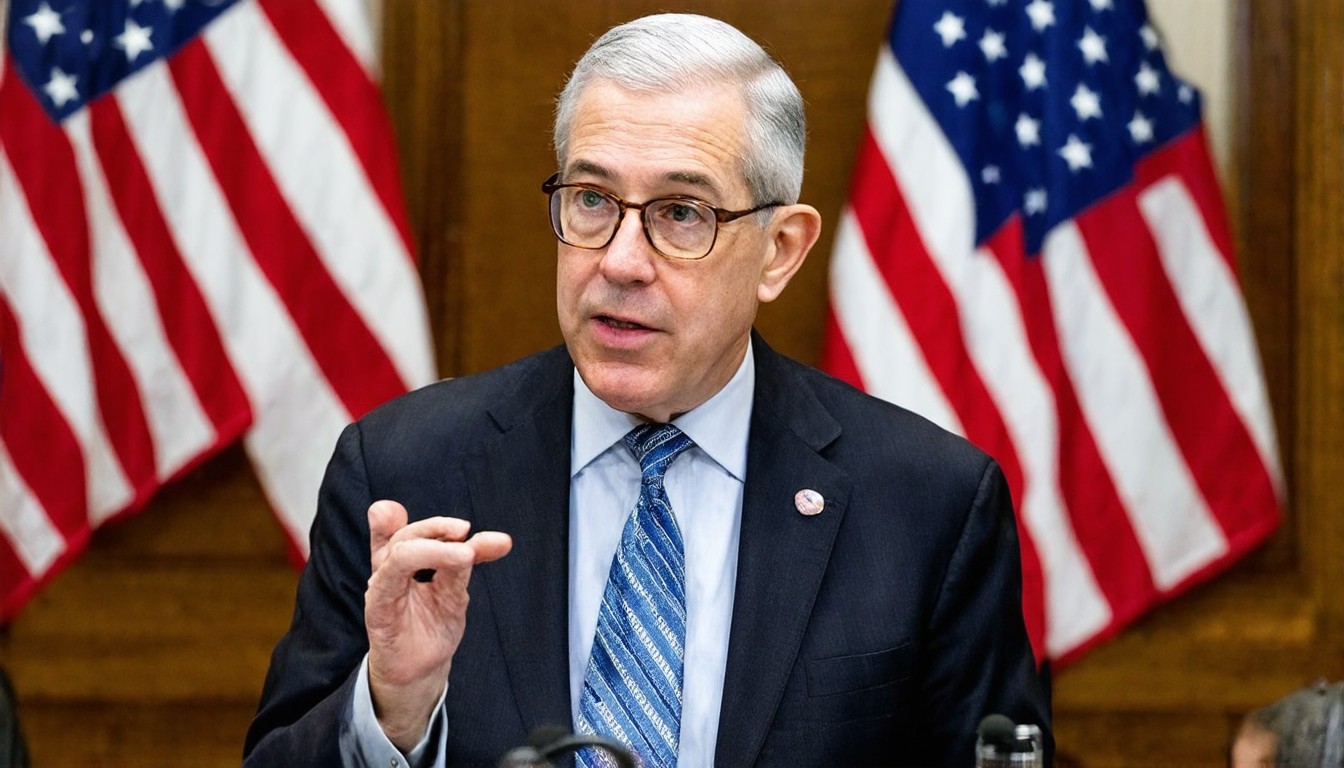
Federal Reserve Chairman Jerome Powell recently visited Harvard University, where he engaged in a discussion with undergraduates on various economic topics, including the sustainability of current U.S. debt trends, inflation, the impact of the Iran war, and the importance of independent decision-making. The event took place in the Sanders Theatre during a macroeconomics course co-taught by Jason Furman and David Laibson, who moderated the talk.
Powell emphasized the resilience of the U.S. financial system and stated that the Fed will adopt a "wait-and-see" approach to assess the economic repercussions of the Iran conflict. He reaffirmed the central bank's commitment to maintaining an inflation rate of 2 percent, even in the face of challenges posed by U.S.-imposed tariffs and the ongoing war.
During the discussion, Powell referred to the economic conditions in late 2024 as a "soft landing." At that time, the Federal Open Market Committee believed that the inflation target was within reach, with U.S. growth at 2.5 percent, 12-month inflation slightly above 2 percent, and the labor market nearly at full employment. This period followed a time of significant recession concerns among economists.
Powell's tenure as Fed chair began in 2017 when he was nominated by President Trump and later re-nominated by President Biden in 2021. His term is set to end in May, but he has pledged to remain in the role until his successor is confirmed by the Senate.
When addressing oil and gas price fluctuations, Powell noted that historically, the Fed tends not to intervene during such supply shocks, as they are often short-lived. Consequently, the central bank will closely monitor how Iran-related oil price changes affect the broader economy and will pay particular attention to inflation expectations.
Throughout the conversation, Powell underscored the importance of independent decision-making, particularly in the context of economic policy. He encouraged students to think critically and form their own judgments, emphasizing that informed and reasoned choices are crucial for addressing the complex challenges facing the U.S. economy.
In conclusion, Powell's visit to Harvard provided an opportunity for undergraduates to engage directly with the Fed chair on a range of pressing economic issues. His warnings about unsustainable debt trends, cautious approach to the Iran war's impact, and steadfast commitment to inflation goals highlight the ongoing challenges and responsibilities of the Federal Reserve in managing the nation's economic health.