
Pope Leo XIV Calls for Peace in First Easter Mass
The pontiff’s Easter remarks follow a Palm Sunday homily in which he said God rejected the prayers of “those who wage war.”
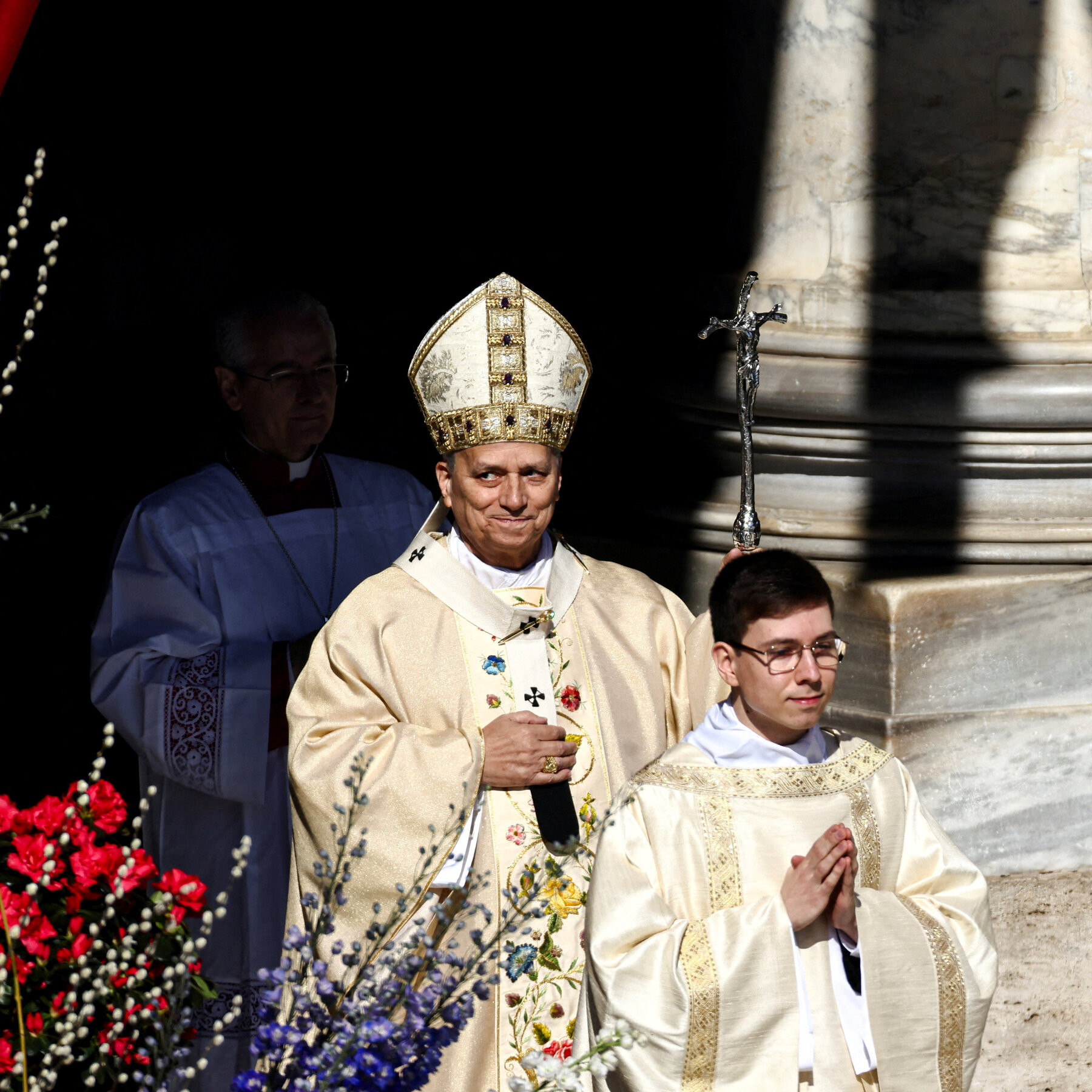
On the first day of Easter, Pope Leo XIV delivered a powerful message of peace and reconciliation during his Mass at St. Peter’s Square. The pontiff’s sermon marked a significant milestone in his papacy, as it followed his Palm Sunday homily, in which he had starkly stated that God rejects the prayers of those who wage war. This Easter address served as a renewed plea for global harmony and a reaffirmation of the Church’s commitment to peace.
As the sun rose over Rome, thousands of pilgrims gathered in St. Peter’s Square, their faces illuminated by the hope and anticipation of the Easter season. Among them were representatives from various faiths and nations, united in their shared desire for peace. Pope Leo XIV, clad in his ornate white vestments, stood before the faithful, his voice resonating with a sense of urgency and compassion.
In his homily, the Pope emphasized the importance of peace as a divine gift and a moral imperative. He spoke of the suffering endured by countless individuals and communities caught in the maelstrom of conflict, and urged all people of goodwill to work tirelessly for a world free from violence. “Peace is not merely the absence of war,” he declared, “but the presence of justice, love, and understanding among all people.”
Drawing on his Palm Sunday remarks, the Pope reiterated that those who choose violence over dialogue are turning their backs on God’s will. He warned that war and hatred are not only destructive of human lives but also a betrayal of the very principles upon which societies are built. “Let us not forget,” he said, “that every act of violence is a rejection of the love that binds us all as one human family.”
The Pope also addressed the global challenges facing humanity, including climate change, economic inequality, and political instability. He called for a spirit of solidarity and cooperation, urging leaders and citizens alike to prioritize the common good over partisan interests. “In the face of these crises,” he said, “we must act as one, recognizing that our shared responsibility is to safeguard the dignity and well-being of every person on this earth.”
In a poignant moment during the Mass, Pope Leo XIV led the congregation in a prayer for peace, invoking the intercession of the saints and the blessings of the Holy Spirit upon all nations. The prayer was a moving testament to the Church’s enduring commitment to peace, and it echoed the words of his predecessor, Pope Francis, who has long championed the cause of global peace and justice.
As the Mass drew to a close, the Pope extended his blessings to all who had gathered, as well as to those who were unable to attend but were spiritually present. He concluded his address with a plea for each individual to be a messenger of peace in their own communities. “Let us carry the message of hope and reconciliation to those who are suffering,” he urged. “Let us be instruments of God’s peace in a world that so desperately needs it.”
The Easter Mass concluded with the traditional singing of the Alleluia, a joyous celebration of life’s triumph over death and darkness. As the faithful dispersed, many carried with them the Pope’s words as a call to action, a reminder that peace begins with each person’s choice to embrace love and understanding over hatred and violence.
In the days following the Mass, the Pope’s message resonated across the globe, inspiring communities and leaders to reflect on their roles in promoting peace. It served as a powerful reminder that the pursuit of peace is not merely a political or religious endeavor, but a moral obligation that transcends borders and divides. As the world continues to grapple with its challenges, the words of Pope Leo XIV will undoubtedly serve as a beacon of hope and a call to renewed commitment to peace for generations to come.









