
Pope Leo XIV bares cross for full Good Friday procession, a feat not seen in decades
Pope Leo XIV marked his first Good Friday by becoming the first pontiff in decades to personally carry the wooden cross for all 14 stations at the Colosseum.
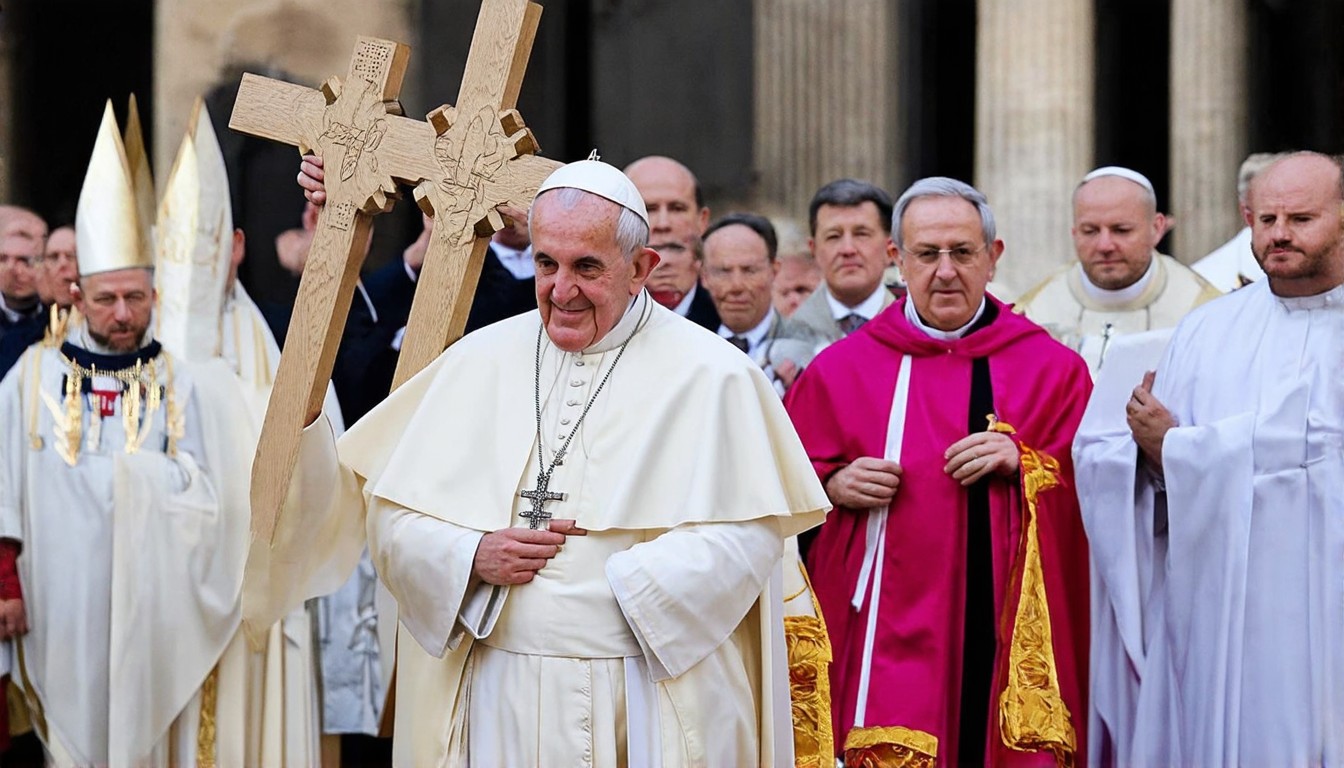
Pope Leo XIV has made history this Good Friday by becoming the first pontiff in decades to personally carry the wooden cross for all 14 stations of the Via Crucis at the Colosseum. This significant gesture, which has not been witnessed in the Vatican for many years, underscores the Pope's dedication to deepening the spiritual connection between the Church and its followers during Holy Week.
The Via Crucis, or Way of the Cross, is a devotional procession that commemorates Jesus Christ's journey from his condemnation to his crucifixion and burial. Traditionally, the Pope does not participate in this procession, which is led by a representative. However, Pope Leo XIV's decision to carry the cross himself was a bold and symbolic move, reflecting his commitment to embodying the suffering and sacrifice of Christ.
The procession began early in the morning at the Archbasilica of St. John Lateran, where the Pope prayed before setting out for the Colosseum. As he walked through the ancient Roman amphitheater, Pope Leo XIV was joined by thousands of pilgrims and worshippers, many of whom had traveled from around the world to witness this historic event. The atmosphere was solemn and reverent, with the crowd singing hymns and reciting the traditional prayers associated with the Via Crucis.
At each of the 14 stations, the Pope knelt to pray and meditate on the corresponding scene from the Passion of Christ. The wooden cross, which weighed approximately 50 pounds, was a significant burden for the Pope to carry, but he bore it with grace and determination. This act of physical endurance was seen as a powerful testament to his faith and his desire to connect with the suffering of ordinary people.
The decision to participate in the full procession was not without controversy. Some critics argued that it was an unnecessary risk to the Pope's health and safety, given his age and the physical demands of carrying the cross. However, the Vatican dismissed these concerns, emphasizing that Pope Leo XIV was in good health and had consulted with medical professionals before making the decision.
The Pope's participation in the Via Crucis has been widely covered by international media, with many outlets highlighting the symbolic significance of his actions. Analysts have suggested that this gesture could serve as a turning point in the Church's approach to Holy Week, encouraging greater participation and engagement from both clergy and laity.
In addition to its spiritual importance, Pope Leo XIV's decision to carry the cross also has historical significance. The last Pope to undertake this feat was Pope John XXIII in 1964, during the Holy Year of the Redemption. Since then, the tradition has been largely abandoned, with popes opting to participate in the procession through other means, such as televised prayers or symbolic gestures.
Pope Leo XIV's actions have been praised by many within the Catholic Church and beyond. They represent a return to a more traditional and devout approach to Holy Week, one that emphasizes personal sacrifice and spiritual connection. As the Pope continues his papacy, his decision to carry the cross on Good Friday is likely to be remembered as a defining moment in his reign and a powerful reminder of the Church's enduring commitment to the Passion of Christ.
In the days following the procession, the Pope has been seen meeting with members of the clergy and laypeople to discuss the significance of his actions. He has emphasized the importance of embodying Christ's suffering and the need for the Church to remain close to the struggles of its followers. This Good Friday, therefore, marks not only a historical milestone but also a renewed call to action for the Catholic faithful around the world.
As the Holy Week concludes, the memory of Pope Leo XIV carrying the cross at the Colosseum will remain a powerful image, symbolizing his dedication to the spiritual life of the Church and his desire to lead by example. This act of personal sacrifice is expected to inspire many, reminding them of the profound meaning behind the Passion of Christ and the importance of living a life of faith and service.








