PM Modi targets TMC over ‘maha jungle raj’, Mamata calls for ‘revenge’ over SIR deletions
PM Modi criticized TMC's governance in West Bengal, while CM Mamata Banerjee urged voters to retaliate against alleged voter roll deletions.
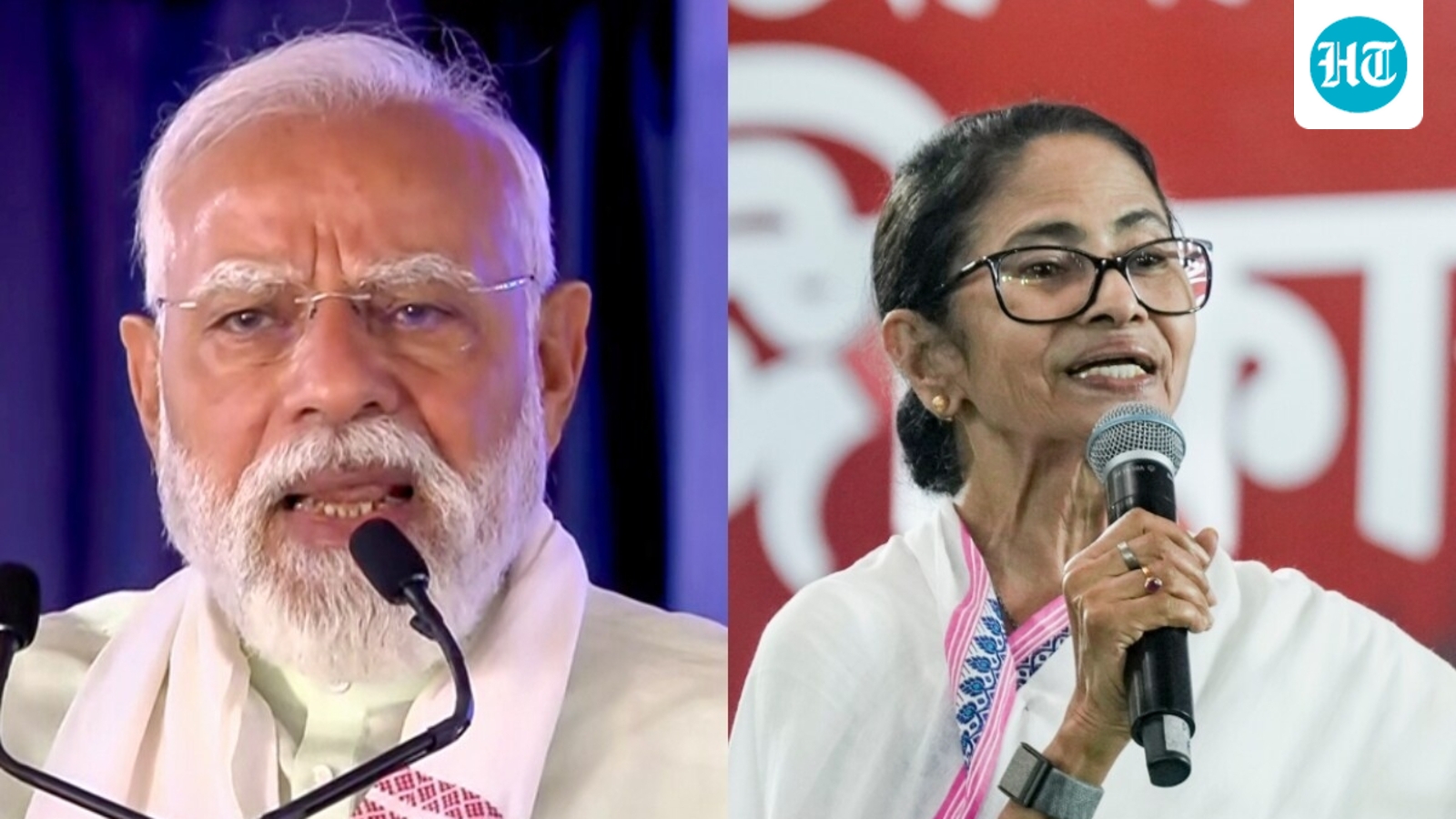
The political landscape of West Bengal has been set ablaze by a high-stakes battle between Prime Minister Narendra Modi and Chief Minister Mamata Banerjee. The conflict, which has been simmering for months, erupted into the open as Modi accused the Trinamool Congress (TMC) of ruling the state with a "maha jungle raj," while Banerjee retaliated by calling for voter revenge over allegations of systematic deletions from the electoral rolls.
In a recent public address, Modi leveled harsh criticism at the TMC, accusing the party of misgovernance and corruption. He described the state's administration as a "jungle raj," implying that it was lawless and chaotic, with officials acting arbitrarily and exploiting their positions for personal gain. Modi's comments came as part of a broader campaign by the Bharatiya Janata Party (BJP) to undermine the TMC's credibility ahead of the upcoming state elections.
The Prime Minister's remarks were met with immediate defiance by Mamata Banerjee, who has been at the helm of West Bengal's government since 2011. In a fiery response, Banerjee accused the central government of orchestrating a conspiracy to manipulate the electoral rolls in favor of the BJP. She claimed that thousands of voters had been illegally deleted from the electoral rolls, a move that she described as an attempt to skew the electoral balance in the state.
Banerjee's allegations have been a central theme in her campaign strategy, with the TMC framing the issue as a matter of voter suppression and democratic rights. The party has called upon its supporters to take a stand against what it perceives as an assault on the electoral process. In a recent rally, Banerjee urged her followers to "revenge" against the alleged voter roll deletions, urging them to ensure that the TMC retains power in the state.
The tension between Modi and Banerjee has deep roots, dating back to the 2014 general elections when the BJP's campaign in West Bengal was marred by allegations of violence and intimidation against TMC supporters. Since then, the two leaders have been locked in a bitter rivalry, with each side accusing the other of undermining democratic institutions and engaging in corrupt practices.
The latest round of accusations has raised concerns about the integrity of the electoral process in West Bengal. Election Commission of India (ECI) officials have been called upon to investigate the allegations of voter roll deletions, with both the TMC and BJP demanding a thorough investigation. However, the ECI has maintained its neutrality, reminding all political parties of the need to adhere to the electoral code and avoid inflammatory rhetoric.
The situation in West Bengal is closely watched by political analysts and observers, who see the state as a pivotal battleground in the larger battle between the BJP and the United Opposition. A TMC victory would be seen as a significant blow to the BJP's ambitions in the region, while a BJP win would bolster the party's influence in the eastern Indian states.
As the electoral fever grips West Bengal, both the TMC and BJP have ramped up their campaigning efforts, with each side vying for the support of the state's diverse electorate. The allegations of voter roll deletions have become a focal point of the campaign, with Banerjee's calls for revenge resonating with many TMC supporters.
Meanwhile, Modi's criticism of the TMC's governance has been met with skepticism by many in the state, who point to the BJP's own record of mismanagement and corruption. Critics argue that the Prime Minister's comments are merely a political ploy designed to distract from the BJP's own shortcomings and to exploit West Bengal's long-standing grievances against central interference in state affairs.
The standoff between Modi and Banerjee is not only a reflection of their personal rivalry but also a manifestation of the broader political dynamics at play in India. The BJP's push for greater centralization of power has been met with resistance from state governments, many of which see the move as a threat to their autonomy and democratic traditions.
In the midst of this political turmoil, the people of West Bengal are expected to make their voices heard at the polls. The outcome of the state elections will not only determine the future of the region but will also have implications for the national political landscape, as both the BJP and the United Opposition vie for control of key states ahead of the 2024 general elections.
As tensions run high and tempers flare, the question remains: will the allegations of voter roll deletions and the TMC's governance woes tip the scales in favor of one side or the other? Only time will tell, but one thing is certain: the battle for West Bengal is far from over.