
‘Please!’ A judge’s sassy ruling halts Trump’s White House ballroom plans
With a portion of the White House demolished and site preparation underway, President Donald Trump’s planned ballroom extension on the White House grounds has been ordered to halt construction . Ruling on a lawsuit filed by the National Trust for Historic Preservation, U.S. District Court Judge Richard J. Leon granted a request for a preliminary injunction against the White House ballroom, finding that Trump exceeded his authority in pursuing the project without congressional approval. Leon gave the White House—along with lead defendants the National Park Service and six other parties—14 days to appeal. The Trump administration has already appealed the ruling , and the case is almost certainly headed to the Supreme Court. The ruling is significant, affecting one of the most controversial and high-profile construction projects in the nation. The ruling is also notable for its expressive and sometimes sassy prose. Construction work continues on President Trump’s White House Ballroom on the site of the former East Wing of the White House, seen from the Washington Monument on March 8, 2026 in Washington, DC. [Photo: Aaron Schwartz/Getty Images] While most court rulings naturally contain a lot of legalese and case references, Leon’s 35-page ruling on the White House ballroom leans into bombast, using an exclamation point 17 times, plus one more time in a footnote. (This tally does not include a 19th exclamation point, in a quote from Trump.) The first usage comes in just the second sentence of the ruling, which notes that Trump is the steward of
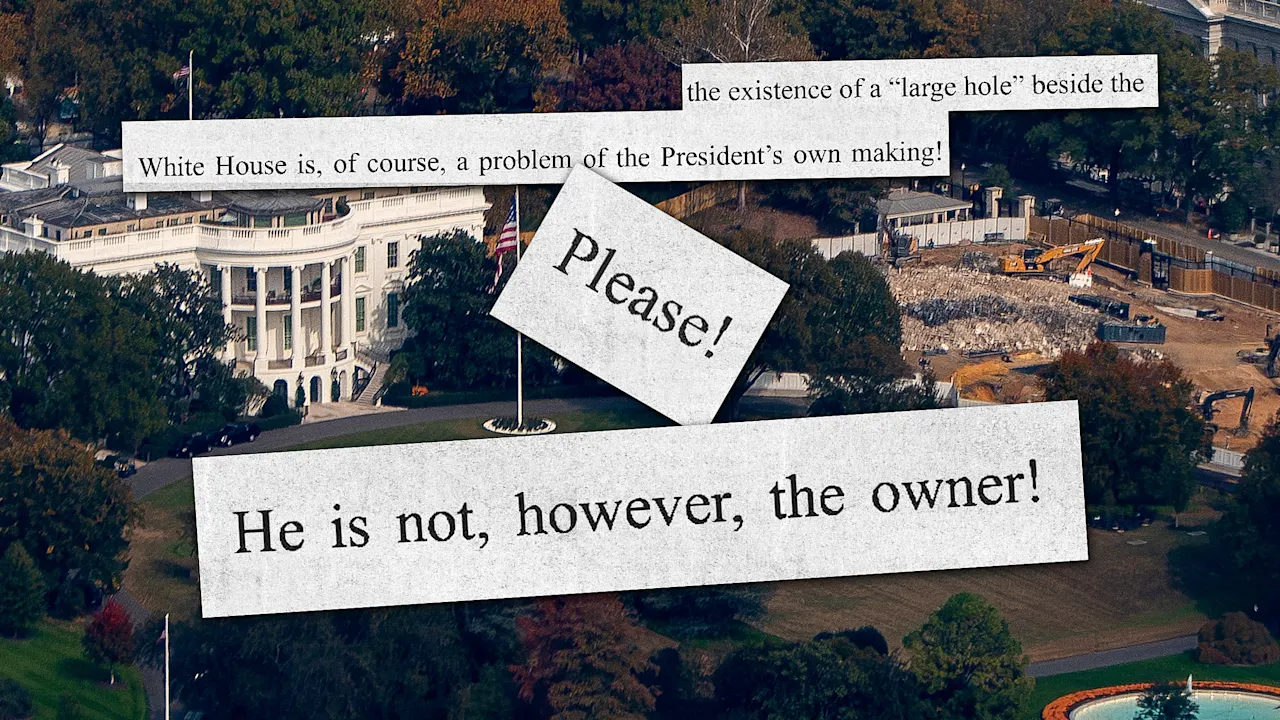
With a portion of the White House demolished and site preparation underway, President Donald Trump's planned ballroom extension on the White House grounds has been ordered to halt construction. Ruling on a lawsuit filed by the National Trust for Historic Preservation, U.S. District Court Judge Richard J. Leon granted a request for a preliminary injunction against the White House ballroom, finding that Trump exceeded his authority in pursuing the project without congressional approval. Leon gave the White House—along with lead defendants the National Park Service and six other parties—14 days to appeal. The Trump administration has already appealed the ruling, and the case is almost certainly headed to the Supreme Court. The ruling is significant, affecting one of the most controversial and high-profile construction projects in the nation. The ruling is also notable for its expressive and sometimes sassy prose.
Construction work continues on President Trump's White House Ballroom on the site of the former East Wing of the White House, seen from the Washington Monument on March 8, 2026 in Washington, DC. [Photo: Aaron Schwartz/Getty Images] While most court rulings naturally contain a lot of legalese and case references, Leon's 35-page ruling on the White House ballroom leans into bombast, using an exclamation point 17 times, plus one more time in a footnote. (This tally does not include a 19th exclamation point, in a quote from Trump.) The first usage comes in just the second sentence of the ruling, which notes that Trump is the steward of the White House, "not, however, the owner!" [Image: United States District Court/District Of Columbia]
Four times in the ruling, Leon responds with exasperation and astonishment to the assertions of the defense in arguing Trump did not violate the law, using the sarcastic and memorable phrase, "Please!" One of the defense's assertions is that a certain section of the law supposedly allows the president to undertake such projects without congressional approval. Leon dismisses this argument with a sharp "Please!" and proceeds to explain that the law in question, the National Historic Preservation Act, explicitly requires the president to obtain congressional authorization for any construction projects on the White House grounds.
The judge's tone becomes increasingly frustrated as he dismantles the Trump administration's legal arguments. He points out that the administration has misrepresented the scope of the National Park Service's authority, which does not extend to approving major construction projects. Leon further argues that the administration's reliance on an outdated legal opinion from the 1950s is baseless, as the opinion was based on a different set of circumstances and does not apply to the current situation.
In a particularly biting passage, Leon writes, "The defendants contend that the President is not bound by the National Historic Preservation Act. Please! That is not how the law works." He goes on to explain that the act is a binding federal law, and the president, like all other federal officials, is subject to its provisions. The judge's sassy prose continues as he mocks the administration's attempt to justify the project on the grounds of national security. "The President claims that the ballroom is necessary for national security," Leon writes. "Please! That is not how national security is maintained."
The ruling also highlights the historical significance of the White House grounds, which have been protected as a national historic site for decades. Leon emphasizes that the president's role as the steward of the White House comes with responsibilities, including the duty to preserve its historical integrity. He warns that the administration's disregard for the law could set a dangerous precedent, allowing future presidents to bypass congressional oversight and engage in unchecked construction projects on the White House grounds.
The Trump administration's appeal of the ruling is expected to prolong the legal battle, with the case likely making its way to the Supreme Court. Meanwhile, the preliminary injunction has effectively halted construction on the White House ballroom, at least for the time being. The ruling has drawn attention to the ongoing controversy surrounding the project and has sparked debates about the balance of power between the executive and legislative branches, as well as the preservation of the White House's historical significance.
As the legal battle continues, the sassy and expressive language of Judge Leon's ruling has captured the public's attention, making it one of the most memorable court decisions in recent years. The case serves as a stark reminder of the checks and balances inherent in the U.S. government system and underscores the importance of adhering to the rule of law, even at the highest levels of power.








