
People of Burkina Faso should forget about democracy, says military ruler
Ibrahim Traoré, who took power in 2022 coup, tells state broadcaster ‘we must tell the truth, democracy isn’t for us’ People in Burkina Faso should forget about democracy as it is “not for us”, the military president, Ibrahim Traoré, told the country’s state broadcaster. Traoré took power in a coup in September 2022 , toppling another junta that had taken power just nine months earlier. He has since stifled opposition and in January banned political parties outright. Continue reading...
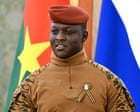
In a stark rejection of democratic principles, Burkina Faso's military ruler, Ibrahim Traoré, has declared that the country's citizens should abandon any hopes of democracy. Speaking to the state broadcaster, Traoré, who seized power in a coup in September 2022, bluntly stated, “we must tell the truth, democracy isn’t for us.” This chilling statement comes as the military leader consolidates his grip on power, stifling opposition and outright banning political parties in January.
Traoré's rise to power marked the second coup in less than a year in Burkina Faso, underscoring the country's descent into political turmoil. In January 2022, a military junta overthrew President Roch Marc Kaboré, citing the government's inability to combat insurgencies and ensure national security. Just nine months later, Traoré orchestrated another coup, ousting the previous junta and declaring himself president. Since then, he has implemented authoritarian measures, effectively dismantling the fragile democratic institutions that had been painstakingly established over decades.
In his recent address, Traoré's dismissal of democracy as an unsuitable system for Burkina Faso reflects a broader trend of military leaders across West Africa viewing democratic governance as incompatible with their objectives. Many military rulers in the region argue that instability and insurgencies necessitate strongman rule, with a focus on security over political freedoms. However, critics contend that such authoritarian approaches often exacerbate the very problems they claim to address, leading to further instability and human rights abuses.
Traoré's decision to ban political parties in January represents a direct challenge to the democratic aspirations of Burkina Faso's citizens. By eliminating the legal framework for opposition and civil society, the military leader has effectively silenced dissent, leaving little room for alternative voices or accountability. This move has drawn condemnation from international organizations and human rights groups, which have called for an end to the suppression of political freedoms and a return to democratic processes.
The situation in Burkina Faso is particularly alarming given the country's history of political transitions. Since gaining independence from France in 1960, Burkina Faso has experienced a mix of civilian and military rule, with periods of relative stability and democracy interspersed with coups and authoritarian regimes. The most recent democratic era began in 1991, when a national conference led to the establishment of a new constitution and multi-party elections. However, Traoré's actions threaten to undo this progress, pushing the country further into the abyss of authoritarianism.
The implications of Traoré's rejection of democracy extend beyond Burkina Faso's borders. As one of the poorest nations in the world, the country has long relied on international aid and support, much of which is conditional on adherence to democratic values. By dismantling democratic institutions, Traoré risks alienating his nation's international partners and jeopardizing critical assistance that is vital for addressing the country's pressing challenges, including poverty, environmental degradation, and insurgencies.
Furthermore, Traoré's stance on democracy could have ripple effects across West Africa, where military coups have become all too common in recent years. In 2022 alone, coups occurred in Mali, Guinea, and Ivory Coast, highlighting a regional trend toward authoritarianism. As Burkina Faso's military leader dismisses democracy, the prospects for political stability and development in the wider Sahel region appear increasingly bleak.
In the face of such challenges, the Burkinabe people must grapple with the harsh reality of their situation. While Traoré's regime may claim to prioritize national security, the long-term consequences of its authoritarian policies are likely to be detrimental to the country's future. The international community, too, must confront the reality of Burkina Faso's descent into military rule and consider how best to respond to this latest chapter in the nation's tumultuous history. As the military president tells his citizens to forget about democracy, the question remains: what path forward can emerge from this dark moment?









