Pakistan: Archbishop of Lahore slams Sharia court verdict in Maria case; Minor Christian girl was abducted & converted
The case of a minor Christian girl Maria, stands as a testament to the atrocities committed by the Pakistani state. It reflects how every institution of the country, including the judiciary, is ideologically and religiously motivated rather than being rooted in fair constitutional principles. Recently, a minor Christian girl was abducted and forcefully converted to Islam . She was later forcefully married to a Muslim man. Unfortunately, the Federal Sharia Court in its ruling has upheld the conversion and forceful marriage, instead of delivering justice to the minor Christian girl Maria. On these grounds, the Archbishop Khalid Rehmat from the Archdiocese of Lahore has staged a strong protest and “deep anguish” against the verdict of the Federal Sharia Court. He reiterated that the ruling appears to validate the marriage of a child under circumstances marked by serious allegations of abduction, forced conversion and absence of free consent. The archbishop further quoted the judgement as “profoundly disturbing and unacceptable”. He also asserted that the decision in the Maria Case not just reflects grave failure of the judicial system but also sends a dangerous message regarding the fragile state of the rule of law, prevailing in Pakistan. The minority community of Pakistan including Christians and the minor girls of the community are extremely vulnerable to dangerous traps such as kidnap, enforced disappearances, forced conversion and forced marriage at an irrelevant age, the Archbishop further added. Such a perilous situation is prevailing across Pakistan, with no concrete action from the government or judiciary.
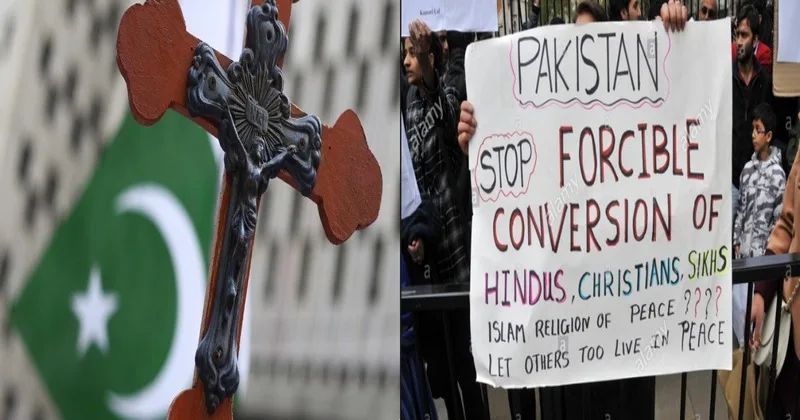
In Pakistan, the case of a minor Christian girl named Maria has become a stark reminder of the systemic atrocities faced by religious minorities in the country. The recent verdict of the Federal Sharia Court in this case has sparked outrage, as it upholds the forced conversion and marriage of Maria, a young Christian girl, to a Muslim man. Archbishop Khalid Rehmat of the Archdiocese of Lahore has strongly condemned this decision, expressing deep anguish and calling it "profoundly disturbing and unacceptable."
The circumstances surrounding Maria's abduction, forced conversion, and subsequent marriage highlight the troubling reality that every institution in Pakistan, including the judiciary, is ideologically and religiously motivated rather than grounded in fair constitutional principles. Archbishop Rehmat emphasized that the ruling not only validates the marriage of a child under allegations of abduction, forced conversion, and lack of free consent but also underscores a grave failure of the judicial system.
The archbishop's concerns extend beyond the Maria case to the broader issue of the fragile state of the rule of law in Pakistan. He warned that such decisions send a dangerous message about the vulnerability of minority communities, particularly Christian girls, to kidnap, enforced disappearances, forced conversion, and forced marriage at an irrelevant age. This perilous situation is widespread across the country, with no concrete action taken by the government or judiciary to address it.
The administrative and governance system in Pakistan appears to operate in a biased manner, failing to protect the rights and lives of religious minorities. Archbishop Rehmat's statement underscores that this verdict is not only contrary to Pakistan's legal framework, which clearly sets the minimum age for marriage at 18 years, but also constitutes a violation of international human rights laws.
The minority community in Pakistan, including Christians, faces significant risks due to the lack of protection from state institutions. The judiciary's failure to uphold justice in cases like Maria's not only perpetuates the cycle of abuse but also undermines the very foundations of the rule of law. As the situation worsens, the international community and human rights organizations must remain vigilant and demand accountability from the Pakistani authorities to ensure the protection of religious minorities and the upholding of human rights.
In response to the verdict, Archbishop Rehmat's strong protest serves as a call to action for all stakeholders, including the government, judiciary, and civil society, to take urgent measures to address the systemic issues affecting religious minorities in Pakistan. The continued vulnerability of Christian girls and other minority communities demands a concerted effort to reform the legal and administrative systems, ensuring that they are rooted in fairness and justice, rather than ideological bias.
The Maria case is a chilling reminder of the urgent need for change in Pakistan's approach to religious minorities and the rule of law. The verdict in this case cannot be seen as an isolated incident but rather as a reflection of deeper systemic failures that must be addressed to protect the rights and safety of all citizens, regardless of their religion.