
Our generation will continue resisting the Taliban’s restrictions on women and girls
The years 2020 and 2021 were among the most accomplished years of my life, because I had found my path and was on the verge of achieving all my goals.
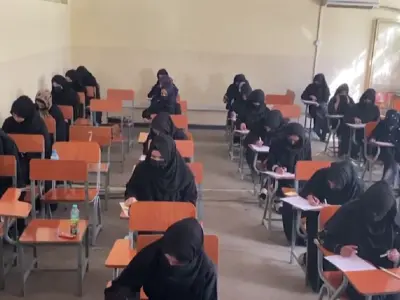
In Afghanistan, education has become a powerful tool for resistance against the Taliban's oppressive restrictions on women and girls. This is a story of resilience, determination, and the unwavering pursuit of knowledge in a country where the future has always been uncertain.
Fareshtah, a young woman from Afghanistan, was born in 1996, the last year of the first Taliban regime. Her childhood was marked by the constant shifts in power between the Taliban and the Afghan government. Despite the turmoil, she was fortunate enough to gain access to education after the fall of the first Taliban regime. She recalls her first day at school with fondness, wearing a black uniform and a white scarf, feeling a sense of pride and excitement.
The years 2020 and 2021 were particularly significant for Fareshtah. She had found her path and was on the verge of achieving her goals. She was studying Sharia and Islamic Sciences, aspiring to become a successful attorney. To further her education, she registered for a two-year legal skills program through the Asia Foundation and the Ministry of Higher Education. These years were a time of hope and progress, as she immersed herself in her studies and envisioned a brighter future.
However, the situation in Afghanistan was rapidly deteriorating. The war between the Taliban and government forces intensified, and the security situation worsened. The extreme heatwaves of the time meant that her university and legal skills classes were held both in person and online. Despite the challenges, Fareshtah remained focused on her education, determined to overcome the obstacles thrown her way.
In August 2021, the Taliban took control of Afghanistan, imposing strict restrictions on women's rights, including their access to education. This was a turning point for Fareshtah and many other young women and girls in the country. The Taliban's takeover brought renewed uncertainty and fear, but it also ignited a sense of resolve among those who valued education as a means of resistance.
Fareshtah's story is a testament to the power of education in the face of adversity. Even under the Taliban's oppressive regime, she and her peers continue to resist by pursuing their educational goals. They understand that education is not just a personal achievement but a form of defiance against the restrictions imposed on them.
The Taliban's restrictions on women's education have been met with global condemnation, and international organizations and activists have been working to support Afghan women's right to learn. Despite the challenges, many young women like Fareshtah are finding ways to access education, whether through secret schools, online platforms, or by relocating to safer regions within Afghanistan.
Education has become a symbol of hope and resistance for Afghan women and girls. It represents their right to pursue their dreams, to contribute to society, and to shape their own futures. Fareshtah's determination to continue her education despite the Taliban's restrictions is a powerful reminder of the enduring spirit of resilience in the face of oppression.
As the Taliban's grip on Afghanistan tightens, the struggle for women's rights to education continues. Fareshtah and her peers are at the forefront of this resistance, proving that education is a force that transcends political boundaries and regimes. Their story serves as an inspiration to others, showing that even in the darkest of times, the pursuit of knowledge can be a beacon of hope and a powerful tool for change.








