Oil Markets Doubt Trump’s Peace Signals as Tensions With Iran Grow
After seesawing between diplomacy and threats, the president may find it harder to knock down prices by suggesting pauses in attacks or progress in talks.
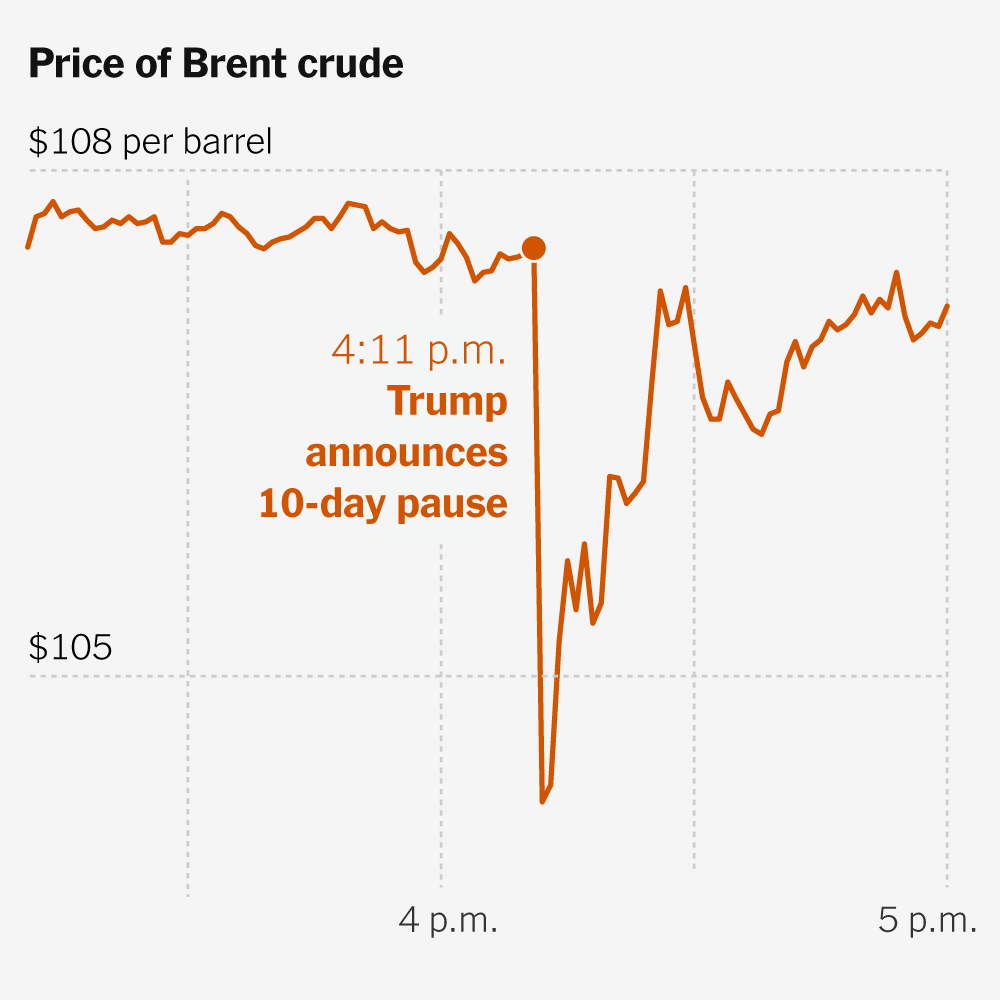
As global oil markets continue to navigate the volatile landscape of geopolitical tensions, investors and analysts are growing increasingly skeptical of President Trump’s peace signals amid escalating hostilities with Iran. Despite the administration’s attempts to present a united front of diplomacy and restraint, the recent back-and-forth between the two nations has left market participants questioning whether the president’s assurances will be enough to stabilize prices.
In recent weeks, the White House has alternated between issuing threats of military action and suggesting cautious optimism in diplomatic talks, creating a sense of uncertainty that has reverberated through international markets. This unpredictability has led to a heightened sense of anxiety among traders, who are wary of the potential impact on oil production and supply.
The stakes are high, as the Organization of the Petroleum Exporting Countries (OPEC) and its allies have been working diligently to balance global oil output and maintain price stability. However, the ongoing tensions in the Strait of Hormuz, a critical chokepoint for global oil shipments, have cast a shadow over these efforts. The strategic importance of the strait, through which approximately 30% of global oil trade passes, means that even minor disruptions could lead to significant price spikes.
President Trump’s recent statements, which have ranged from warning of “severe consequences” to hinting at progress in negotiations, have left market observers uncertain about the likelihood of a diplomatic resolution. This uncertainty has fueled speculation that the administration’s ability to influence oil prices through its diplomatic efforts may be limited, particularly if tensions continue to escalate.
In addition to geopolitical concerns, the oil markets are also grappling with the broader economic outlook. As global growth slows and demand for oil declines, the pressure on prices has intensified. This has made the situation even more precarious, as any disruption in supply could exacerbate existing pressures and lead to further volatility.
Analysts are particularly concerned about the administration’s ability to effectively manage its messaging in the face of these challenges. The frequent shifts in tone and strategy have made it difficult for investors to gauge the likelihood of a peaceful resolution, which in turn has hindered their ability to make informed decisions about oil investments.
Furthermore, the administration’s decision to impose sanctions on Iran, which has significantly reduced the country’s oil exports, has added another layer of complexity to the situation. While some analysts argue that this could help to stabilize prices by reducing supply, others warn that it could also lead to retaliatory measures that further destabilize the market.
In the meantime, oil producers are closely monitoring the situation, with many countries in OPEC and non-OPEC alike preparing for a range of possible outcomes. Some producers are ramping up output to capitalize on any potential shortages, while others are taking precautionary measures to ensure supply chain resilience.
As the situation continues to evolve, it remains to be seen whether President Trump’s peace signals will be enough to quell market anxieties and stabilize oil prices. What is clear, however, is that the geopolitical tensions with Iran are likely to remain a significant factor in determining the trajectory of global oil markets in the coming months.
Investors and analysts are urging the administration to adopt a more consistent and transparent approach to its diplomatic efforts, in order to provide greater clarity and reassurance to the market. As the stakes for both the global economy and the administration’s ability to influence oil prices continue to rise, the pressure is on to deliver a resolution that can help to stabilize an already volatile situation.