Oil Markets Doubt Trump’s Peace Signals as Tensions With Iran Grow
After seesawing between diplomacy and threats, the president may find it harder to knock down prices by suggesting pauses in attacks or progress in talks.
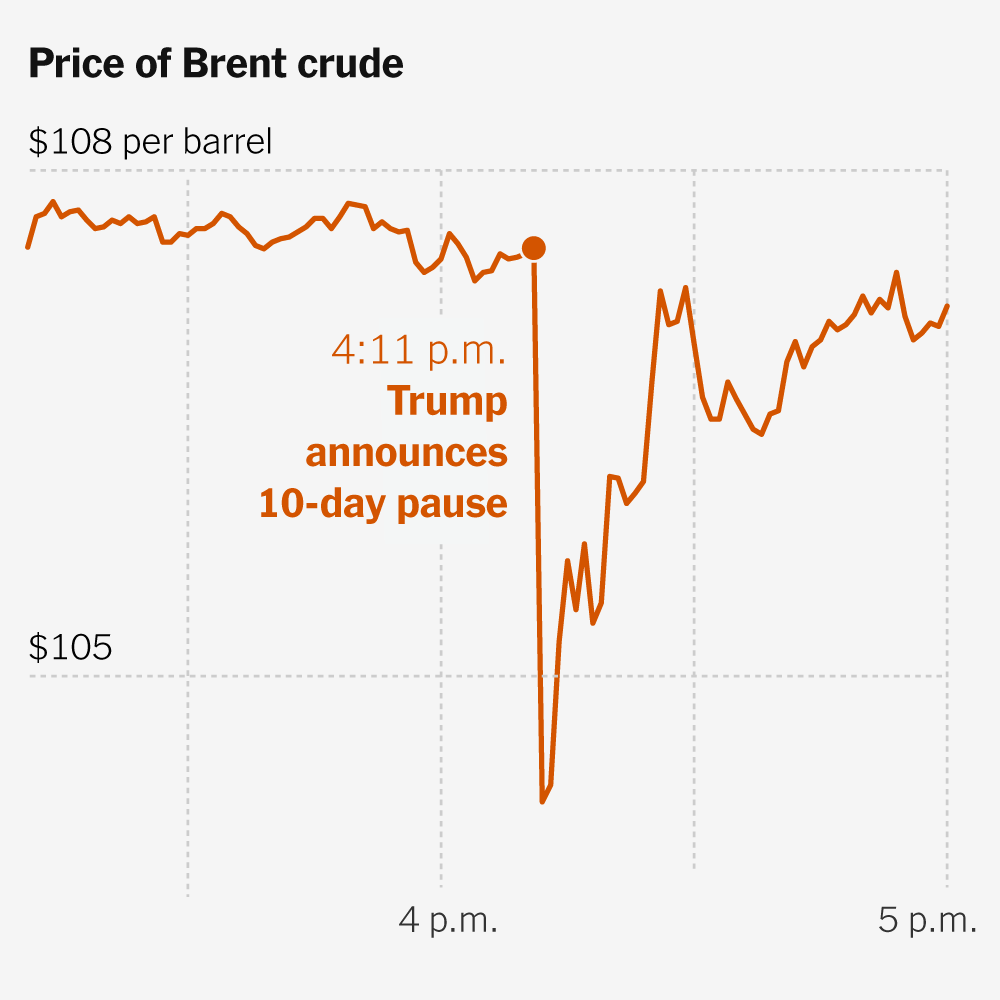
As global oil markets continue to navigate the volatile landscape of geopolitical tensions, investors and analysts are growing skeptical of President Trump’s peace signals amid escalating hostilities with Iran. Despite the administration’s frequent pivots between diplomatic overtures and aggressive rhetoric, the market’s confidence in the ability of these efforts to stabilize prices is waning.
In recent weeks, the president has alternated between suggesting temporary ceasefires in military operations and claiming progress in diplomatic talks with Iranian officials. However, these inconsistent messages have left market participants uncertain about the likelihood of a lasting resolution. The oil price volatility, which has been a persistent issue for several months, is likely to persist as traders and investors grapple with the uncertainty surrounding the potential for a diplomatic breakthrough.
The uncertainty stems from the fact that the Trump administration’s approach to Iran has been marked by a series of abrupt policy shifts. On one hand, the president has repeatedly called for a “de-escalation” of tensions and has suggested that military action could be avoided if Iran were to make concessions. On the other hand, he has also threatened military retaliation for any perceived threats from Tehran, such as the recent attack on a U.S. oil tanker in the Gulf of Oman.
This seesawing between diplomacy and threats has created a sense of unease among oil market participants. Traders are concerned that the administration’s inconsistent messaging could lead to a false sense of security, which might ultimately result in a sudden escalation of tensions. As a result, the market is increasingly doubtful that the president’s peace signals will translate into concrete actions that can effectively reduce the risk premium associated with geopolitical instability in the region.
Moreover, the administration’s recent decision to impose new sanctions on Iranian oil exports has further complicated the situation. While these sanctions are intended to pressure Tehran into negotiating a deal, they have also contributed to a tightening of global oil supply, which has exacerbated price pressures. The resulting increase in oil prices has made it even more challenging for the administration to claim any success in its diplomatic efforts, as the market’s reaction to its policies has been largely negative.
In addition to the geopolitical uncertainties, the oil market is also facing other challenges. The ongoing trade tensions between the United States and China, as well as concerns about global economic growth, are contributing to a broader sense of uncertainty in the global economy. This has led to a reduction in demand for oil, which is further complicating the situation for the administration’s efforts to stabilize prices through diplomatic means.
As the situation continues to evolve, it remains to be seen whether the administration’s peace signals will be enough to reassure the market and bring about a stabilization of oil prices. Traders and analysts are closely watching the latest developments, but the prevailing sentiment is one of skepticism. The administration’s ability to deliver concrete results in its diplomatic engagements with Iran will be a critical factor in determining whether the oil market can find any semblance of stability in the near term.
In conclusion, the oil markets are grappling with a complex set of challenges as they try to navigate the shifting sands of U.S.-Iran relations. The administration’s inconsistent approach to diplomacy and threats has left investors and traders wary of the prospect of a lasting resolution to the geopolitical tensions. As the situation continues to unfold, the ability of the administration to deliver concrete results will be crucial in determining whether the oil market can find any respite from the volatility that has characterized recent months.