Odisha cabinet approves spelling correction of 64 places
The Odisha state cabinet, led by Chief Minister Mohan Charan Majhi, has approved a proposal to correct the spellings of 64 places across 26 districts, marking two years of the BJP government in office.
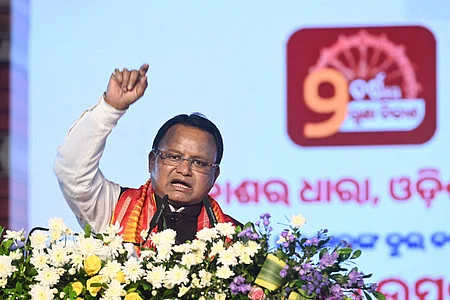
The Odisha state cabinet, presided over by Chief Minister Mohan Charan Majhi, has approved a proposal to correct the spellings of 64 places across 26 districts. The decision was announced on Friday, marking the completion of two years in office for the Bharatiya Janata Party government in the state. The initiative targets a broad range of locations, including towns, villages, and landmarks, whose current spellings in official records are considered inconsistent or historically inaccurate.
The cabinet’s approval sets in motion a process to align these names with their original linguistic and cultural roots, a move that could have implications for government documentation, signage, and mapping. For residents and local administrations, the spelling corrections are expected to reduce confusion in land records, postal services, and public administration. Standardized place names also facilitate better coordination between state and central government agencies, particularly in areas such as disaster management, census operations, and infrastructure planning.
The decision comes as part of a broader push by the Majhi government to assert Odisha’s cultural identity. The state has a rich linguistic heritage, with many place names derived from the Odia language. Over time, colonial-era transliterations and administrative errors have led to variations that officials say need rectification. While the cabinet has not released the full list of affected places, the scope of the project suggests a methodical review of geographic nomenclature across the state.
Each district will likely be required to submit its own list of proposed changes for final approval, ensuring that local historical and linguistic nuances are respected. Critics, however, have questioned the timing of the announcement, noting that it coincides with the government’s second-year anniversary. Some opposition leaders have argued that the focus should remain on pressing issues such as unemployment, infrastructure, and healthcare. Yet the government maintains that correcting place names is a matter of administrative efficiency and cultural pride.
The process is expected to involve multiple departments, including revenue, panchayati raj, and language and culture. Coordination with the Survey of India and the Registrar General of India may also be required to update official maps and census records. The financial implications of the project have not been disclosed, but costs are likely to include new signage, updated databases, and public awareness campaigns. For businesses and investors, standardized place names reduce ambiguity in logistics and legal documentation.
Real estate transactions, for instance, often suffer from discrepancies in land records due to inconsistent spellings. The move could therefore have a positive, if indirect, impact on the ease of doing business in the state. Odisha joins a growing list of Indian states that have undertaken similar exercises. In recent years, governments in Maharashtra, Tamil Nadu, and Karnataka have also moved to correct anglicized or misspelled place names. These efforts reflect a broader trend across the country to reclaim linguistic heritage and streamline governance.
The cabinet’s approval is the first formal step. Implementation will require notification in the state gazette, followed by updates to all official documents. The timeline for completion has not been specified, but officials indicate that the process will be phased over several months. As the BJP government in Odisha enters its third year, the spelling correction project stands as a tangible, if niche, policy achievement. Whether it will resonate with voters remains to be seen, but for now, the focus is on getting the names right.