
Nueva revisión avanza en la inserción precisa de genes en maíz
Una nueva revisión destaca avances en la inserción precisa de genes en maíz, centrada en la integración específica y los “sitios seguros” genómicos. Liderado por investigadores del GCCRC, el estudio explica cómo herramientas de edición genética reducen la aleatoriedad, mejoran la estabilidad y disminuyen costos. El enfoque impulsa el desarrollo más rápido de maíz tolerante a sequía y resiliente al clima. The post Nueva revisión avanza en la inserción precisa de genes en maíz appeared first on Seed World .
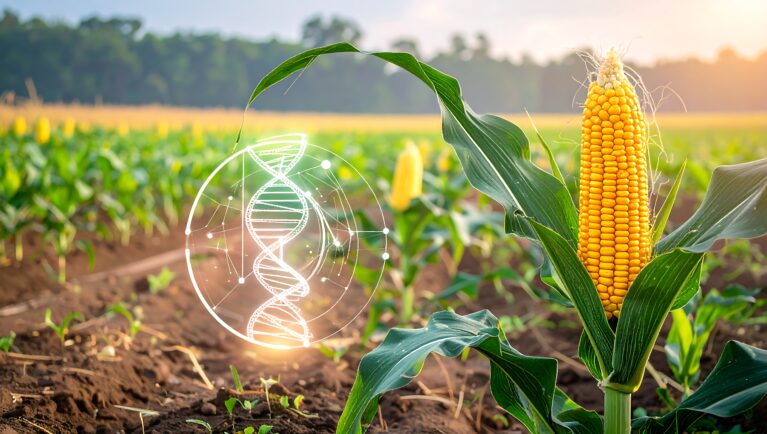
A new review has advanced the precise insertion of genes in maize, focusing on specific integration and "safe" genomic sites. Led by researchers from the GCCRC (Genomic Center for Climate Resilience and Crop Improvement), the study explains how genetic editing tools reduce randomness, improve stability, and lower costs. This approach accelerates the development of drought-tolerant and climate-resilient maize.
The review, conducted by the Joint Research Unit in Genomics for Climate Change (UMiP GenClima/GCCRC), provides a comprehensive overview of emerging technologies for precise gene insertion in plant genomes, with a particular emphasis on maize. Collaborating with the Center for Molecular Biology and Genetic Engineering (CBMEG) and Embrapa Agriculture Digital, the article details how the latest generation of genetic engineering methods can accelerate, increase precision, and enhance the reliability of gene insertion. The study was published in Frontiers in Plant Science.
Based in Unicamp and supported by the São Paulo Research Foundation (Fapesp) and Embrapa, the GCCRC is an applied research center that develops genetic and biotechnological solutions to help crops withstand environmental stress. By integrating gene discovery, genomics, microbiology, plant breeding, and bioinformatics, the center aims to provide more efficient and sustainable agricultural tools in the context of climate change. One of the GCCRC's priorities is to produce transgenic or genetically modified maize with greater drought tolerance.
However, the insertion of target genes in plants often relies on unpredictable methods, where genes can integrate randomly into regions of the genome that are unsafe or unstable. This randomness is one of the main reasons why traditional GMO development can be slow, costly, and imprecise, according to a press release. It also poses a regulatory challenge: biosecurity requirements typically demand that a commercially viable line contains a single intact copy of the inserted gene in a stable and safe genomic location, a result that is difficult to guarantee when integration occurs randomly.
"With the strategy of targeted integration, we can now achieve precise gene insertion in maize, significantly improving the efficiency and reliability of the process," said Dr. Ana Maria dos Santos, a lead researcher at the GCCRC. "By focusing on 'safe' genomic sites, we can ensure that the inserted genes are stable and do not disrupt other important functions in the plant. This not only accelerates the development of new maize varieties but also meets regulatory requirements more effectively."
The review highlights the use of advanced genetic editing tools, such as CRISPR/Cas9 and TALENs, which allow researchers to target specific genomic locations with high precision. These technologies have revolutionized plant breeding by enabling the precise insertion of genes, eliminating the need for random integration. This shift has reduced the time and resources required to develop new maize varieties, as well as minimizing the risk of unintended consequences.
In addition to improving drought tolerance, precise gene insertion in maize could also address other challenges, such as pest resistance and nutritional quality. By focusing on 'safe' genomic sites, researchers can ensure that the inserted genes are stable and do not interfere with other critical plant functions. This stability is crucial for the long-term success of genetically modified crops, as it reduces the likelihood of unwanted genetic changes over time.
The GCCRC's research underscores the potential of genetic editing tools to revolutionize maize breeding and contribute to global food security. By accelerating the development of climate-resilient maize varieties, scientists can help farmers adapt to changing environmental conditions and ensure food production remains sustainable in the face of climate change.
"The ability to precisely insert genes in maize is a game-changer in plant breeding," said Dr. Carlos Eduardo Martins, a researcher at the CBMEG. "It allows us to develop new crop varieties more efficiently, with greater precision, and with fewer unintended consequences. This is particularly important in the context of climate change, where we need to rapidly develop crops that can withstand extreme weather conditions and ensure global food security."
The review also emphasizes the importance of interdisciplinary collaboration in advancing precise gene insertion in maize. By bringing together experts in genomics, molecular biology, plant breeding, and bioinformatics, researchers can develop more effective strategies for targeting 'safe' genomic sites and ensuring the stability of inserted genes.
In conclusion, the precise insertion of genes in maize represents a significant advancement in plant breeding and genetic engineering. By focusing on specific genomic sites and using advanced editing tools, researchers can develop new maize varieties more efficiently, ensuring their stability and meeting regulatory requirements. This progress is crucial for addressing the challenges posed by climate change and ensuring the long-term sustainability of global food production.








