'Nothing Left About Left Front Anymore': Rahul Gandhi Alleges Vijayan-BJP Links At Kerala Rally
Rahul Gandhi said LDF's policies no longer reflected the Left values and accused the ruling alliance of maintaining close ties with the BJP and RSS.
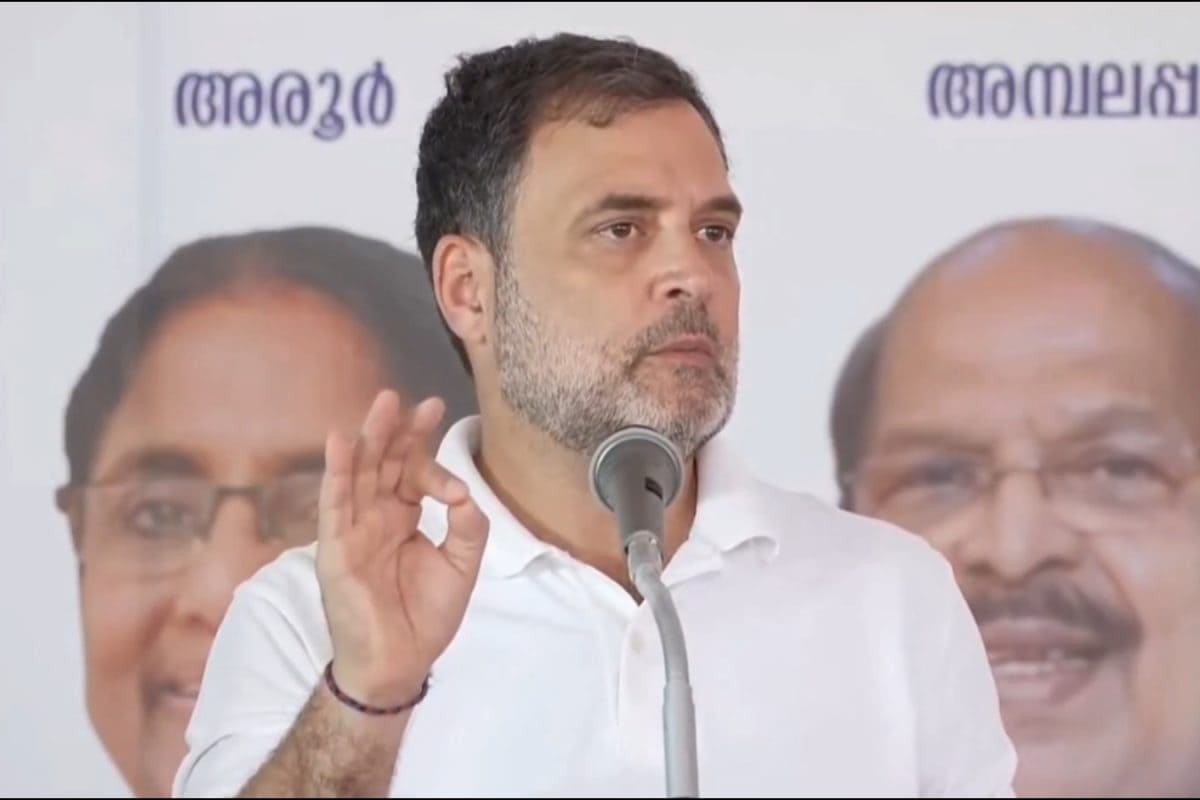
On a sweltering afternoon in Kerala, Rahul Gandhi stood before a sea of supporters, his voice resonating with a sense of urgency as he addressed the state's political landscape. The rally, held in the heart of the region, was a culmination of growing tensions between the Left Democratic Front (LDF) and the Indian National Congress, with Gandhi leveling serious allegations against the ruling alliance. His words, "Nothing left about Left Front anymore," encapsulated a sentiment of disillusionment that had been simmering for some time.
Gandhi began by highlighting the LDF's shift in policies, arguing that the alliance had strayed from its traditional values. Once a bastion of progressive ideals, the LDF had, in his view, become a shell of its former self, prioritizing political survival over the principles that had once defined it. He pointed to specific policy decisions, such as the recent moves to liberalize certain economic sectors, which he claimed were a departure from the socialist ethos that the Left had long championed.
"The Left, as we know it, is no more," Gandhi declared, his tone sharp and critical. "The policies being implemented are not just a deviation; they are a betrayal of the very ideals that brought the LDF to power." He emphasized that the alliance's commitment to social justice, labor rights, and secularism had been compromised, leaving many of its core supporters feeling abandoned.
The allegations soon turned more incendiary as Gandhi accused the LDF of maintaining close ties with the Bharatiya Janata Party (BJP) and the Rashtriya Swayamsevak Sangh (RSS). He suggested that the ruling alliance had entered into a covert understanding with these right-wing groups, a claim that sent shockwaves through the political arena.
"The LDF is not just losing its identity; it is becoming an accomplice to the very forces it was supposed to resist," Gandhi thundered. He provided examples of legislative actions that aligned with BJP-RSS agendas, such as moves to amend certain laws and the promotion of certain cultural policies. These, he argued, were not mere coincidences but rather evidence of a strategic partnership.
Gandhi's accusations were met with a mix of disbelief and anger among the crowd. Many had long suspected that the LDF's policies were not in line with their stated ideology, but hearing it from the mouth of a prominent Congress leader like Gandhi lent credence to their concerns.
The Congress leader also warned of the potential consequences of this alleged alliance. He foresaw a future where the Left's influence in Kerala would wane, paving the way for a BJP-led government. This, he argued, would be a disaster for the state, which had long been a bastion of Leftist politics.
"The people of Kerala deserve better than this," Gandhi implored. "They deserve leaders who stand by their principles and fight for the cause they claim to represent."
In response to Gandhi's allegations, LDF leaders dismissed them as baseless and politically motivated. They insisted that the alliance remained steadfast in its commitment to Leftist values and that any policy decisions were made in the best interest of the state.
Despite their denials, the allegations have undoubtedly cast a shadow over the LDF's image. The question now is whether this rift between the Congress and the LDF will widen or if the alliance can find a way to reconcile its differences.
As the rally drew to a close, Gandhi left the stage amidst a chorus of cheers and chants of support. For him, the rally was not just about Kerala; it was about the future of Leftist politics in India. His words served as a stark reminder that in Indian politics, allegiances can be as fluid as the sands of time, and that the battle for the soul of the Left is far from over.
In the days that followed, the allegations continued to reverberate across Kerala, sparking debates and discussions in homes, offices, and public spaces. The people of Kerala, known for their political astuteness, were left to ponder the implications of these allegations and the future of their state's political landscape.
Meanwhile, the LDF found itself in a precarious position, facing mounting pressure from within and without. The allegations, while not proven, had done enough to sow seeds of doubt and uncertainty. The question of whether the LDF could regain the trust of its supporters and reaffirm its commitment to its core values became paramount.
As the political winds continued to shift, one thing was clear: the rally in Kerala had marked a turning point. It was a moment when the once-unshakable alliance of the Left found itself on shaky ground, and when the allegations of a secret BJP-RSS link threatened to upend the very foundations of Kerala's political identity.
In the end, the rally served as a stark reminder of the complexities of Indian politics, where ideology often collides with pragmatism, and where allegiances can be as fleeting as the tides of the Arabian Sea. As the dust settled, one thing was certain: the battle for the soul of the Left in Kerala was far from over, and the allegations of a Vijayan-BJP link would continue to shape the state's political narrative in the years to come.