‘Not Sourav Ganguly, But I’m Bengali’: BJP's Leander Paes Pushes Back On Identity Questions
Leander Paes recently joined the Bharatiya Janata Party, a move seen as important ahead of the upcoming West Bengal Assembly elections.
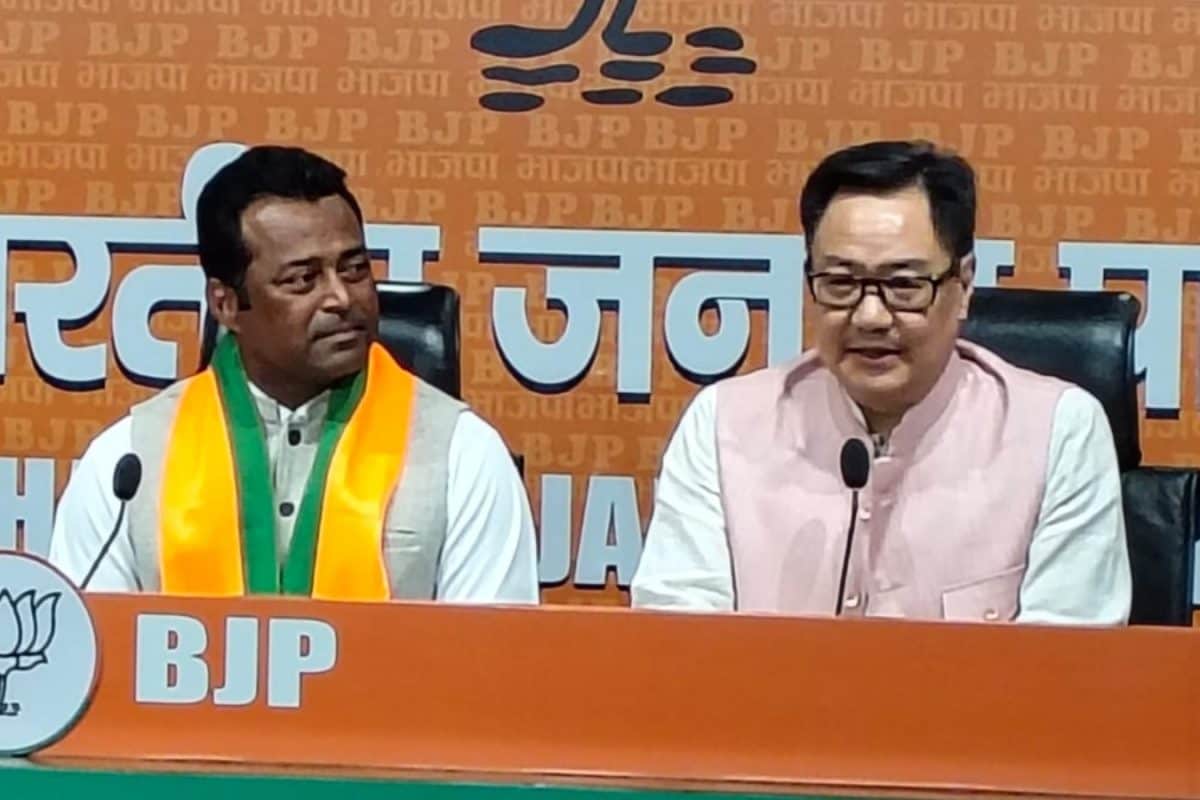
Leander Paes, the former world number one tennis player, has recently made headlines by joining the Bharatiya Janata Party (BJP), a move that has been closely watched in the context of the upcoming West Bengal Assembly elections. Paes' decision to align with the BJP has sparked discussions about his identity and the role of personal identity in politics. In a recent interview, Paes addressed these questions, emphasizing his Bengali heritage and his commitment to the values of the BJP.
Paes, who was born in Kolkata and raised in a Bengali family, has always been proud of his roots. However, his decision to join the BJP, a party often associated with Hindutva ideology, has led some to question his identity. Paes, who has been a prominent figure in Indian tennis, has faced scrutiny over his political affiliations, with some critics suggesting that his move to the BJP is a strategic one aimed at gaining political influence.
In response to these questions, Paes has firmly stated that his Bengali identity is not in question. He has repeatedly emphasized that his decision to join the BJP is based on his belief in the party's vision and policies, not on any attempt to redefine his personal identity. Paes has highlighted his commitment to the BJP's focus on development, governance, and national unity, arguing that these values align with his own principles.
Paes' decision to join the BJP has been seen as significant in the context of the upcoming West Bengal Assembly elections. The state, which has a large Bengali population, is traditionally considered a stronghold of the Trinamool Congress, led by Mamata Banerjee. The BJP, which has been struggling to gain a foothold in West Bengal, sees Paes' inclusion as a strategic move to appeal to the state's diverse population and to challenge the Trinamool Congress's dominance.
Paes' entry into politics has also prompted discussions about the role of sports personalities in Indian politics. In a country where sports are deeply intertwined with national identity, figures like Paes have the potential to influence public opinion and sway elections. Paes' decision to join the BJP has been viewed as an attempt to leverage his popularity and influence to support the party's campaign in West Bengal.
However, Paes has been clear in his message, stating that his primary allegiance is to his Bengali identity and his commitment to the BJP's policies. He has rejected suggestions that his move is a betrayal of his roots, arguing instead that his decision reflects his belief in a unified and inclusive India. Paes has also emphasized that his political affiliation should not be seen as a reflection of his personal identity, but rather as a reflection of his political beliefs and values.
The reaction to Paes' decision to join the BJP has been mixed. Supporters of the BJP have welcomed his inclusion, seeing it as a boost to the party's campaign in West Bengal. Critics, however, have questioned his motivations and suggested that his move is a calculated political strategy rather than a genuine expression of his identity.
Despite the controversy, Paes remains steadfast in his decision. He has repeatedly stressed that his Bengali heritage is not in question and that his identity is not up for debate. Paes' message is clear: he is not Sourav Ganguly, but he is Bengali, and his decision to join the BJP is a reflection of his political beliefs, not an attempt to redefine his personal identity.
In the weeks leading up to the West Bengal Assembly elections, Paes' role in the BJP's campaign will be closely watched. As a high-profile figure with a strong connection to the state, his influence could potentially sway voters and impact the election's outcome. However, Paes' decision to join the BJP also highlights the complex interplay between personal identity and political affiliation in India.
In a country where identity politics plays a significant role in shaping political discourse, Paes' case serves as a reminder of the challenges faced by individuals who choose to enter politics. For Paes, his decision to join the BJP is not just a political move, but a statement of his beliefs and values. As the West Bengal Assembly elections approach, Paes' story will undoubtedly continue to unfold, offering insights into the intricate relationship between identity, politics, and personal conviction.