‘Not Kashmir’: Rajasthan's Bikaner turns white after intense hailstorm | Watch
Among India’s driest regions, Bikaner saw 30 degree celcius on April 4, down from 40 degree celcius a year ago, on the same date
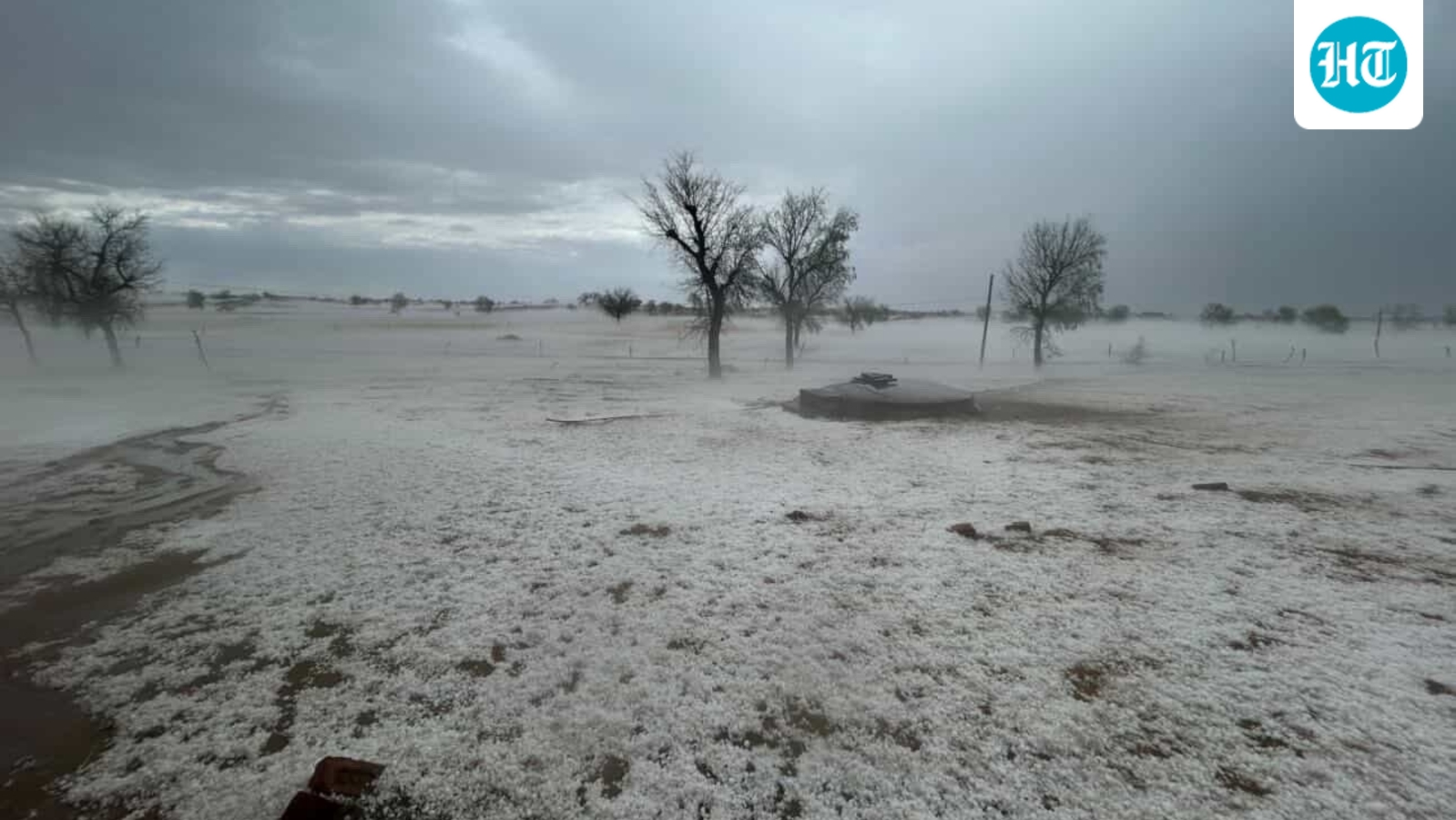
In a stark contrast to its usual arid climate, the desert city of Bikaner in Rajasthan experienced an unusual hailstorm that turned the landscape a startling white. This unexpected weather event brought the region's climate patterns into sharp focus, as the city recorded a temperature of 30 degrees Celsius on April 4, significantly lower than the 40 degrees Celsius recorded on the same date a year ago.
Bikaner, often referred to as the "City of Palaces," is known for its harsh desert conditions and scorching heat. The city's average annual rainfall is just over 200 millimeters, making it one of the driest regions in India. However, the recent hailstorm served as a reminder that even the most predictable climates can be unpredictable.
The hailstorm, which lasted for several hours, brought the city to a standstill. Streets were covered in a thick layer of hail, causing traffic chaos and forcing many residents to seek shelter indoors. The intensity of the storm was such that it left a white blanket over the usually barren landscape, transforming the city into a surreal winter wonderland.
Meteorologists are still trying to understand the exact cause of this unusual weather phenomenon. While the region is prone to extreme temperatures, hailstorms are rare and not typically associated with Bikaner's climate. Some experts suggest that climate change could be playing a role in these unpredictable weather patterns.
"The frequency and intensity of extreme weather events are on the rise, and this hailstorm in Bikaner is a clear indication of that," said Dr. Anjali Garg, a climate scientist at the Indian Institute of Tropical Meteorology. "We are seeing more instances of such events, and it's crucial for us to understand the implications of these changes."
The hailstorm not only disrupted daily life in Bikaner but also had a significant impact on the local economy. Many businesses, particularly those in the agriculture sector, suffered losses due to the unexpected weather event. Farmers reported that their crops were damaged, leading to a potential decrease in productivity.
Despite the challenges posed by the hailstorm, residents of Bikaner displayed resilience and adaptability. Community members rallied together to clear the streets and help those in need. The city's authorities also sprang into action, deploying teams to restore services and ensure the safety of the public.
This unusual weather event has sparked a wider discussion about climate change and its impact on India's arid regions. With the country experiencing an increasing number of extreme weather events, there is a growing need for policies and strategies to mitigate the effects of climate change.
"The hailstorm in Bikaner is a wake-up call for us all," said Arun Pawar, a local environmental activist. "We need to take urgent action to address climate change and its consequences. Our traditional ways of living in these regions are at risk, and we must adapt to the changing climate."
As Bikaner slowly recovers from the hailstorm, the city's residents and authorities are left to ponder the implications of this unusual weather event. While the storm was a temporary disruption, its impact on the region's climate and economy serves as a reminder of the need for sustainable practices and preparedness for future extreme weather events.
In the aftermath of the hailstorm, Bikaner's residents are learning to coexist with the unpredictability of their climate. The city, once synonymous with desert heat, now bears the scars of a winter storm, a poignant reminder of the shifting dynamics of India's weather patterns. As the city returns to normalcy, the memory of the hailstorm lingers, a stark testament to the power of nature and the need for adaptability in the face of climate change.
The hailstorm in Bikaner has left a lasting impression on the city and its people. While the weather has returned to normal, the experience has served as a catalyst for change, prompting the region to reevaluate its approach to climate resilience. The event has highlighted the need for comprehensive climate action plans and the importance of investing in infrastructure that can withstand extreme weather events.
In the coming months and years, Bikaner will face the challenges of rebuilding and adapting to the new normal. The hailstorm has underscored the vulnerability of the region's ecosystem and the need for sustainable agricultural practices to ensure food security. It has also brought to the forefront the importance of community resilience and the role of local governments in preparing for and responding to climate-related disasters.
As the world continues to grapple with the consequences of climate change, the hailstorm in Bikaner serves as a microcosm of the challenges faced by many regions. It is a reminder that even in the driest of climates, nature can surprise us with its unpredictability. The experience of Bikaner's residents is a call to action for policymakers and citizens alike, urging us to take decisive steps to address the climate crisis and build a more resilient future for all.
In the end, the hailstorm in Bikaner is more than just a weather event; it is a powerful symbol of the interconnectedness of our environment and the need for collective action to safeguard our planet. As the city recovers, it does so with a newfound awareness of the delicate balance between human activity and the natural world. The white landscape of Bikaner, once a stark reminder of its arid climate, now stands as a testament to the transformative power of nature and the resilience of its people.