‘Not Greenwich’: Dharmendra Pradhan Says Ujjain Is Original Centre Of Global Time
Education Minister Dharmendra Pradhan said Mahakal Standard Time based on Ujjain should replace GMT, and highlighted Ujjain as ancient global time and science centre.
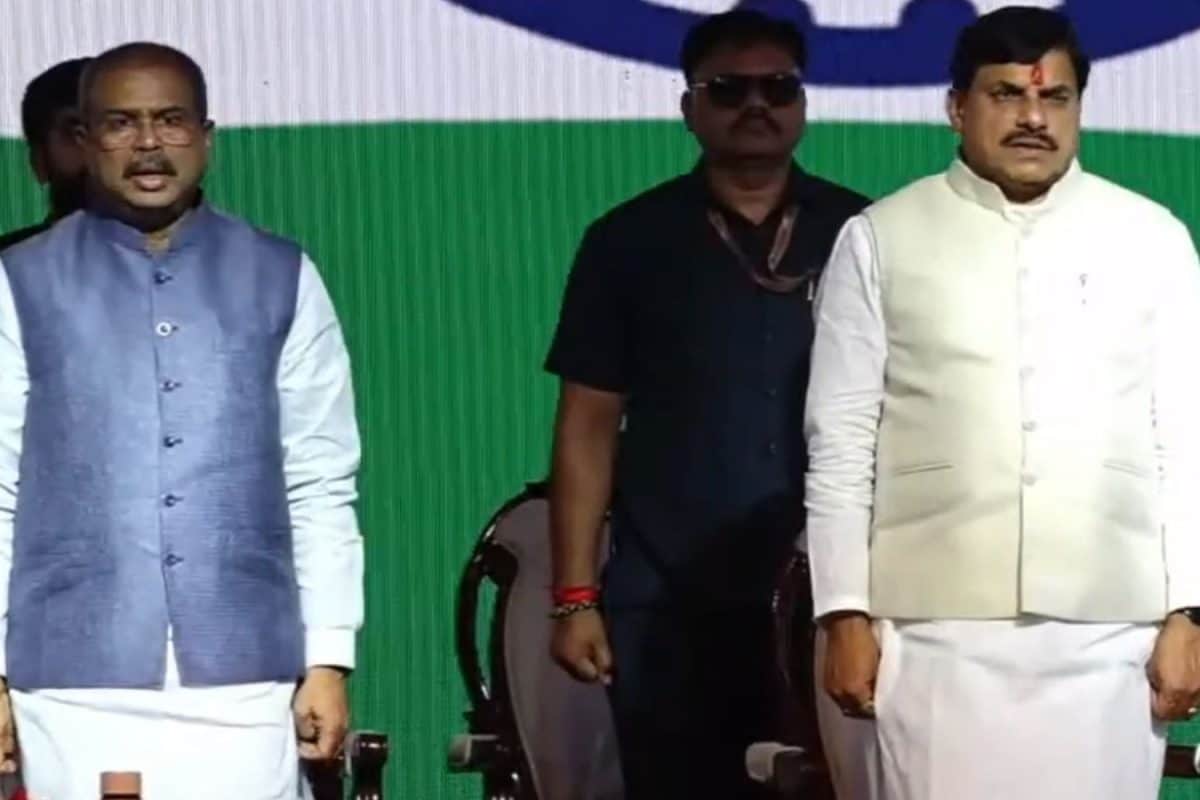
In a surprising turn of events, India's Education Minister Dharmendra Pradhan has proposed that the country's Mahakal Standard Time, based in Ujjain, should replace the globally accepted Greenwich Mean Time (GMT) as the primary timekeeping system. This bold suggestion comes as Pradhan emphasizes Ujjain's historical significance as an ancient global time and science centre. The idea has sparked widespread debate, with some hailing it as a return to India's rich heritage, while others question its practicality and feasibility.
Ujjain, a city in the state of Madhya Pradesh, has long been revered for its astronomical and scientific contributions. Ancient texts, such as the Vedas and the Siddhanta texts, have referred to Ujjain as the "Holy City" and the "Centre of the Universe." It was during the Mauryan Empire that Ujjain became a significant hub for astronomical studies, with scholars like Aryabhata and Brahmagupta contributing to the field. The city's strategic location, situated at a longitude of 75.85 degrees east, has historically been considered the midpoint of the Earth's longitudinal extent. This belief led to the idea that Ujjain's time should be the standard for the entire world.
Pradhan's proposal is not without precedent. In the past, several civilizations have used their own time standards. For instance, the ancient Egyptians used the heliacal rising of Sirius as their solar year, while the Mayans developed their own complex calendar system. However, the adoption of a single global time standard became necessary with the advent of railways, telegraphs, and later, air travel. In 1884, the International Meridian Conference established Greenwich Mean Time (GMT) as the primary reference, with the Prime Meridian passing through Greenwich, London.
The Mahakal Standard Time, proposed by Pradhan, is based on Ujjain's longitude. This would mean shifting the global time standard by approximately 49 minutes and 12 seconds. While this may seem like a minor adjustment, it could have significant implications for international coordination, business operations, and global communication.
Proponents of the Mahakal Standard Time argue that it would be a fitting tribute to India's astronomical heritage and a recognition of its historical role in shaping scientific knowledge. They contend that the world owes a debt to ancient Indian scholars whose work laid the foundation for modern astronomy and timekeeping. By adopting Ujjain as the new global time standard, they believe, India would be reclaiming its rightful place in the annals of scientific history.
Critics, however, express concerns about the logistical challenges and potential disruptions that such a shift would entail. The global financial markets, airline schedules, and international conferences would all need to be recalibrated, leading to significant operational complexities. Moreover, the vast majority of timekeeping systems and devices worldwide are already aligned with GMT. The transition would require widespread updates and adjustments, which could be costly and time-consuming.
Others argue that the proposal is more symbolic than practical. While it may be important to celebrate and acknowledge India's historical contributions to science, they question whether changing the global time standard is the most effective way to do so. They suggest that focusing on education, research, and cultural preservation would be more impactful in honoring India's scientific legacy.
The debate over the Mahakal Standard Time also touches upon broader geopolitical implications. Some view the proposal as an assertion of India's growing influence and a bid to challenge the Western-centric global systems that have dominated since colonial times. Others see it as a harmless, albeit symbolic, gesture that underscores India's rich cultural and scientific heritage.
Regardless of the outcome, Dharmendra Pradhan's proposal has reignited a global conversation about the historical significance of timekeeping and the role of different civilizations in shaping it. It serves as a reminder that while our modern world is increasingly interconnected, the foundational systems we rely on often bear the imprint of specific historical and cultural contexts.
As the discussion continues, it remains to be seen whether the Mahakal Standard Time will gain traction or if GMT will continue to serve as the unofficial heartbeat of the global community. One thing is certain, however: Pradhan's bold suggestion has undeniably added a new chapter to the ever-evolving story of time.