
‘New trick’ at 50: Fiction. And now, raves.
Janet Rich-Edwards on the Radcliffe moment that helped turn an epidemiologist into a novelist
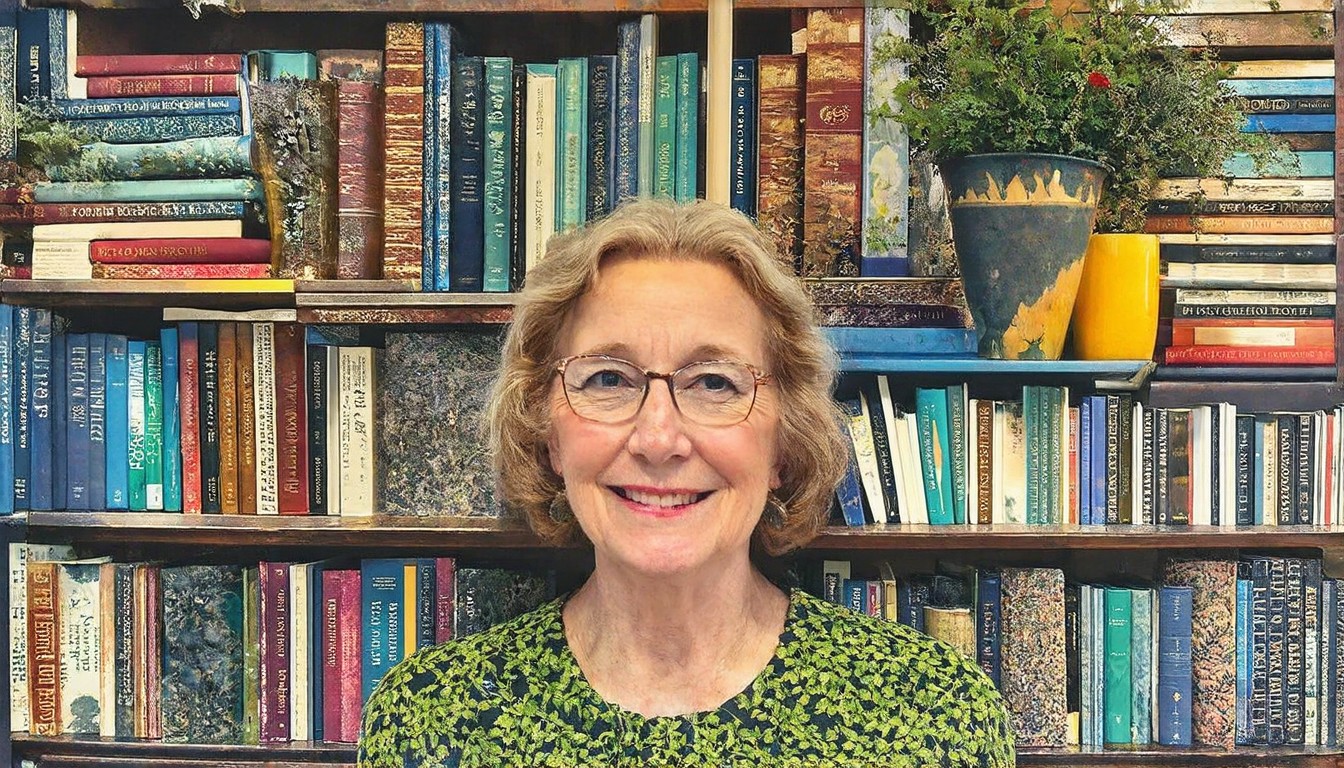
Janet Rich-Edwards, an epidemiologist and Harvard Medical School associate professor of medicine at Brigham and Women’s Hospital, recently made a splash in the literary world with her debut novel, “Canticle.” The inspiration for this critically acclaimed work came from an unexpected source: a lecture at Radcliffe College.
In 2018-2019, Rich-Edwards was a Helen Putnam Fellow at Radcliffe, where she was immersed in an academic environment that would shape her creative journey. During her fellowship, she attended a presentation by fellow Radcliffe scholar Katie Bugyis, who spoke about liturgical books created and used by medieval nuns. As Rich-Edwards listened to the talk, she felt a profound connection to the history and spirituality of these women. “You sort of feel a connection back through centuries,” she recalled. “As academics, we’re all book-lovers ourselves, and to be reminded how sacred books are feels a little bit like coming home.”
This moment at Radcliffe ignited a spark in Rich-Edwards, leading her to write “Canticle,” a novel set in 13th-century Bruges. The story follows Aleys, a young woman prone to mystical visions who flees an unwanted marriage and joins the beguines, a group of economically self-sufficient lay religious women who lived outside the rule of the church. When Aleys begins to perform what might be miracles, she becomes a target of desire for many, including an ambitious local bishop. The novel delves into themes of faith, doubt, and solidarity among women seeking spiritual and intellectual freedom.
Despite her background in epidemiology and medicine, Rich-Edwards found her passion for fiction at the age of 50. Her Radcliffe fellowship project focused on childhood trauma and its impact on addiction, appetite, and health, which might seem an unlikely precursor to a literary career. However, the lecture by Bugyis provided the catalyst she needed to explore a different creative avenue. “I’m a believer in the power of stories,” Rich-Edwards explained. “They have the ability to transport us to other worlds and help us understand complex emotions and experiences.”
“Canticle” has been widely praised, earning recommendations from publications such as The New York Times and People magazine. The novel’s success highlights the idea that one’s professional expertise can sometimes lead to unexpected creative outlets. For Rich-Edwards, her time at Radcliffe and the chance encounter with Bugyis’ lecture opened a new chapter in her life, transforming her from an epidemiologist to a novelist.
In an interview, Rich-Edwards reflected on the importance of embracing new experiences and challenges. “Life is full of opportunities to grow and discover passions we might not have known we had,” she said. “It’s about being open to these serendipitous moments that can change the course of your life.”
As Rich-Edwards continues to build her literary career, her story serves as a reminder of the power of curiosity, the value of interdisciplinary learning, and the enduring allure of storytelling. Her journey from academic research to bestselling fiction demonstrates that the boundaries between professions and passions can be porous, and that sometimes, the most unexpected events can lead to the most fulfilling pursuits.









