Netanyahu Downplays Trump Row, Affirms Hezbollah Disarmament
Israeli Prime Minister Benjamin Netanyahu has reportedly sought to de-escalate recent tensions with US President Donald Trump, emphasizing a unified stance on the critical objective of disarming the Lebanese militant group Hezbollah, a shared strategic priorit
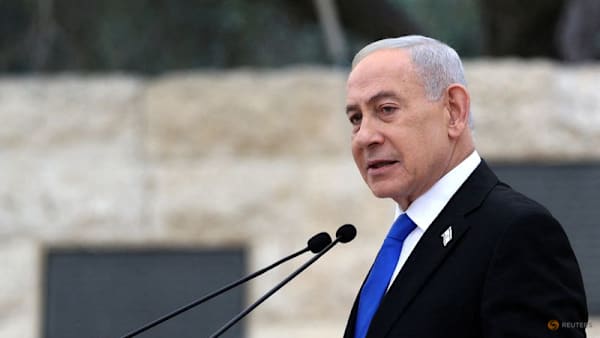
In a significant diplomatic move from Jerusalem on Wednesday, Israeli Prime Minister Benjamin Netanyahu reportedly sought to temper perceptions of a recent disagreement with US President Donald Trump. The Prime Minister's statement, delivered on June 3, emphasized a crucial point of convergence between the two leaders: a shared and resolute commitment to the strategic objective of disarming Hezbollah. This public clarification from Netanyahu underscores the importance placed on maintaining a unified front between Israel and its closest ally, the United States, particularly concerning pressing regional security challenges. The reported "row," while not detailed in its specifics, was evidently deemed significant enough for the Israeli leader to address directly, indicating a proactive effort to ensure that any perceived friction does not overshadow fundamental areas of mutual interest and cooperation.
The relationship between the United States and Israel has historically been characterized by a deep strategic alliance, built on shared democratic values and common security interests in a complex Middle Eastern landscape. This enduring partnership often involves close coordination on defense, intelligence, and diplomatic fronts. Therefore, any indication of a "row" or significant disagreement between the leaders of these two nations naturally draws considerable attention from international observers and regional actors alike. Netanyahu's swift action to downplay such reports suggests a deliberate strategy to reinforce the foundational strength of this alliance, ensuring that external perceptions align with the underlying reality of a robust and collaborative relationship. The stability of this bilateral bond is often seen as a cornerstone of regional security.
High-level diplomacy, by its very nature, can involve periods of intense negotiation and occasional differences in approach or emphasis, even among the closest allies. What might be perceived as a "row" could, in some instances, simply be a robust exchange of views or a temporary divergence on specific tactical matters rather than a fundamental rift. Netanyahu's public statement, therefore, serves not only to clarify the current state of affairs but also to manage expectations and counter any narratives that might seek to exploit perceived divisions. By focusing on a shared, overarching goal like the disarmament of Hezbollah, the Israeli Prime Minister strategically redirects attention towards the enduring strategic alignment that underpins the US-Israel partnership, rather than dwelling on transient diplomatic nuances.
Hezbollah, a powerful Shi'ite political party and militant group based in Lebanon, represents a significant and persistent security concern for Israel and a destabilizing force in the broader Middle East. Established in the 1980s, the group maintains a formidable arsenal of weaponry, including an extensive rocket and missile capability, which it has historically directed towards Israel. Beyond its military prowess, Hezbollah also wields considerable political influence within Lebanon, often operating as a state within a state. Its close ties with Iran further complicate regional dynamics, positioning it as a key proxy in the ongoing geopolitical struggle between Tehran and its adversaries, including Israel and the United States.
For Israel, the disarmament of Hezbollah is not merely a policy preference but a core national security imperative. The presence of a heavily armed, non-state actor on its northern border, openly hostile and capable of launching devastating attacks, poses an existential threat. Israeli defense strategists have long viewed Hezbollah's growing military capabilities, particularly its precision-guided missile projects, with extreme alarm. Achieving the disarmament of such a group would fundamentally alter the security landscape along Israel's northern frontier, significantly reducing the immediate threat of conflict and allowing for greater regional stability. This objective is consistently at the forefront of Israel's diplomatic and security agenda.
The United States, too, shares a profound interest in the disarmament of Hezbollah, viewing the group as a designated foreign terrorist organization and a key destabilizing force. Washington's concerns extend beyond Israel's immediate security, encompassing broader regional stability, counter-terrorism efforts, and the prevention of Iranian proxy influence. A disarmed Hezbollah would weaken Iran's regional leverage, enhance the sovereignty of the Lebanese state, and reduce the likelihood of wider conflicts that could draw in other regional and international powers. The US commitment to this goal aligns with its broader strategy of promoting peace and security in the Middle East and supporting its allies against militant threats.
Achieving the disarmament of Hezbollah is, however, an immensely complex undertaking, fraught with significant challenges. The group's deep entrenchment within Lebanese society, its political representation, and its role in providing social services make it far more than just a military entity. Any efforts towards disarmament would require a delicate balance of international pressure, regional diplomacy, and internal Lebanese consensus, which has historically been difficult to achieve. The geopolitical realities of the region, including the ongoing Syrian conflict and the broader Iran-Saudi rivalry, further complicate prospects for a straightforward resolution, making the shared commitment of the US and Israel all the more critical.
Netanyahu's emphasis on the shared goal of disarming Hezbollah, despite any reported diplomatic friction, serves as a powerful reminder of the strategic depth of the US-Israel alliance. It signals that while tactical disagreements may arise, the fundamental objectives concerning regional security remain firmly aligned. This alignment provides a clear framework for continued cooperation, whether through intelligence sharing, joint military exercises, or coordinated diplomatic initiatives aimed at curbing the influence of hostile non-state actors. Such a unified stance is essential for presenting a credible deterrent to adversaries and for pursuing long-term stability in a volatile part of the world.
Ultimately, the Israeli Prime Minister's statement from Jerusalem on Wednesday highlights the pragmatic approach often adopted in high-stakes international relations. By publicly affirming a common strategic purpose with President Trump, Netanyahu not only downplayed a reported "row" but also reinforced the enduring strength and shared vision that define the relationship between the United States and Israel. This focus on a critical, mutual objective like the disarmament of Hezbollah underscores the ongoing commitment of both nations to confronting regional threats and working collaboratively towards a more secure Middle East. It reaffirms that, despite any transient political nuances, the core strategic partnership remains robust and focused on key security imperatives.