
NASA’s Perseverance rover completes the first AI-planned drive on Mars
NASA’s Perseverance rover has just made history by driving across Mars using routes planned by artificial intelligence instead of human operators. A vision-capable AI analyzed the same images and terrain data normally used by rover planners, identified hazards like rocks and sand ripples, and charted a safe path across the Martian surface. After extensive testing in a virtual replica of the rover, Perseverance successfully followed the AI-generated routes, traveling hundreds of feet autonomously.
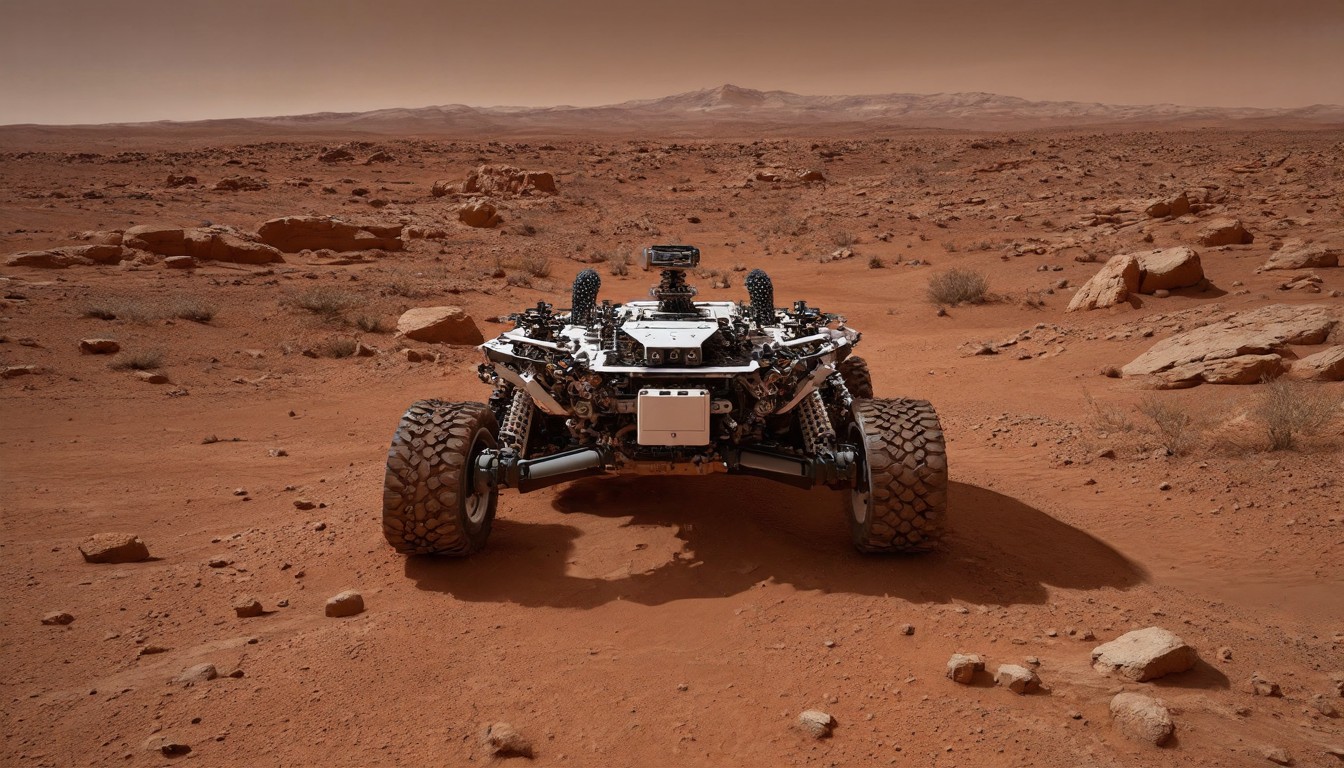
NASA’s Perseverance rover has achieved a historic milestone on Mars by completing the first AI-planned drive on the planet. This groundbreaking achievement marks a significant step forward in the use of artificial intelligence (AI) for space exploration, as the rover successfully navigated its way across the Martian surface using routes generated by an AI system.
The Perseverance rover, which landed on Mars in February 2021, has been equipped with advanced AI capabilities designed to assist in its operations. The AI system, known as the "Autonomous Navigation System" (ANS), was tasked with analyzing the same images and terrain data that human operators typically use to plan safe routes for the rover. Unlike previous missions, where human planners meticulously mapped out paths to avoid hazards such as rocks, sand ripples, and other obstacles, the AI was given the responsibility of identifying these dangers and charting a safe course.
The development of the ANS began several years ago, with NASA researchers recognizing the potential of AI to enhance the efficiency and safety of rover operations on Mars. The AI was trained using a vast dataset of images and terrain data collected by previous Mars rovers, including the Curiosity and Opportunity rovers. By analyzing these datasets, the AI learned to recognize patterns and hazards that could pose a threat to the rover’s mobility.
Once the AI was trained, it underwent extensive testing in a virtual replica of the Perseverance rover. This virtual environment allowed researchers to simulate various scenarios and terrain conditions, ensuring that the AI could accurately identify and avoid hazards. After passing these tests, the AI was ready to be deployed on the actual rover.
On the day of the historic drive, the AI analyzed real-time images and terrain data from the Perseverance rover’s cameras and sensors. It identified potential hazards in the rover’s path and generated a safe route that avoided these obstacles. The rover then followed this AI-generated path, traveling hundreds of feet across the Martian surface autonomously.
The success of this AI-planned drive is a testament to the growing role of artificial intelligence in space exploration. By leveraging AI to assist in navigation and decision-making, NASA can enhance the efficiency and safety of its missions, allowing rovers to explore more challenging terrains and complete their objectives more effectively.
This achievement also has implications for future Mars missions. As NASA prepares for the eventual goal of sending humans to Mars, the use of AI-driven autonomous systems will become even more critical. These systems will be essential for ensuring the safety of astronauts and enabling them to explore the Martian surface with greater confidence.
In addition to navigation, AI is also being explored for other applications on Mars, such as scientific analysis and resource utilization. For instance, AI algorithms can assist in identifying potential samples of interest for the rover’s scientific instruments, helping researchers prioritize their exploration efforts.
The Perseverance rover’s AI-planned drive is just one example of how AI is transforming space exploration. As the technology continues to advance, it promises to unlock new frontiers of discovery and enable humanity to venture further into the unknown reaches of our solar system.
NASA’s success with the AI-planned drive on Mars is a significant step forward in the integration of artificial intelligence into space missions. It not only demonstrates the potential of AI to enhance the capabilities of rovers but also paves the way for future missions that will rely on these advanced technologies to achieve their goals. As we look towards the future of space exploration, the role of AI is poised to become even more critical, shaping the way we explore and understand the planets beyond our own.









