
NASA’s 1977 computers aboard Voyager are still working in interstellar space
Check out the retro tech powering the spacecraft 15 billion miles from Earth. The post NASA’s 1977 computers aboard Voyager are still working in interstellar space appeared first on Popular Science .
NASA’s 1977 computers aboard Voyager are still working in interstellar space
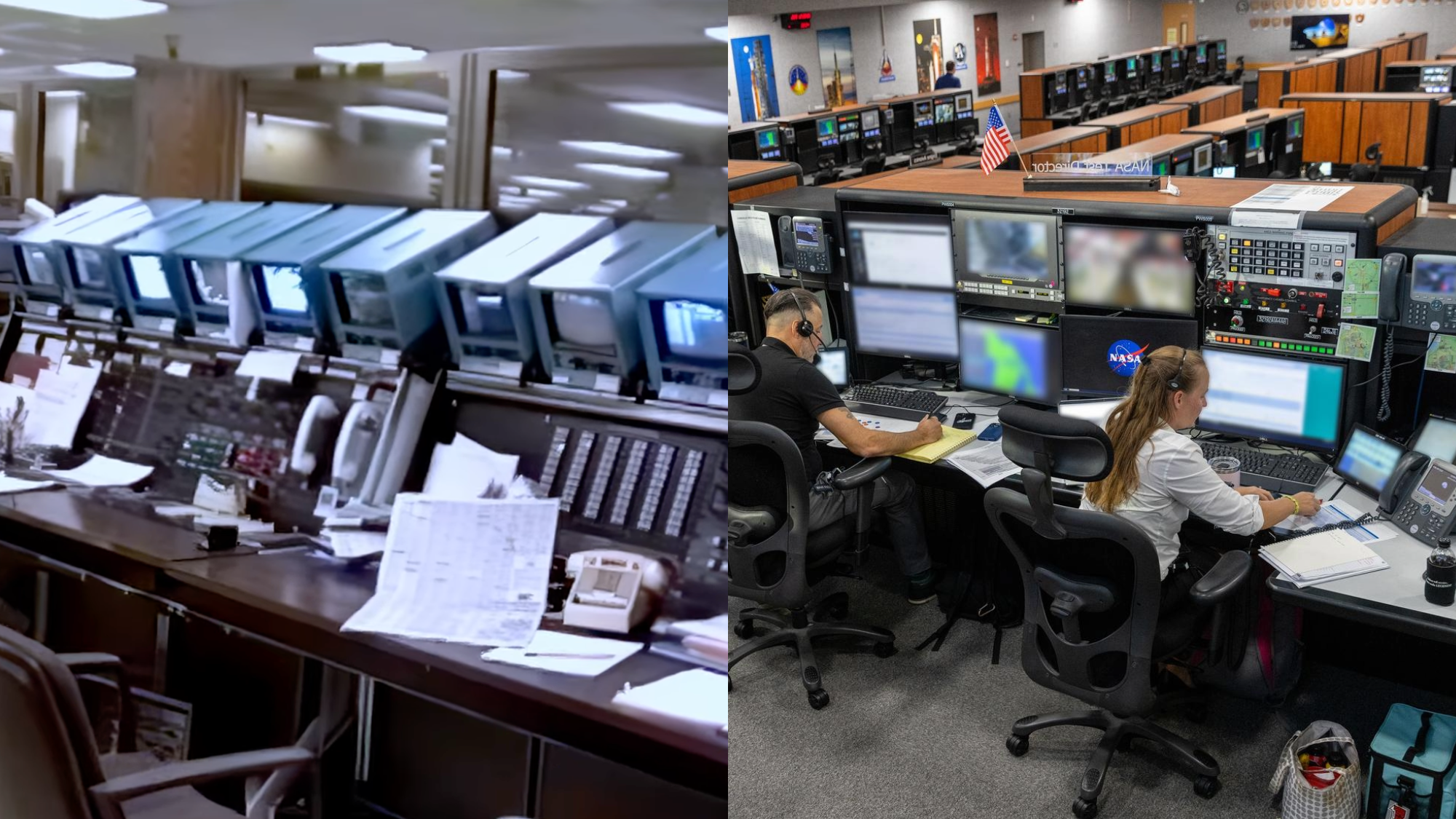
As millions around the world watched on smartphones, TVs, or in person, Artemis II and its four-person crew burst from the ground on April 1 and successfully began its 10-day journey to the moon. While all eyes were focused on the Orion spacecraft, it’s worth remembering that it takes a small army of humans—and computers—to make these kinds of awe-inspiring journeys possible. And just like everyday tech users, NASA also has to upgrade its systems from time to time, and the one powering Artemis looks nothing like their relic ancestors. That doesn’t necessarily mean those older versions did not work.
Resurfaced footage released by YouTuber Gary Friedman shows some of the sturdy computing hardware that powered Voyager 1 and 2, a pair of spacecraft first launched in 1977 and tasked with taking a trip through our solar system. Incredibly, both of these spacecraft are still functional in deep space, despite relying on vintage hardware older than many of NASA’s engineers today.
The roughly 14-minute video shows a NASA engineer taking viewers on a tour of Building 230 at the Jet Propulsion Laboratory in southern California. As he walks through the room, he passes an assortment of refrigerator-sized computers made by Univac and IBM. He also stops to acknowledge punch cards used to communicate with the spacecraft, old tape drives, and a communication hub lined with phones and small monitors that one engineer calls “the heartbeat of the enterprise.” The voice behind the camera says he is documenting these historic devices, “before they replace it all with mainframes.”
All of this ancient-looking hardware was tasked with overseeing the operational safety of the Voyager craft, which are currently well over 16 billion miles from Earth in interstellar space. On board both spacecraft is a suite of custom-made computers and electronics built prior to 1977. Each of the Voyager craft has three computer systems onboard, with a total memory capacity of 64 kilobytes—a fraction of what a modern smartphone might have.
Despite their age, these computers have proven to be incredibly reliable. Voyager 1, launched in 1977, became the first human-made object to enter interstellar space in 2012, and Voyager 2 followed in 2018. Both spacecraft have sent back data and images from the outer reaches of our solar system, including close-up views of the gas giants Jupiter and Saturn, and their moons.
The computers on board the Voyagers are designed to be highly resilient. They use a combination of solid-state electronics and mechanical switches to minimize the risk of errors caused by radiation in space. The systems are also designed to operate in a wide range of temperatures, from extremely cold to very hot, depending on the spacecraft’s position relative to the sun.
The longevity of these computers is a testament to the engineering prowess of the time. NASA’s engineers at the time had to design systems that would last for decades, with minimal maintenance and support. The Voyager computers were built to withstand the harsh conditions of space, and they have done so remarkably well.
Today, NASA’s spacecraft use more advanced computers, but the legacy of the Voyager systems lives on. The technology of the past has paved the way for the advancements of today, and the success of missions like Artemis II is built on the foundation of those earlier achievements.
As we continue to explore the cosmos, the story of the Voyager computers serves as a reminder of the enduring power of human ingenuity and the importance of preserving our technological history. These old computers may seem outdated by today’s standards, but they have played a crucial role in our quest to understand the universe and our place within it.









