My dream pair of AR gaming glasses needs to have these nine features
I’ve spent months in the lab testing the latest AR glasses from Xreal and Viture. By “lab,” I mean cozied up on my couch each night, playing my Steam Deck or Nintendo Switch 2 on a huge, virtual screen that only I can see through these glasses. Using AR glasses as a portable display for […]
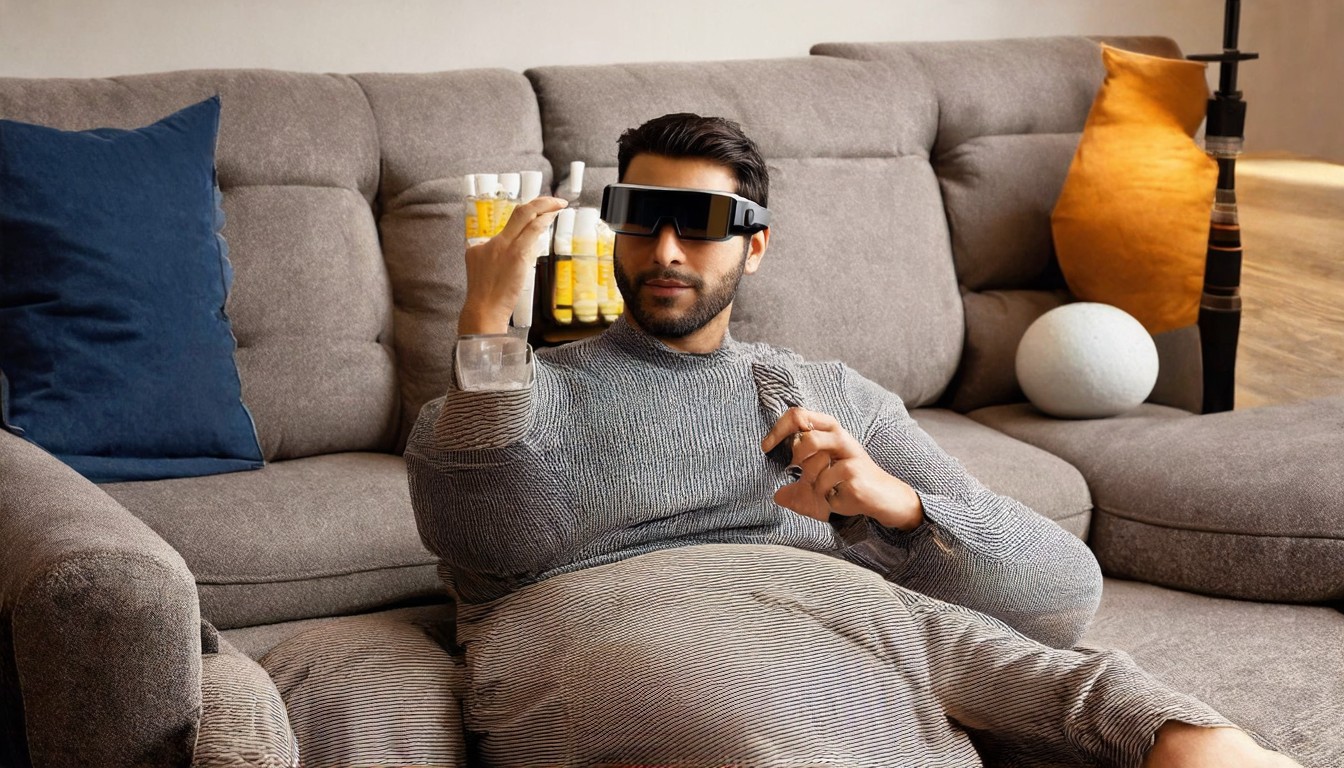
I’ve spent months in the lab testing the latest AR glasses from Xreal and Viture. By “lab,” I mean cozied up on my couch each night, playing my Steam Deck or Nintendo Switch 2 on a huge, virtual screen that only I can see through these glasses. Using AR glasses as a portable display for your handhelds (and other USB-C devices, like phones, tablets, and laptops) is nothing new. However, the latest versions have one must-have feature in common: three degrees of freedom, or 3DoF, which lets you anchor the screen anywhere you’d like, as opposed to having it nauseatingly wiggle with every head movement. This won’t make AR glasses worth their $400-plus costs for most gamers. But this makes them more useful if you travel a lot, or if you want a more ergonomic handheld setup.
I tested three popular models — Xreal’s $449 1S, its $649 One Pro, and Viture’s $549 Beast — and there is no best pair that everyone should buy. Each does a few things well and a few things not so well, which leaves me no other choice than to list out the ingredients that would make for one perfect pair of AR glasses for gaming.
The comfort, sound quality, and ease of use of Xreal’s glasses
All of these AR glasses are heavier and thicker than regular glasses, but Xreal’s 1S glasses are the lightest model of the bunch. On my kitchen scale, they weigh 85 grams (for comparison, the One Pro glasses weigh 91 grams, while the Viture Beast glasses are 96 grams). A small thing that’s actually a big deal is that they (as well as the One Pro) have great weight distribution and thinner temple arms than Viture’s Beast, which helps me feel less strain on my ears. It’s great that Xreal’s most affordable AR glasses are just as comfortable as its most expensive pair.
The 1S and One Pro glasses deliver better-sounding audio through their temple arms than Viture’s latest glasses. Xreal’s audio is tuned by Bose, and the glasses have balanced audio with surprisingly good low-end performance. Viture’s audio, while not bad, doesn’t quite match the quality of Xreal’s. The 3DoF feature is present in all three models, but Xreal’s implementation seems slightly more refined, making it easier to anchor the screen without any unwanted movement.
The versatility and customization of Viture’s software
While Xreal’s hardware is impressive, Viture’s software offers a level of customization that sets it apart. The Viture Beast comes with a robust software suite that allows users to tweak settings, adjust the field of view, and even change the color temperature of the display. This level of control is invaluable for gamers who want to tailor their experience to their preferences.
Viture also offers a unique feature called “AR Mode,” which allows users to overlay the AR screen onto the real world. This can be useful for gaming in a social setting or for using the glasses as a heads-up display while multitasking. Although this feature is less critical for pure gaming, it adds a layer of versatility that’s hard to ignore.
The build quality and premium feel of Viture’s glasses
Despite the superior hardware of Xreal’s glasses, Viture’s Beast has a build quality that feels more premium. The materials used in the Beast’s construction are of higher quality, and the overall craftsmanship is more polished. This may not be a deal-breaker for most users, but it’s a subtle detail that adds to the overall experience.
The Viture Beast also has a slightly wider field of view than Xreal’s models, which can be an advantage for certain games or when watching videos. The larger screen allows for a more immersive experience, making it easier to lose yourself in the virtual world.
The perfect AR gaming glasses: A balance of comfort, sound, and software
After testing these three models, it’s clear that no single pair of AR glasses is perfect. However, the ideal pair would combine the comfort and sound quality of Xreal’s 1S with the versatility and software customization of Viture’s Beast.
The perfect AR glasses should also include a few additional features. First and foremost, battery life is crucial. All three models have decent battery life, but longer-lasting batteries would be a welcome addition. Additionally, better eye-tracking technology would allow for a more seamless transition between real and virtual worlds, enhancing the overall gaming experience.
In conclusion, the perfect AR gaming glasses would need to strike a balance between comfort, sound quality, and software customization. While Xreal’s hardware is impressive, Viture’s software and build quality offer a unique set of benefits. As AR technology continues to evolve, it’s likely that future models will incorporate these desired features, making for an even more enjoyable gaming experience. For now, gamers should consider their individual needs and preferences when choosing between the available options on the market.