Home ScienceMulugeta Bekele: the jailed and tortured scientist...
ScienceтнР Featured

Mulugeta Bekele: the jailed and tortured scientist who kept Ethiopian physics alive

Robert P Crease talks to Mulugeta Bekele, who almost single-handedly kept Ethiopian physics going The post Mulugeta Bekele: the jailed and tortured scientist who kept Ethiopian physics alive appeared first on Physics World .
6 April 2026 at 08:10 pm
1 views
Mulugeta Bekele: the jailed and tortured scientist who kept Ethiopian physics alive

Mulugeta Bekele: the jailed and tortured scientist who kept Ethiopian physics alive

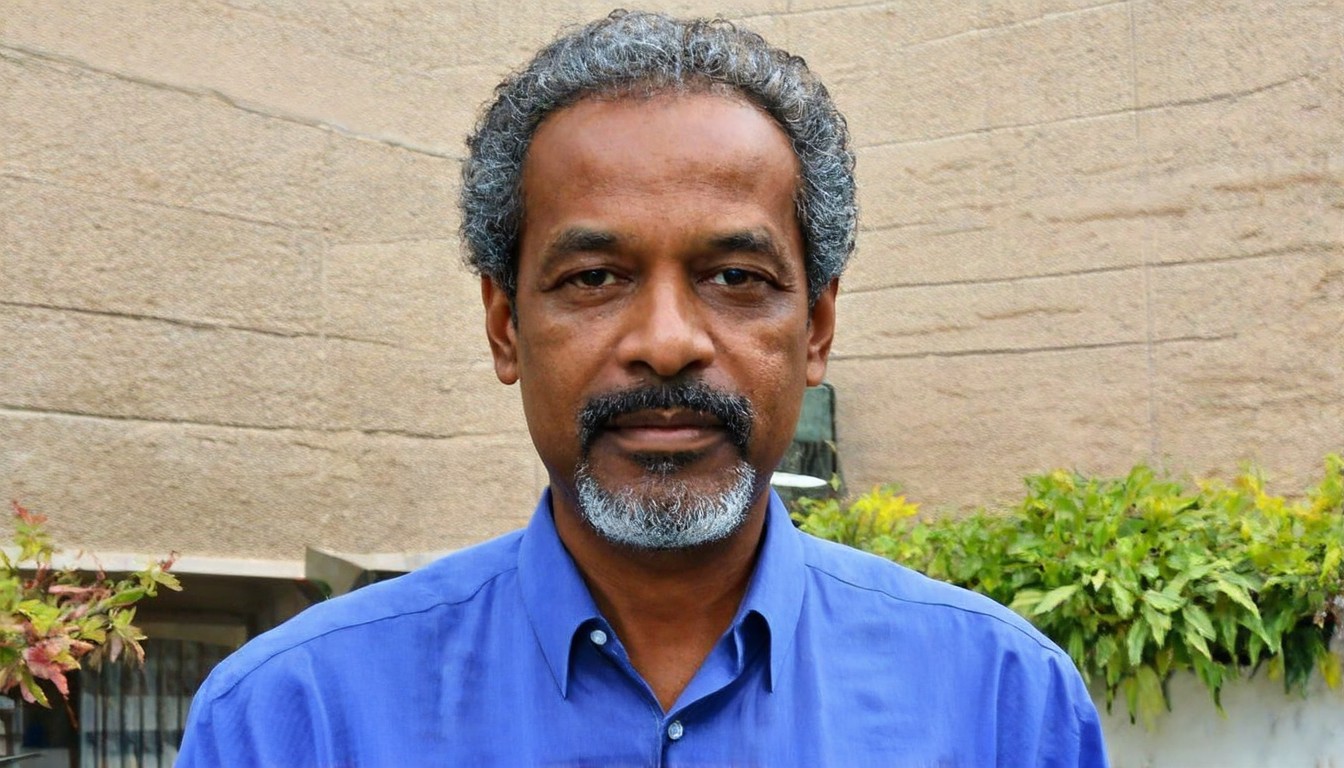
In the turbulent 1970s and 1980s, when Ethiopia was under the brutal rule of the Derg military junta, few academics dared to stay in the country. Many fled to avoid persecution, but Mulugeta Bekele, a physicist, chose to remain. His decision to stay was driven by a deep commitment to his field and a desire to educate the next generation of Ethiopian scientists. Despite facing arrest, torture, and the constant threat of danger, Mulugeta persevered, almost single-handedly keeping physics alive in Ethiopia.

Mulugeta Bekele was born in 1947 in a small town near Asela, south of Addis Ababa. His early education was shaped by a single secondary school that relied on volunteer teachers from abroad. Among these teachers was a US Peace Corps volunteer named Ronald Lee, who taught history, mathematics, and science. Lee was a charismatic educator who would climb trees during physics lessons to demonstrate pulleys and held special after-school calculus classes for advanced students. Mulugeta and his peers were captivated by Lee's passion and creativity, which ignited a lifelong interest in science.

When Mulugeta enrolled at Haile Selassie 1 University (now Addis Ababa University) in 1965, he declared his intention to study both mathematics and physics. However, the university informed him that he could only pursue one subject. "I told myself that if I choose mathematics, I will miss physics," Mulugeta recalls. "But if I do physics, I will be continually engaged with mathematics." Thus, he chose physics, a decision that would shape his life and the future of Ethiopian science.

During his third year of study, Mulugeta's academic journey faced a challenge. The university's only physics teacher, an American named Ennis Pilcher, left the country. With no other faculty members available to teach the subject, Mulugeta and his peers were left without a physics curriculum. Undeterred, Mulugeta decided to teach himself the subject using textbooks and resources he could find. His determination paid off when he graduated with a degree in physics in 1969.

After completing his studies, Mulugeta returned to his alma mater as a lecturer. He quickly became the only physics teacher at the university, a position he held for decades. Despite the lack of resources and the political instability of the time, Mulugeta dedicated himself to teaching and research. He built a small but vibrant community of physicists, inspiring countless students to pursue careers in the field.

Mulugeta's dedication to his work did not go unnoticed by the Derg regime. In 1977, he was arrested and brutally tortured by members of the military junta. He was accused of being part of a conspiracy against the government, but Mulugeta maintains that his only crime was his love for physics and his commitment to education. "I still have scars," he says, referring to the physical and emotional wounds inflicted during his time in captivity.

Despite the trauma he endured, Mulugeta refused to abandon his mission. He continued teaching and researching, even after his release from prison. His unwavering commitment to his field earned him international recognition when he was awarded the Sakharov Prize by the American Physical Society in 2012. The prize honored his tireless efforts in defending human rights, freedom of expression, and education, as well as his inspiration to colleagues and students worldwide.

Today, Mulugeta Bekele, now 79, is retired but still actively involved in research. He continues to mentor young physicists and advocates for the importance of science education in Ethiopia. His story is a testament to the power of perseverance and the enduring impact of a single individual's dedication to their passion. Mulugeta Bekele's legacy serves as a beacon of hope for future generations of Ethiopian scientists, proving that even in the darkest of times, the spirit of inquiry can prevail.

ЁЯУ░ Related News
The largest orbital compute cluster is open for business | TechCrunch
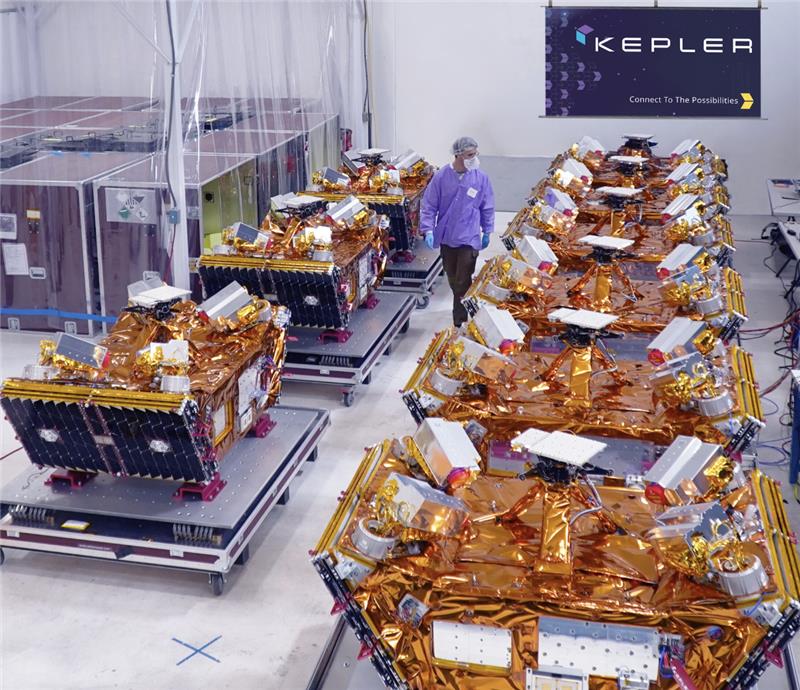
Kepler Communications is flying 40 GPUs in Earth orbit. And its latest customer is Sophia Space.
14 Apr
тАШMideast conflict poses risks to Philippines growthтАЩ
The Philippine economy is expected to grow at a faster pace of 5.3 percent this year from last year’s 4.4 percent but the ongoing Middle East conflict is seen to pose risks, according to the Association of Southeast Asian Nations Plus 3 Macroeconomic Research Office.
7 Apr
AFBI welcomes DUP representatives to its research farm at Hillsborough
The Agri-Food and Biosciences Institute (AFBI) welcomed a number of DUP representatives to its research farm at Hillsborough on Friday.
7 Apr
A simple way to get more value from metrics
We spent one day 1 building a system that immediately found a mid 7 figure optimization (which ended up shipping). In the first year, we shipped mid 8 figures per year worth of cost savings as a result. The key feature this system introduces is the ability to query metrics data across all hosts and all services and over any period of time (since inception), so we've called it LongTermMetrics (LTM) internally since I like boring, descriptive, names. This got started when I was looking for a starter project that would both help me understand the Twitter infra stack and also have some easily quantifiable value. Andy Wilcox suggested looking at JVM survivor space utilization for some large services. If you're not familiar with what survivor space is, you can think of it as a configurable, fixed-size buffer, in the JVM (at least if you use the GC algorithm that's default at Twitter). At the time, if you looked at a random large services, you'd usually find that either: The buffer was too small, resulting in poor performance, sometimes catastrophically poor when under high load. The buffer was too large, resulting in wasted memory, i.e., wasted money. But instead of looking at random services, there's no fundamental reason that we shouldn't be able to query all services and get a list of which services have room for improvement in their configuration, sorted by performance degradation or cost savings. And if we write that query for JVM survivor space, this also
7 Apr
Accelerating Mathematical and Scientific Discovery with Gemini Deep Think
Research papers point to the growing impact of Deep Think across fields
7 Apr
Gemini 3 Deep Think: Advancing science, research and engineering
Our most specialized reasoning mode is now updated to solve modern science, research and engineering challenges.
7 Apr
Context Engineering for Coding Agents
The number of options we have to configure and enrich a coding agent’s context has exploded over the past few months. Claude Code is leading the charge with innovations in this space, but other coding assistants are quickly following suit. Powerful context engineering is becoming a huge part of the developer experience of these tools. Birgitta Böckeler explains the current state of context configuration features, using Claude Code as an example. moreтАж
7 Apr
What does less protein and nitrogen mean for methane?
Does feeding less protein to cows over a longer period not only reduce nitrogen losses, but also affect methane emissions? Researchers at Wageningen University & Research (WUR) investigated this in a multi-year study with dairy cows, funded by the Vereniging Diervoederonderzoek Nederland (VDN), the Dutch Ministry of Agriculture, Fisheries, Food Security and Nature (LVVN), and […] The post What does less protein and nitrogen mean for methane? appeared first on Agriland.ie .
7 Apr
SecondтАЩs Bark Boasts New era of Bitcoin Payments, drawing in former Blockstream developers
Bitcoin Magazine SecondтАЩs Bark Boasts New era of Bitcoin Payments, drawing in former Blockstream developers Second, the Bitcoin development lab founded by ex-Blockstream executives including CEO Steven Roose and CTO Erik De Smedt, has unveiled Bark тАФ its custom Ark protocol implementation promising self-custodial payments that are faster and cheaper than Lightning channels. This post SecondтАЩs Bark Boasts New era of Bitcoin Payments, drawing in former Blockstream developers first appeared on Bitcoin Magazine and is written by Juan Galt .
7 Apr
'Morale boost': Nasa carries out Moon mission during tough year for science
HOUSTON — As the four Artemis astronauts approached a high point of their lunar mission -- getting slung around the far side of the Moon -- National Aeronautics and Space Administration (Nasa) staffers crowded into Houston's famed mission control room Monday for a team photo.
7 Apr