Middle East War: Trump ramps up threats against Iran
As the conflict in the Middle East enters its second month, U.S. President Donald Trump is escalating threats against Iran. On Monday he warned that the entire country could be 'taken out' on Tuesday.
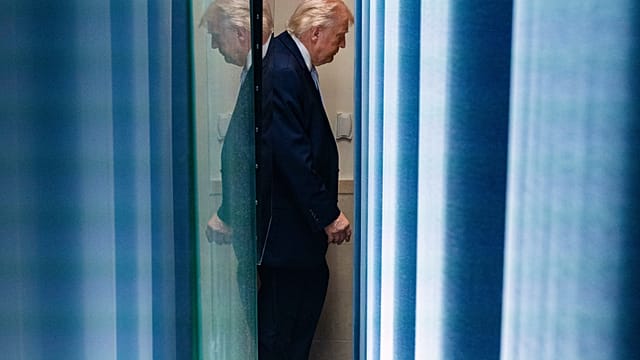
As tensions in the Middle East continue to escalate, U.S. President Donald Trump has ramped up his threats against Iran, warning that the entire nation could be "taken out" in a matter of days. This dramatic escalation comes as the region's conflict enters its second month, with both domestic and international observers watching closely for potential military actions.
The recent threats from Trump follow a series of events that have heightened the region's instability. In the past weeks, there have been several incidents involving U.S. and Iranian forces, including the downing of an American drone by Iranian forces and the reported killing of Iranian-backed militia members in Iraq by U.S. forces. These events have fueled speculation about a possible military confrontation between the two nations.
On Monday, Trump tweeted, "Iran is calling for the death of the United States. They just had a huge, huge demonstration in Tehran, calling for the death of the USA. They are calling for the death of me, which is a great honor, but they are calling for the death of the entire USA. This can only end in one way. The entire country of Iran could be taken out, and we know it." The following day, he added, "Iran is calling for the death of the United States. This can only end in one way. The entire country of Iran could be taken out. We know it."
These statements mark a significant escalation in the rhetoric between the two nations. Trump's "taken out" phrase has been interpreted by many as a veiled threat of a military strike against Iran. While the U.S. has not explicitly stated its intentions, the threat has raised concerns among international leaders and experts about the potential for a full-scale conflict in the region.
Iranian officials have responded to Trump's threats with their own, warning that any attack on Iran would result in a devastating counter-strike. The country's Supreme Leader, Ayatollah Ali Khamenei, has previously stated that "the US should not expect any mercy" if it were to launch an attack. Additionally, Iran's military commander, General Hossein Salami, has vowed to "turn the region into a sea of fire" in response to any U.S. aggression.
The situation in the Middle East is further complicated by the involvement of other regional and international actors. Iraq, a key player in the conflict, has expressed concerns about the potential impact of U.S.-Iran tensions on its own stability. European and Asian nations, including those with significant economic ties to Iran, are also monitoring the situation closely, hoping to avoid further escalation.
The U.S. government has not provided a clear roadmap for how it plans to de-escalate the situation. Some officials have suggested that diplomatic efforts are still underway, while others have indicated that military options remain on the table. Meanwhile, critics argue that Trump's aggressive rhetoric is only serving to exacerbate the tensions rather than resolve them.
In the midst of this volatile situation, many are calling for caution and diplomacy. Experts warn that a military conflict between the U.S. and Iran could have far-reaching consequences, potentially destabilizing the entire Middle East and leading to a global crisis. They emphasize the importance of finding a peaceful resolution to the ongoing disputes.
As the world watches the situation unfold, the question of whether a military confrontation is inevitable remains unanswered. While Trump's threats have undoubtedly heightened the region's instability, it is unclear whether they will lead to direct conflict or if diplomatic channels will ultimately prevail. One thing is certain: the Middle East's future is hanging in the balance, and the world is eagerly awaiting developments.