
Marguerite Humeau: Meys
Words Emily Sandiford What’s in a name? For Marguerite Humeau, a shared prehistoric language, a collective future and the structure of her latest exhibition at The White Cube. Meys, meaning to mix or bring together in a hypothetical Indo-European language, is a multi-disciplinary body of work that imagines what insects could build with the remains of a human world.  Humeau’s exploration begins in an unlikely place – at North Peckham Civic Centre. Slated for demolition, this former community hub features a mural named […]
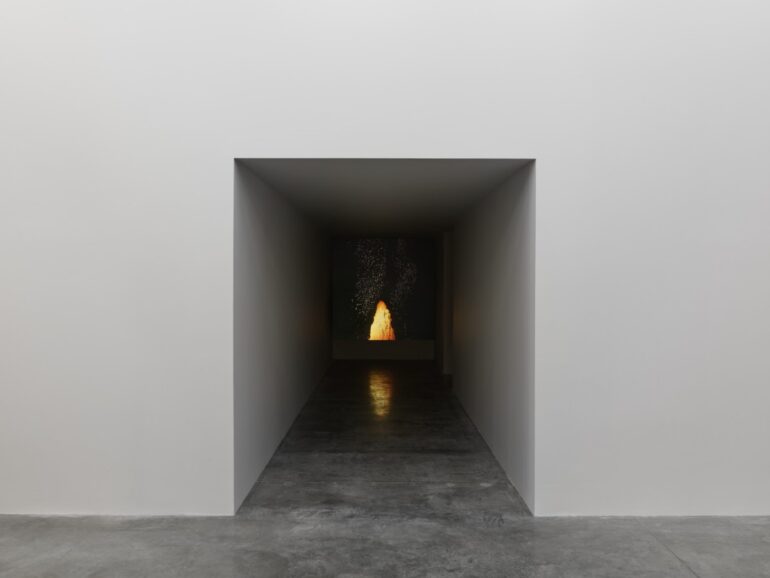
Marguerite Humeau's latest exhibition, "Meys," at The White Cube invites viewers to contemplate the interconnectedness of language, history, and the future through a unique exploration of insects and human remains. The title, derived from a hypothetical Indo-European word meaning "to mix or bring together," encapsulates the artist's intent to blend disparate elements and challenge conventional perspectives.
Humeau's journey with "Meys" began at North Peckham Civic Centre, a former community hub in southeast London set for demolition. This site, now a relic of urban transformation, serves as a backdrop for the exhibition's themes. The mural at the civic centre, partially visible within the exhibition space, adds a layer of local history and community loss to Humeau's work.
At the heart of "Meys" is the idea of a shared prehistoric language, a concept that transcends time and culture. Humeau's art delves into the possibility of an ancient linguistic foundation that unites humanity, hinting at a collective future where such unity might be rediscovered. This linguistic thread is woven throughout the exhibition, guiding viewers through a series of installations that blur the lines between past and present.
One of the most striking elements of "Meys" is the artist's imaginative exploration of what insects might construct using the remnants of a human world. Humeau's sculptures and installations depict insects as both destroyers and builders, transforming human artifacts into something new and unexpected. This juxtaposition challenges viewers to reconsider the role of nature in the aftermath of human civilization.
The exhibition also reflects on the fragility of community spaces and the loss of local identity in an ever-changing urban landscape. North Peckham Civic Centre, now slated for demolition, symbolizes the fleeting nature of these hubs and the stories they hold. Humeau's work invites reflection on how such spaces contribute to the fabric of society and the memories they preserve.
"Meys" is not just an artistic inquiry; it is a call to action. By blending language, history, and nature, Humeau encourages viewers to envision a future where collaboration and unity might prevail. The exhibition's title, a word from a hypothetical past, becomes a metaphor for the potential of the present to shape a collective future.
In "Meys," Marguerite Humeau masterfully combines elements of history, language, and nature to create a thought-provoking exploration of our interconnected past and future. The exhibition, nestled within the shadow of a demolished civic centre, serves as a poignant reminder of the importance of preserving community and unity in an ever-evolving world.









