Mamata Banerjee Blames EC For Malda Gherao After SC Rap, Says ‘Powers Taken Away’
Mamata Banerjee blames Election Commission for Malda incident after Supreme Court criticism, says law and order not in her hands, alleges BJP wants President rule in Bengal
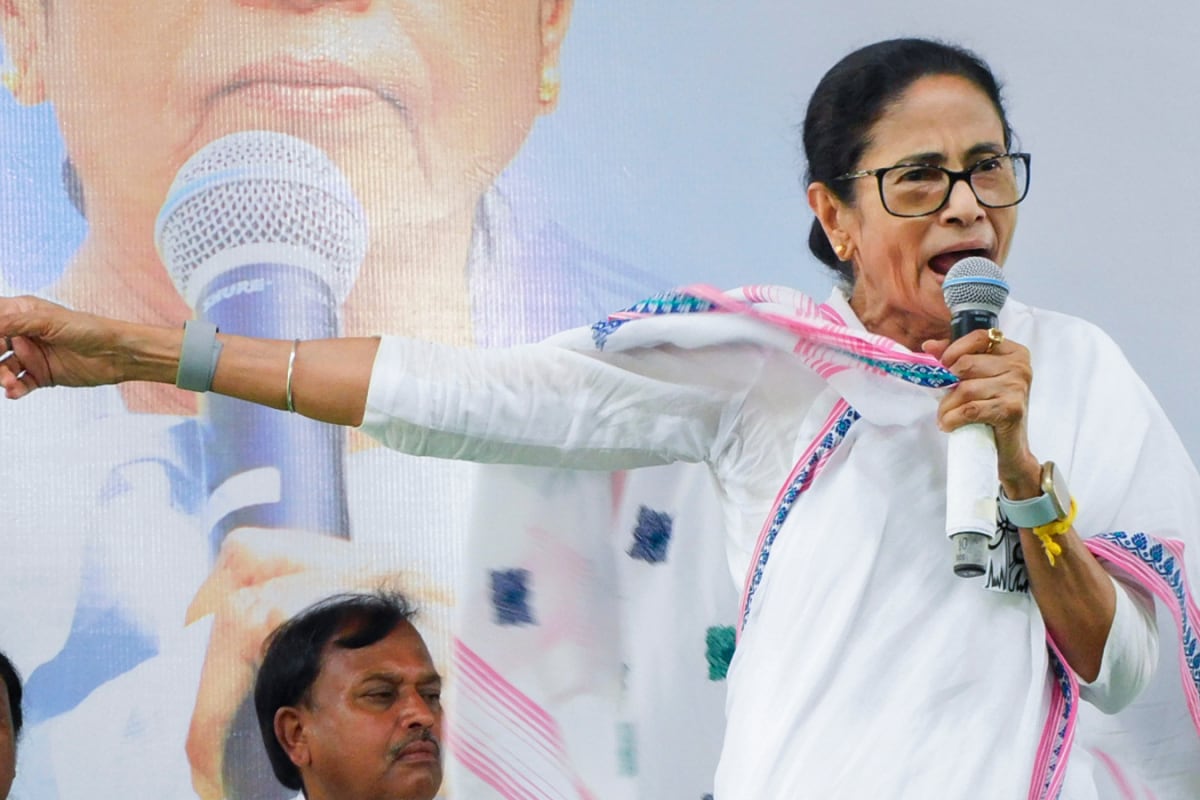
Mamata Banerjee, the incumbent Chief Minister of West Bengal, has recently taken to the public stage to express her displeasure and frustration over the recent Malda Gherao incident, which occurred after the Supreme Court's (SC) criticism of the Election Commission of India (EC). In a series of statements, Banerjee has accused the EC of failing to maintain law and order during the event, and has further claimed that the Bharatiya Janata Party (BJP) is pushing for a President's Rule in Bengal.
The Malda Gherao, which took place in the state's Malda district, was a significant event that drew national attention. It was organized by various groups, including the Trinamool Congress (TMC), the ruling party in West Bengal, in response to the Supreme Court's recent verdict. The SC had criticized the EC for not taking adequate measures to prevent violence and ensure fair elections. The Malda Gherao was seen as a show of support for the EC and a demonstration against the TMC's perceived influence over the electoral process.
In the aftermath of the incident, Mamata Banerjee has taken a strong stand against the EC, alleging that the organization has not taken the necessary steps to prevent the violence that erupted during the protest. She has emphasized that the law and order situation in the state is not under her control, and that the EC should have been more proactive in managing the event. Banerjee's comments come as a direct response to the SC's criticism, which has put pressure on the EC to improve its electoral management practices.
In addition to her criticisms of the EC, Banerjee has also accused the BJP of attempting to destabilize the state by pushing for a President's Rule. She has suggested that the BJP is using the Malda Gherao as a pretext to demand President's Rule, which would allow the central government to take control of the state administration. Banerjee has warned that such attempts are unwarranted and would only serve to disrupt the peace and stability of West Bengal.
The BJP, on the other hand, has denied these allegations, stating that their primary concern is ensuring fair elections and upholding the EC's authority. The party has argued that the Malda Gherao was a legitimate expression of dissent against the TMC's alleged interference in the electoral process, and that any violence that occurred was regrettable but not a reflection of their intentions.
The situation in West Bengal has been tense in recent months, with both the TMC and the BJP vying for political supremacy. The Malda Gherao incident has further escalated tensions, with both sides blaming each other for the violence that ensued. The Supreme Court's criticism of the EC has added another layer of complexity to the situation, as the organization now faces scrutiny over its ability to manage electoral events effectively.
Mamata Banerjee's accusations against the EC and the BJP have sparked a political firestorm, with both parties engaging in a verbal exchange over the matter. The TMC has called for the EC to take immediate action to prevent such incidents from happening in the future, while the BJP has urged the central government to step in and ensure a fair and transparent electoral process.
The situation in West Bengal is closely watched by political analysts and observers, who are keen to see how the EC and the central government respond to the ongoing tensions. The Malda Gherao incident has highlighted the fragile state of law and order in the region, and has underscored the need for effective electoral management to prevent similar outbursts of violence in the future.
As the political battle in West Bengal intensifies, the role of the EC and the central government in maintaining stability and ensuring fair elections becomes increasingly important. The recent Malda Gherao incident serves as a stark reminder of the challenges faced by the electoral process in India, and the need for concerted efforts to address these issues.
In conclusion, the Malda Gherao incident has become a focal point of political discourse in West Bengal, with Mamata Banerjee blaming the EC for failing to maintain law and order, and accusing the BJP of seeking a President's Rule. The Supreme Court's criticism of the EC has added to the complexity of the situation, as the organization now faces pressure to improve its electoral management practices. The ongoing tensions in the state highlight the need for effective governance and a fair electoral process, as both the TMC and the BJP vie for political supremacy. The response of the EC and the central government to these developments will be crucial in determining the future trajectory of West Bengal's political landscape.