Maharashtra signs MoU for Navi Mumbai International MediCity
The Maharashtra government has signed a landmark MoU with Cleveland Clinic, Brookfield Asset Management, and Arodhan Health City to develop the Navi Mumbai International MediCity, India's first global-scale healthcare hub spread over 250 acres near the international airport.
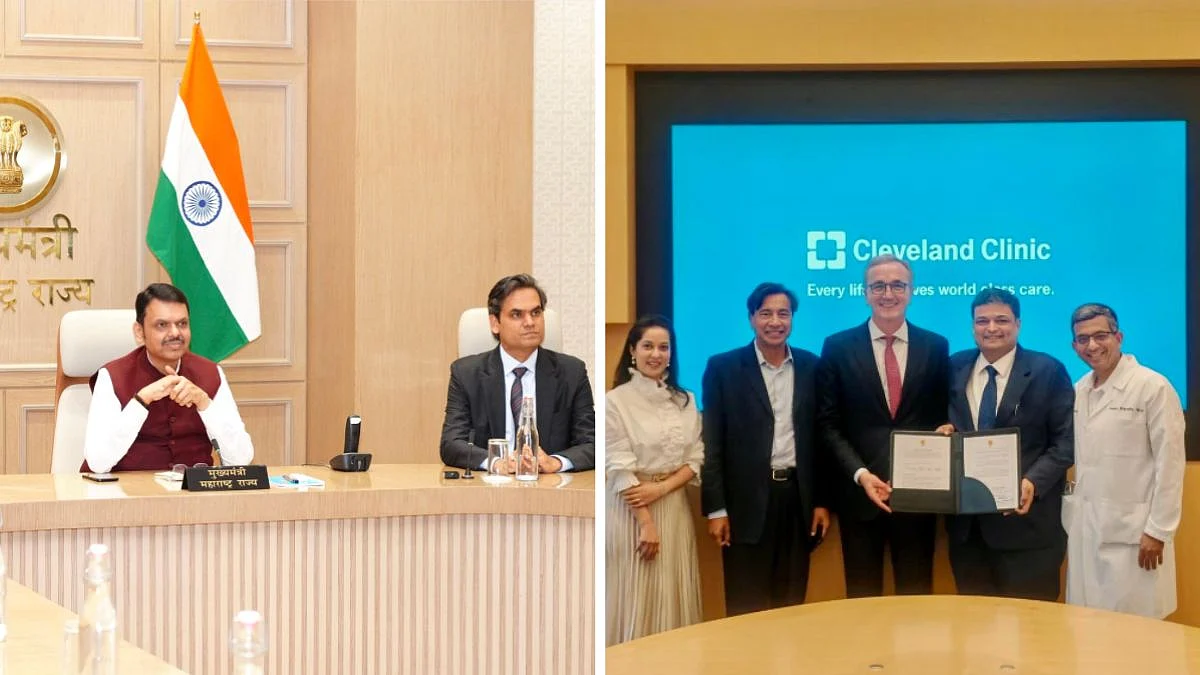
The Maharashtra government has signed a memorandum of understanding with Cleveland Clinic, Brookfield Asset Management, and Arodhan Health City to establish the Navi Mumbai International MediCity, billed as India's first global-scale healthcare hub. The project will be developed on a 250-acre site near the Navi Mumbai International Airport, positioning it as a major medical destination for domestic and international patients. The initiative brings together a unique combination of clinical expertise, global investment, and local infrastructure.
Cleveland Clinic, a renowned non-profit academic medical centre based in Ohio, will provide clinical leadership and operational standards. Brookfield Asset Management, a leading alternative asset manager with over $900 billion in assets under management, will anchor the financial and real estate development. Arodhan Health City, a Mumbai-based healthcare development firm, will coordinate the local execution and regulatory approvals. The MediCity is designed to integrate multiple healthcare functions within a single campus.
Plans include multi-specialty hospitals, medical colleges, nursing schools, advanced research centres, biotechnology laboratories, and facilities dedicated to artificial intelligence-driven healthcare innovation. The integration of education and research alongside clinical care is intended to create a continuous pipeline of medical talent and cutting-edge treatments. Located adjacent to the Navi Mumbai International Airport, the MediCity will benefit from direct connectivity to major domestic and international flight routes. This location is expected to facilitate medical tourism, allowing patients from South Asia, the Middle East, Africa, and beyond to access world-class treatment without travelling to traditional hubs such as Singapore, Bangkok, or the United States.
The project aligns with the Maharashtra government's broader strategy to position the Mumbai Metropolitan Region as a global healthcare destination. The state has been actively promoting investment in health infrastructure, including the development of medical device parks and digital health platforms. The MediCity is expected to generate thousands of direct and indirect jobs, ranging from clinical staff to researchers, technicians, and support personnel. Cleveland Clinic's involvement brings a proven model of integrated care that has been replicated in several countries, including the United Arab Emirates and the United Kingdom.
The clinic operates a network of hospitals and outpatient centres that consistently rank among the top in cardiology, neurology, oncology, and orthopaedics. Its participation in the Navi Mumbai project signals a commitment to transferring clinical protocols, training programmes, and quality standards to the Indian healthcare ecosystem. Brookfield Asset Management's role as a capital partner is significant given the scale of investment required for a project of this magnitude. The firm has a track record of developing large-scale infrastructure and real estate assets in India, including office parks, data centres, and renewable energy projects.
Its involvement provides financial stability and long-term development expertise, reducing the risk profile for other investors and lenders. Arodhan Health City brings local knowledge and experience in navigating India's regulatory environment for healthcare real estate. The company has previously worked on hospital development projects in Maharashtra and understands the specific requirements for zoning, environmental clearance, and medical licensing. This local partnership is critical for ensuring that the MediCity meets Indian healthcare standards while incorporating global best practices.
The announcement comes at a time when India is seeking to expand its healthcare infrastructure to meet growing demand from a rising middle class and an ageing population. The country faces a shortage of hospital beds, medical professionals, and advanced treatment facilities, particularly in tier-one cities. The MediCity is expected to help bridge this gap by adding significant capacity for complex procedures such as organ transplants, robotic surgery, and gene therapy.
Artificial intelligence will play a central role in the MediCity's operations. Plans include AI-powered diagnostic imaging, predictive analytics for patient outcomes, and automated administrative systems to reduce wait times and improve efficiency. The integration of AI into clinical workflows is intended to enhance accuracy and allow doctors to focus on complex cases while routine tasks are handled by algorithms. The project also includes a focus on biotechnology research, with dedicated laboratories for genomics, proteomics, and drug discovery.
These facilities will collaborate with academic institutions and pharmaceutical companies to develop new therapies and diagnostic tools. The proximity of research labs to clinical wards is expected to accelerate the translation of laboratory discoveries into bedside treatments. Construction is expected to begin in phases, with the first phase likely to include a core hospital and medical college. Subsequent phases will add research centres, biotech parks, and residential facilities for staff and patients' families.