Lucknow Marks Environment Day 2026 with Green Initiatives
CSIR-NBRI EIACP and BBAU Lucknow collaboratively observed World Environment Day 2026, spearheading a comprehensive array of activities that underscored a commitment to ecological preservation and sustainable living. The day's events reportedly included key ini
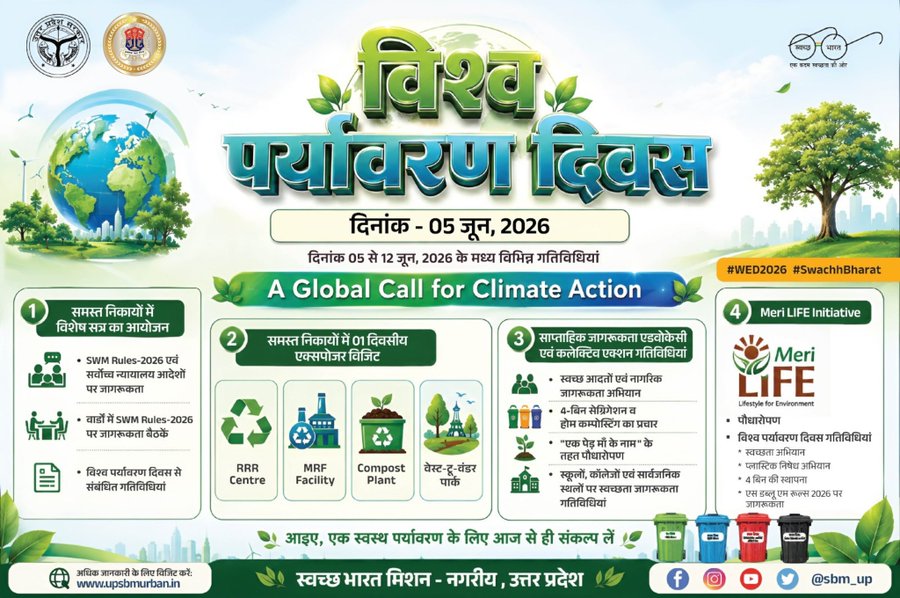
Lucknow, India – In a significant display of environmental commitment, the CSIR-National Botanical Research Institute's Environmental Information, Awareness, Capacity Building Programme (CSIR-NBRI EIACP) and Babasaheb Bhimrao Ambedkar University (BBAU) in Lucknow reportedly marked World Environment Day 2026 with a series of impactful initiatives. The collaborative efforts underscored a shared vision for a sustainable future, focusing on critical areas such as lifestyle changes for environmental protection, combating plastic pollution, enhancing ecological literacy, and actively contributing to green cover expansion. These activities, held on the globally recognized day for environmental action, highlighted the crucial role of academic and research institutions in driving public awareness and tangible change towards ecological preservation.
World Environment Day, observed annually on June 5th, serves as a global platform to raise awareness and generate action on pressing environmental issues. Each year, the day focuses on a specific theme, encouraging governments, businesses, communities, and individuals worldwide to address environmental challenges. The reported observance by CSIR-NBRI EIACP and BBAU Lucknow aligns with this global imperative, translating international environmental goals into local action. The proactive engagement of such esteemed institutions is vital in fostering a culture of environmental responsibility, particularly within the academic community and extending its influence to the broader public.
The CSIR-NBRI EIACP, as a pivotal program under the Council of Scientific and Industrial Research, plays a crucial role in disseminating environmental information and building capacity for sustainable practices. Its collaboration with BBAU, a central university known for its diverse academic programs and research focus, creates a powerful synergy. This partnership leverages scientific expertise and academic outreach to educate, engage, and empower stakeholders to make informed choices for the environment. Such institutional collaborations are increasingly recognized as essential for tackling complex environmental problems that require multi-faceted approaches and widespread participation.
A cornerstone of the day's events was the promotion of Mission LiFE, or Lifestyle for Environment. This India-led global movement, envisioned by the Hon'ble Prime Minister, encourages individuals to adopt sustainable lifestyles and practices that are in harmony with nature. Mission LiFE advocates for a shift from a 'use-and-dispose' economy to a circular economy, emphasizing mindful consumption over mindless and destructive consumption. By integrating Mission LiFE into their World Environment Day activities, CSIR-NBRI EIACP and BBAU reportedly aimed to inspire students, faculty, and the public to embrace simple yet impactful daily actions that collectively contribute to environmental protection and resource conservation.
Another significant focus of the observance was a dedicated plastic-free awareness campaign. Plastic pollution remains one of the most pervasive environmental challenges globally, with its detrimental effects on ecosystems, wildlife, and human health. The campaign reportedly sought to educate participants on the adverse impacts of single-use plastics and encourage the adoption of sustainable alternatives. By raising awareness about responsible plastic consumption and disposal, the institutions aimed to foster behavioral changes that could lead to a substantial reduction in plastic waste, contributing to cleaner surroundings and healthier environments within the university campus and beyond.
Further enriching the day's agenda was a book release, an initiative that underscores the importance of knowledge dissemination in environmental education. While specific details about the book were not provided, such publications typically serve as valuable resources for students, researchers, and the general public, offering insights into various environmental topics, research findings, or practical guides for sustainable living. The release of an environmental publication reportedly reinforces the commitment of both institutions to academic scholarship and public enlightenment, providing accessible information that can empower individuals to better understand and address ecological challenges.
Perhaps one of the most tangible outcomes of the day's activities was a substantial 300-sapling plantation drive. Tree plantation drives are critical for enhancing green cover, combating deforestation, mitigating climate change by absorbing carbon dioxide, improving air quality, and supporting biodiversity. The planting of 300 saplings reportedly represents a direct investment in the local ecosystem, contributing to ecological restoration and providing long-term environmental benefits. Such hands-on initiatives not only improve the physical environment but also instill a sense of ownership and responsibility among participants, particularly the youth, towards nature.
The collective efforts by CSIR-NBRI EIACP and BBAU on World Environment Day 2026 serve as a powerful example of how educational and research institutions can act as catalysts for environmental change. By combining scientific knowledge, public awareness campaigns, educational resources, and direct action, they are reportedly playing a pivotal role in shaping a more environmentally conscious society. These initiatives are not merely symbolic gestures but represent a strategic commitment to fostering sustainable practices and building a resilient future for the community and the planet. The focus on Mission LiFE, plastic reduction, education, and reforestation collectively addresses multiple facets of environmental stewardship, demonstrating a holistic approach to sustainability.
As the world continues to grapple with escalating environmental crises, the proactive engagement of institutions like CSIR-NBRI EIACP and BBAU becomes increasingly vital. Their reported activities on World Environment Day 2026 are a testament to the power of collaboration and community involvement in addressing global challenges at a local level. These initiatives are expected to inspire continued action and foster a deeper understanding of our collective responsibility towards protecting and nurturing the environment for generations to come, reinforcing the message that every action, no matter how small, contributes to a larger impact.