
LPG Crisis Triggers Another Exodus Of India’s Gig And Manufacturing Workers
Six years ago, flyovers across India witnessed streams of migrant and gig workers walking miles to reach home. It was…
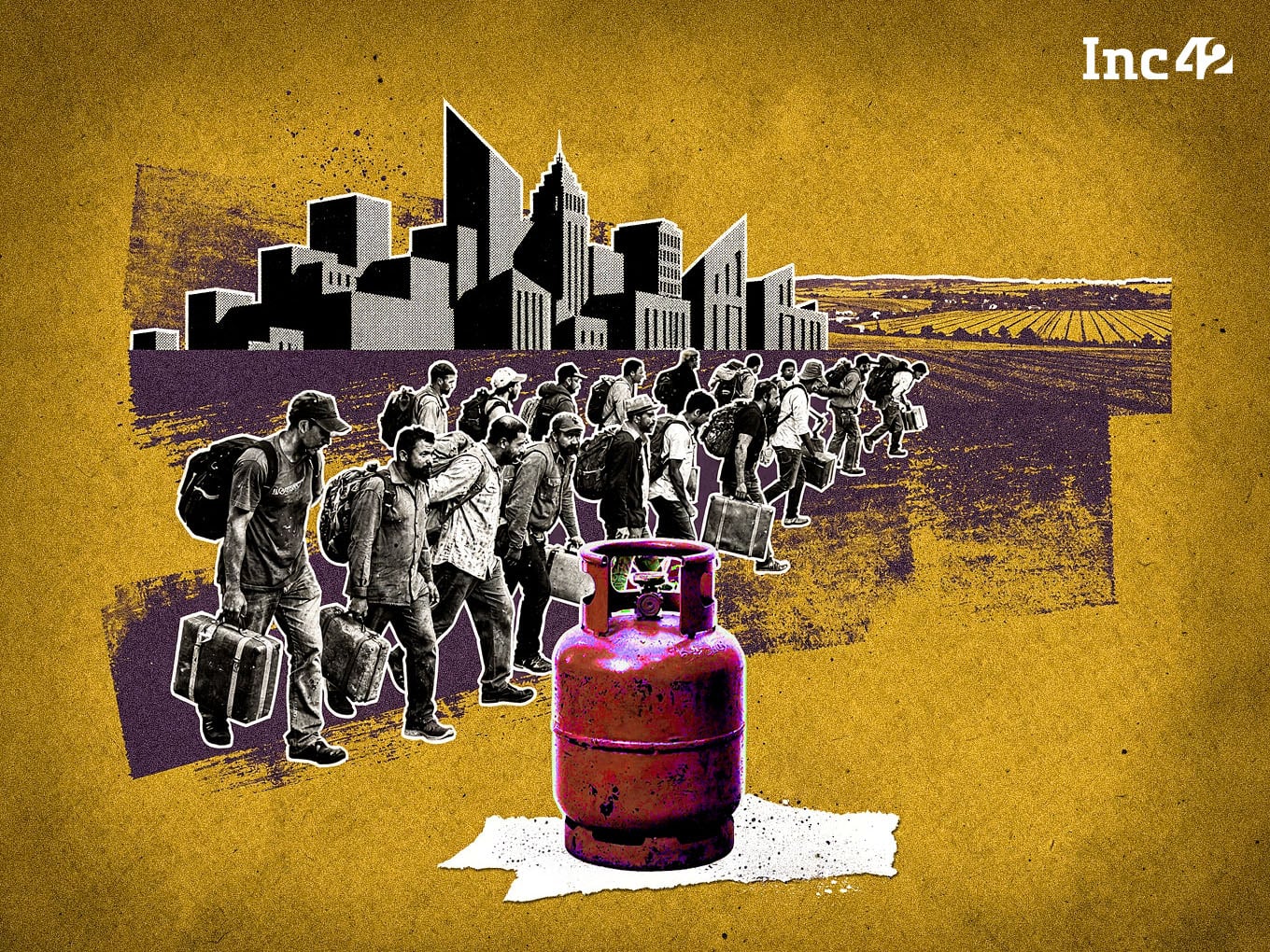
Six years ago, flyovers across India witnessed streams of migrant and gig workers walking miles to reach home. It was about survival back then, and it still is about survival now, even if the same scenes have not yet been witnessed. Amid escalating tensions in West Asia and the conflict between the US-Israel and Iran, global supply chains have come under strain, hitting India’s LPG or cooking gas consumers. Vessel movement and trade through the Strait of Hormuz is almost at a standstill, impacting about 25% of the world’s seaborne oil trade. In particular, the route is vital for India’s and the global LPG supply, accounting for nearly 29% of global trade. Nearly 90% of India’s LPG imports pass through the Strait of Hormuz.
In a recent development, Iran has labelled India a “friendly nation,” allowing Indian-flagged vessels to safely commute through the route. Even after that, the LPG supply has not settled back to normal levels, resulting in large-scale bootlegging, predatory sales, and unavailability of LPG for even those registered with the government. Ultimately, the blockage has resulted in a multifold jump in LPG prices for end consumers in India. A 1 kg LPG refill that earlier cost ₹100 for households is now being sold at ₹400, creating panic among people, especially gig and blue-collar workers who are far away from their home towns and depending on the urban ecosystem.
Inc42 has spoken to multiple gig workers to enquire about the gravity of the situation. “The cylinder prices have gone up. A 5 kg LPG cylinder requires refills every 10-15 days. We do not earn this kind of money from work, hence we are moving back. My husband works at a manufacturing factory and there are rumors that it might also shut down due to the rise in diesel prices. Back in the village, we can at least prepare food with a mud stove and firewood,” a Delhi-based househelp worker, who is migrating back to her village in West Bengal, told Inc42.
Around 200-300 people are moving back from one colony in Delhi, as they struggle to afford the skyrocketing LPG prices. Many of these workers are part of the gig economy, working as delivery drivers, rickshaw pullers, or street vendors. They have no savings to fall back on and are heavily reliant on daily income. The LPG shortage has forced them to either leave their jobs or face starvation.
“I can’t afford to stay here anymore. My daily earnings are just enough to cover my food and shelter. With LPG prices soaring, I can’t even cook a proper meal for my family,” said a delivery driver from Mumbai, who is returning to his village in Uttar Pradesh.
The situation is exacerbated by the fact that many gig workers are not registered with the government, making them ineligible for any relief measures. The Indian government has announced some subsidies for LPG, but they are limited to those who are already registered. This has left thousands of gig workers and migrant workers without any support.
The LPG crisis has also affected the manufacturing sector, as factories are struggling to keep up with the rising diesel prices. Many small and medium-sized enterprises (SMEs) are shutting down, leading to job losses for thousands of workers. The Delhi-based househelp worker mentioned earlier works in a factory that produces kitchenware. “The factory owner has warned us that if the diesel prices don’t stabilize, he might have to close the factory,” she said.
The exodus of gig and manufacturing workers is not only affecting the urban economy but also the rural areas. As people return to their villages, it is putting a strain on local resources and infrastructure. Many villages do not have the necessary facilities to support a sudden influx of migrants.
The Indian government has been monitoring the situation closely and has announced some measures to address the LPG shortage. It has increased the import of LPG from alternative routes and has also relaxed some import restrictions. However, experts believe that it will take time for the situation to normalize.
In the meantime, the LPG crisis is pushing thousands of gig and manufacturing workers to the brink of survival. As they struggle to make ends meet, they are forced to leave their jobs and return to their villages, hoping for a better future. The situation highlights the vulnerability of the gig economy and the need for better support systems for migrant and informal workers in India.









