
Lorena Basso: Innovation Is Urgent to Feed 9.5 Billion by 2050
As incoming ISF president, Lorena Basso calls for faster breeding advances, AI-driven improvement, and more resilient crops amid climate pressure The post Lorena Basso: Innovation Is Urgent to Feed 9.5 Billion by 2050 appeared first on Seed World .
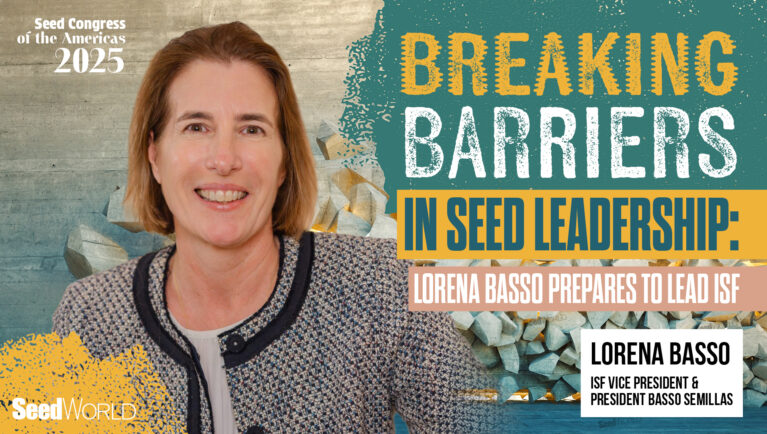
As the world population is projected to reach 9.5 billion by 2050, the need for innovative agricultural solutions has never been more pressing. At the 10th Congress of the Seed Association of the Americas in Brazil, Lorena Basso, president of Semillas Basso and the incoming leader of the International Seed Federation (ISF), underscored the urgency of accelerating advancements in the seed industry to meet this challenge.
Basso emphasized that the world faces significant constraints, including limited arable land and escalating climate pressures. To address these challenges, she called for a focus on boosting agricultural efficiency and developing crops that are more resilient to environmental stresses. She argued that progress in these areas will depend on continuous incremental improvements, supported by advanced breeding tools and artificial intelligence (AI).
In her address, Basso highlighted the critical role of breeding in creating high-yielding, disease-resistant, and climate-resilient crop varieties. She noted that traditional breeding methods, while still valuable, are being enhanced by modern technologies such as genomic selection and marker-assisted selection. These tools enable breeders to identify and select desirable traits more efficiently, accelerating the development of improved crop varieties.
In addition to breeding advancements, Basso stressed the potential of AI to revolutionize the seed industry. She explained that AI can be used to analyze vast amounts of data, from historical weather patterns to soil quality, to predict crop performance and identify areas where improvements are needed. By leveraging AI, researchers can develop more accurate models for predicting crop yields and optimizing planting schedules, ultimately leading to increased productivity and food security.
However, Basso also acknowledged the challenges posed by regulatory complexities in the global seed market. She pointed out that varying seed regulations across countries can hinder the free movement of seeds, making it difficult for farmers to access the best available varieties. As the first woman to lead the ISF, Basso expressed her commitment to fostering collaboration among seed industry stakeholders to address these regulatory hurdles and promote greater inclusion in the sector.
In her capacity as the incoming ISF president, Basso aims to inspire greater participation from women and diverse groups within the seed industry. She believes that diverse perspectives are essential for driving innovation and addressing the complex challenges facing global agriculture. By promoting inclusivity, Basso hopes to create a more dynamic and resilient seed industry capable of meeting the growing demands of the world's population.
In conclusion, Lorena Basso's call for urgent innovation in the seed industry is a response to the pressing need to feed a rapidly growing global population. By investing in advanced breeding techniques, AI-driven improvements, and the development of resilient crops, the seed industry can play a crucial role in ensuring food security and sustainable agriculture for generations to come. As Basso takes the helm of the ISF, her leadership will be pivotal in driving these necessary changes and fostering a more inclusive and innovative sector.









