
Little sign of breakthrough as Trump's Iran deadline nears
The US president is in a delicate political position as the final hours to Tuesday's deadline for Iran to open the Strait of Hormuz tick down.
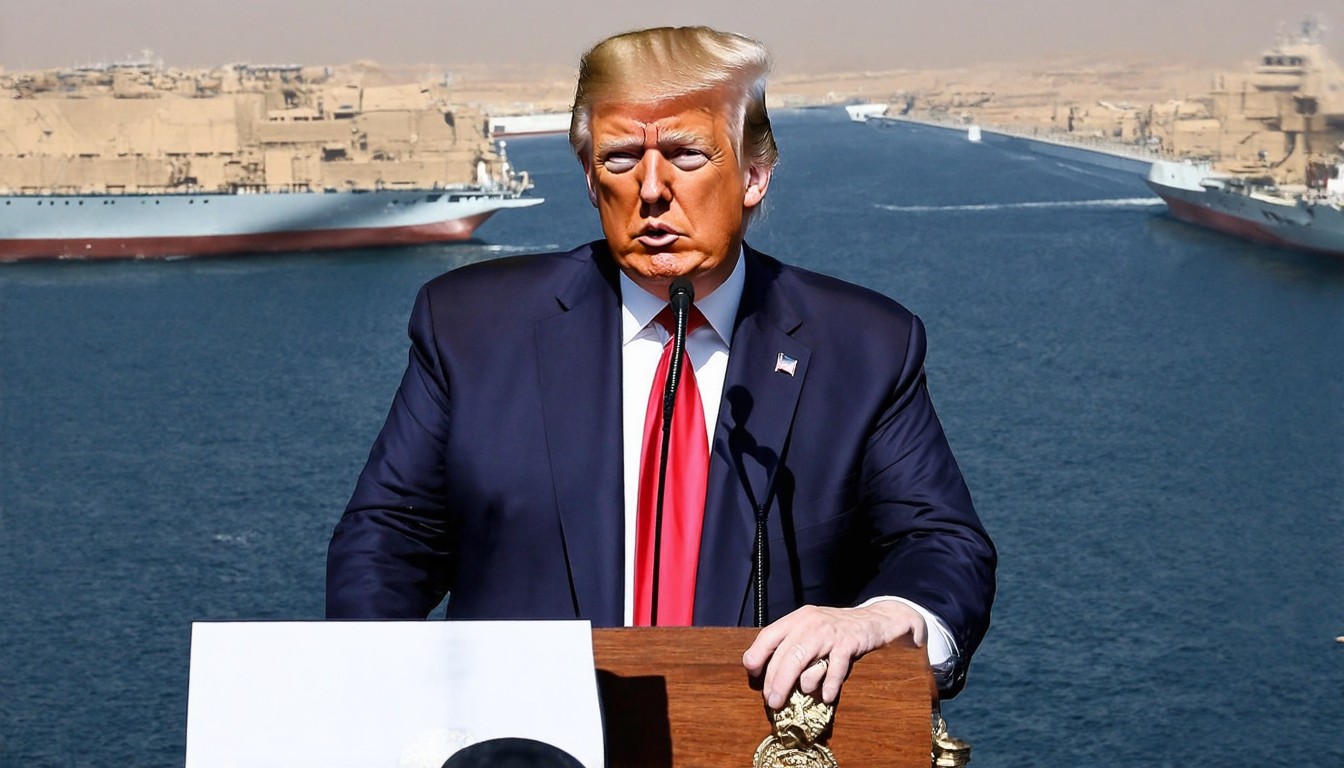
As the clock ticks down on President Trump's deadline for Iran to open the Strait of Hormuz, there is little sign of a breakthrough in the ongoing geopolitical standoff. The administration has been under pressure to demonstrate decisive action against Iran, particularly following the recent increase in tensions in the region. However, the lack of concrete progress has left many observers questioning the effectiveness of the current approach.
The Strait of Hormuz, a narrow waterway between the Persian Gulf and the Gulf of Oman, is a critical chokepoint for global oil supplies, with approximately 30% of the world's daily oil trade passing through it. This strategic location has long been a point of contention between the US and Iran, with both nations vying for influence in the region. The US has long accused Iran of threatening the safety of shipping in the strait, while Iran has maintained that its actions are defensive and necessary to protect its sovereignty.
President Trump's ultimatum to Iran, issued in May, demanded that Tehran end its activities in the Strait of Hormuz and cease its support for proxies in the region, threatening severe consequences if the demands were not met. The deadline, set for Tuesday, has now arrived, but there is no indication that Iran has made any concessions. This has left the US administration in a precarious position, as they face mounting criticism for their handling of the situation.
Critics argue that the US has failed to present a clear and coherent strategy to address Iran's actions, and that the ultimatum has backfired, emboldening Tehran rather than deterring it. Some experts suggest that the US should have focused on building a broader coalition of international support to pressure Iran, rather than relying on unilateral threats. Others argue that the administration's approach has been inconsistent, with mixed messages sent to Iran and its regional allies.
Meanwhile, Iran has dismissed the US ultimatum as baseless and unenforceable, insisting that it has the right to defend its territorial waters and that its actions in the Strait of Hormuz are purely defensive. Iranian officials have also accused the US of attempting to destabilize the region and exploit its oil resources.
The lack of progress has raised concerns about the potential for further escalation in the region. Analysts warn that any military action could have catastrophic consequences, leading to a full-scale conflict that would disrupt global oil markets and destabilize the Middle East. The US has previously warned of the possibility of military retaliation if Iran does not comply with its demands, but there is no clear indication of what steps the administration would take next.
In the meantime, the European Union and other international actors have been trying to mediate the situation, but their efforts have been hampered by the US's refusal to engage in direct negotiations with Iran. The EU has called for a diplomatic solution and has urged both sides to de-escalate tensions.
As the deadline passes without any agreement in sight, the US administration faces mounting pressure to reconsider its approach. Some lawmakers have called for a more cautious strategy, emphasizing the need to avoid a costly and potentially disastrous military conflict. Others argue that the US must demonstrate resolve and take decisive action to protect its interests and allies in the region.
The situation in the Strait of Hormuz remains a focal point of global tensions, with the future of US-Iran relations hanging in the balance. As the deadline passes, it is unclear whether the current impasse will lead to further negotiations or whether it will escalate into a more confrontational standoff. One thing is certain: the geopolitical landscape is poised for significant upheaval, and the consequences of any misstep could be far-reaching.








