
Little sign of breakthrough as Trump's Iran deadline nears
The US president is in a delicate political position as the final hours to Tuesday's deadline for Iran to open the Strait of Hormuz tick down.
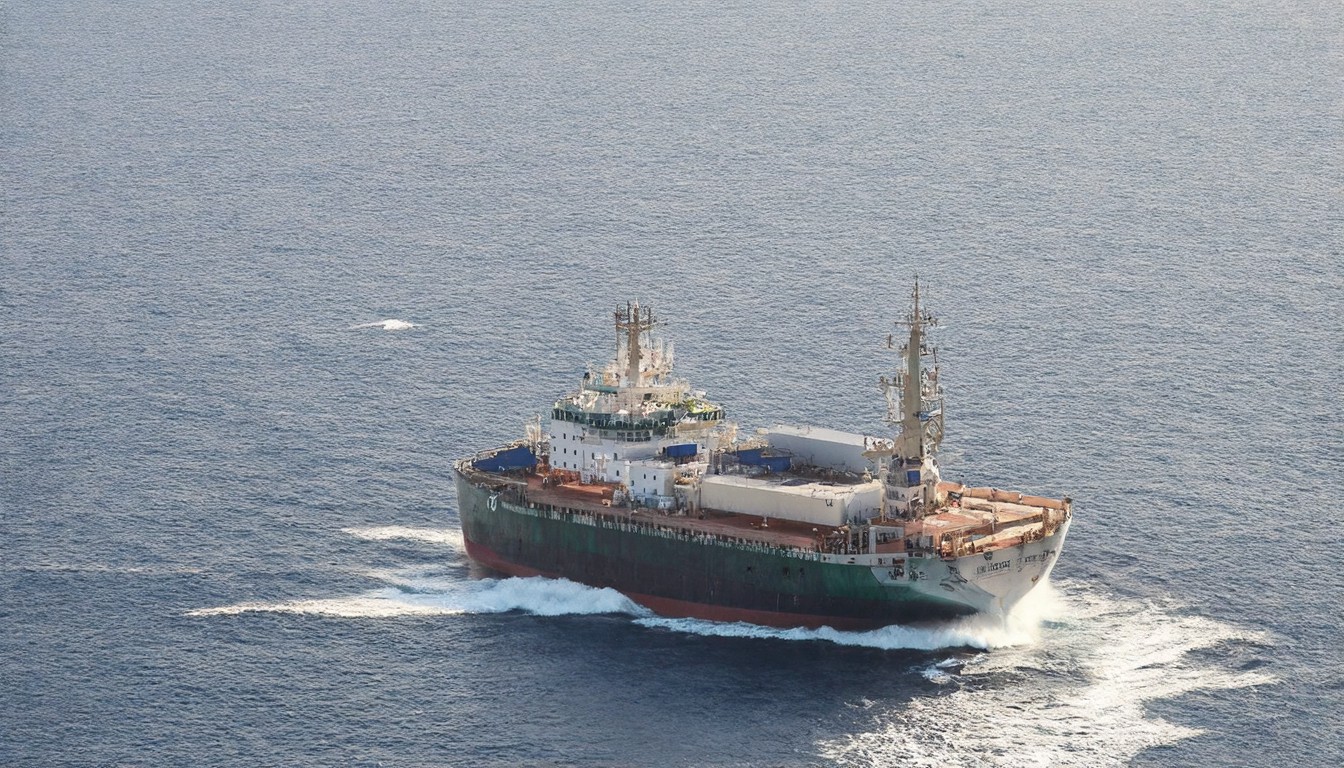
As the clock ticks down on President Trump's deadline for Iran to open the Strait of Hormuz, there has been little sign of a breakthrough in the ongoing diplomatic standoff. The administration has been under significant pressure to secure a resolution that addresses both national security concerns and the economic implications of the region's oil trade.
The Strait of Hormuz, a crucial chokepoint for global oil shipments, has been a focal point of tension between the US and Iran for years. The US has long argued that Iran's actions in the region, including its naval presence and threats to tankers, pose a serious threat to international maritime security. In response, the administration has imposed a series of sanctions on Iranian oil exports, aiming to curb Tehran's influence and revenue.
The recent deadline, set by President Trump, was intended to pressure Iran into changing its behavior. However, as the final hours approach, diplomatic efforts have not yielded the desired outcome. Officials from both countries have engaged in high-stakes negotiations, but no concrete agreements have been reached.
The political landscape in the US has added complexity to the situation. President Trump's administration has faced criticism for its handling of the crisis, with some critics arguing that the sanctions have only exacerbated tensions and harmed US economic interests. The administration, on the other hand, insists that the sanctions are necessary to counterbalance Iran's aggressive posture.
In addition to the diplomatic challenges, there are significant geopolitical implications at stake. The Strait of Hormuz is a critical artery for global oil trade, with an estimated 30% of the world's oil passing through it. Any disruption to this flow could lead to spikes in oil prices and destabilize global economies.
Iran, for its part, has been vocal about its right to defend its territorial waters and has warned against any attempts to impose external pressures. The country has also accused the US of hypocrisy, pointing out that the US itself has engaged in similar actions in the past.
As the deadline approaches, the international community is closely monitoring the situation. Allies such as Saudi Arabia and the United Arab Emirates have expressed concerns about the potential for conflict and have called for a diplomatic resolution. Meanwhile, European nations, heavily reliant on Iranian oil, have urged caution to avoid further escalation.
The lack of progress so far has raised questions about the effectiveness of the US strategy. Some analysts argue that the sanctions have not achieved their intended purpose and may have even strengthened Iran's resolve. Others suggest that a more nuanced approach, involving direct engagement and a broader coalition of international partners, might be more effective in addressing the complex challenges posed by Iran's actions.
In the final hours leading up to the deadline, both the US and Iran are likely to remain on high alert. The stakes are high, and any misstep could lead to unintended consequences. As the situation unfolds, it remains to be seen whether a breakthrough can still be achieved, or if the deadline will pass without a resolution, further complicating the already delicate political and geopolitical landscape.








