
Listening before helping: Why community involvement is essential for peace in Cox’s Bazar, Bangladesh
Lasting peace cannot be delivered from a distance. It must grow within communities themselves shaped by local realities, and supported by international partners willing to listen before they act.
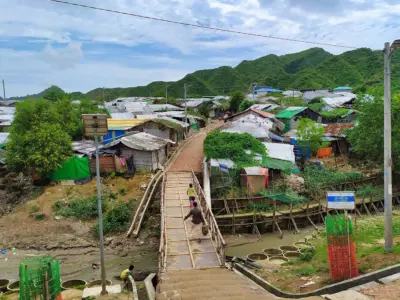
In the bustling district of Cox’s Bazar in Bangladesh, the arrival of over a million Rohingya refugees since 2017 has not only created a humanitarian crisis but also reshaped the social and economic fabric of the region. While international efforts have focused on addressing the urgent needs of refugees living in makeshift camps, the impact on the host communities has been less visible. These communities, who share their land, resources, and daily lives with the displaced population, are experiencing growing tensions and pressures that demand a deeper engagement from international organizations.
Teknaf, a municipality in Cox’s Bazar district, serves as a microcosm of these challenges. Local residents, who have long relied on fishing and agriculture, have witnessed a steady increase in the pressure on their livelihoods and social relations. UNDP Bangladesh Reports highlight that rising living costs, shrinking day labor opportunities, and rumors about unequal aid distribution have contributed to the mounting tensions between refugees and host communities.
Abdur Rahim, a volunteer coordinator in Teknaf, recalls how these concerns began to intensify during the early years of the Rohingya influx. In an in-depth interview conducted by the author in December 2025, Rahim explained, “Rumors spread quickly that refugees were receiving large amounts of assistance while local people were being left behind. At the same time, prices for basic goods went up, and work opportunities became fewer.”
Recognizing the growing tensions, Rahim and other volunteers began organizing informal discussions in December 2025 between representatives of both host and refugee communities. These meetings aimed to foster mutual understanding and address grievances, but they were often met with skepticism and distrust. Many local residents felt that international aid was not being distributed fairly, exacerbating existing inequalities and deepening divisions.
The challenges faced by Cox’s Bazar are not unique to this region. Across the globe, communities grappling with displacement and conflict often find themselves at the mercy of external interventions that fail to consider their specific needs and realities. Projects developed without meaningful local input risk overlooking grievances or reinforcing local inequalities. This lack of engagement can lead to a cycle of dependency, where communities become reliant on external aid without the opportunity to rebuild their own social and economic structures.
In Cox’s Bazar, the need for genuine community involvement has become increasingly apparent. International organizations must prioritize listening to the voices of both host and refugee communities, ensuring that their needs are addressed in a way that promotes long-term peace and stability. This requires a shift in approach, from delivering aid from afar to fostering local ownership and empowerment.
One example of this shift is the emergence of grassroots initiatives, such as the network led by Abdur Rahim, which aim to bridge the divide between host and refugee communities. By facilitating dialogue and collaboration, these efforts help to dispel myths and build trust. They also provide a platform for local voices to be heard, ensuring that aid programs are more effective and sustainable in the long run.
However, the path to lasting peace in Cox’s Bazar is not without its challenges. Deep-seated tensions and misunderstandings must be addressed with patience and empathy. International organizations must be willing to adapt their strategies and work closely with local communities, ensuring that their interventions are informed by a deep understanding of the local context.
In conclusion, the journey towards peace in Cox’s Bazar requires more than just humanitarian aid; it demands a genuine commitment to community involvement. By listening to the voices of those most affected, international partners can help to build a future where both host and refugee communities can coexist harmoniously. Only through this collaborative approach can lasting peace be achieved, rooted in the realities and needs of the people who call Cox’s Bazar their home.









