
Listening before helping: Why community involvement is essential for peace in Cox’s Bazar, Bangladesh
Lasting peace cannot be delivered from a distance. It must grow within communities themselves shaped by local realities, and supported by international partners willing to listen before they act.
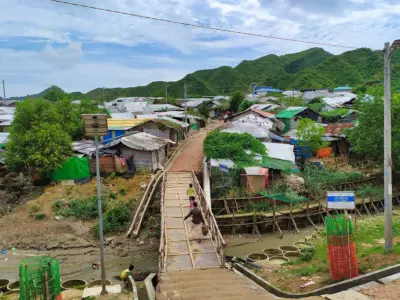
In the bustling district of Cox’s Bazar in Bangladesh, the arrival of over a million Rohingya refugees since 2017 has not only created a humanitarian crisis but also reshaped the social and economic fabric of the region. While international efforts have focused on addressing the urgent needs of refugees living in makeshift camps, the plight of the host communities has often been overlooked. These communities, which share land, resources, and economic spaces with refugees, are experiencing growing tensions and pressures on their livelihoods.
Teknaf, a municipality in Cox’s Bazar district, serves as a microcosm of these challenges. Local residents have reported increasing strain on their daily lives, with rising living costs, shrinking day labor opportunities, and rumors about unequal aid distribution fueling tensions between refugees and host communities. According to a UNDP Bangladesh report, these factors have contributed to a volatile situation that requires careful attention from international organizations.
Abdur Rahim, a volunteer coordinator in Teknaf, recalls how these tensions began to escalate during the early years of the Rohingya influx. In an in-depth interview conducted in December 2025, Rahim explained, “Rumors spread quickly that refugees were receiving large amounts of assistance while local people were being left behind. At the same time, prices for basic goods went up, and work opportunities became fewer.”
Recognizing the growing divide, Rahim and other volunteers initiated informal discussions aimed at fostering understanding and collaboration between host and refugee communities. Their efforts highlight the importance of meaningful local engagement in addressing the complex realities faced by both groups.
The challenges in Cox’s Bazar underscore a broader principle: lasting peace cannot be delivered from a distance. It must grow within communities themselves, shaped by local realities, and supported by international partners willing to listen before they act. Projects developed without meaningful local input risk overlooking grievances or reinforcing local inequalities.
In recent years, international organizations have increasingly recognized the need for deeper engagement with host and refugee communities. Initiatives such as participatory planning and capacity-building programs have been implemented to ensure that local voices guide development efforts. These approaches not only help to address immediate needs but also promote long-term stability and coexistence.
For instance, the UNDP has launched several projects in Cox’s Bazar that prioritize local participation. One such initiative, the “Rohingya and Host Community Livelihoods Program,” focuses on creating job opportunities and supporting small-scale enterprises in the region. By involving both host and refugee communities in the design and implementation of these programs, the UNDP aims to ensure that they are culturally sensitive and address the specific needs of the populations involved.
However, despite these efforts, challenges persist. The influx of refugees has strained existing resources and infrastructure, leading to competition for jobs, housing, and basic services. Moreover, the Rohingya refugees themselves face unique challenges, including a lack of legal recognition and limited access to education and healthcare.
To address these issues, international organizations must continue to prioritize community involvement and dialogue. This includes not only working with host communities but also ensuring that refugees have a voice in shaping the response to their situation. By fostering trust and collaboration, international partners can help build a more inclusive and sustainable future for both host and refugee populations in Cox’s Bazar.
In conclusion, the experience of Cox’s Bazar serves as a powerful reminder of the importance of community involvement in achieving lasting peace. By listening to the voices of those most affected and working collaboratively with local communities, international organizations can help address the complex challenges faced by host and refugee populations. Ultimately, this approach not only promotes stability and coexistence but also ensures that development efforts are equitable and sustainable in the long run.








