
Launching Cloudflare’s Gen 13 servers: trading cache for cores for 2x edge compute performance
Cloudflare’s Gen 13 servers double our compute throughput by rethinking the balance between cache and cores. Moving to high-core-count AMD EPYC ™ Turin CPUs, we traded large L3 cache for raw compute density. By running our new Rust-based FL2 stack, we completely mitigated the latency penalty to unlock twice the performance.
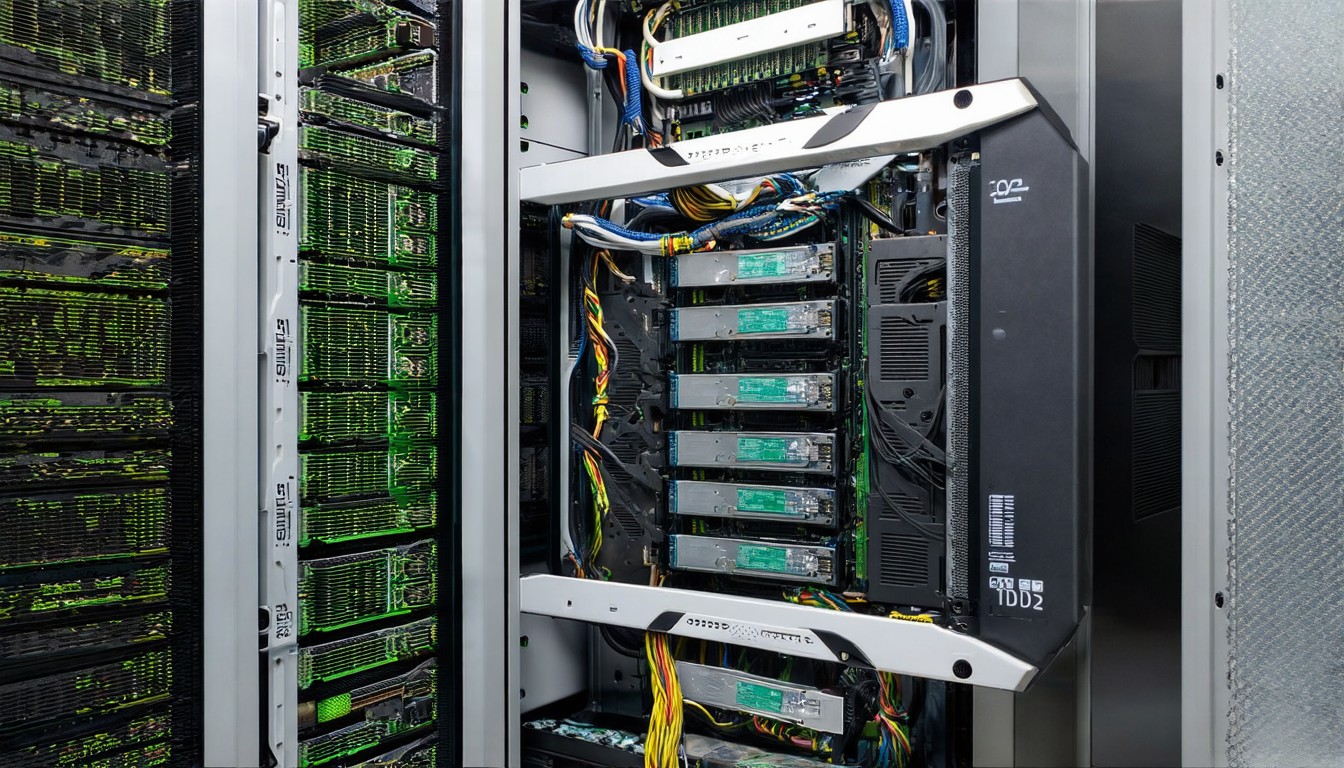
Cloudflare has announced the launch of its Gen 13 server fleet, which delivers a significant boost in edge compute performance by rethinking the balance between cache and cores. The new architecture, built on AMD EPYC™ Turin CPUs, prioritizes raw compute density over large L3 cache, resulting in a 2x increase in compute throughput. This breakthrough was made possible by the transition to a Rust-based FL2 stack, which eliminated the latency penalty and unlocked the full potential of the high-core-count processors.
Two years ago, Cloudflare introduced its Gen 12 server fleet, powered by AMD EPYC™ Genoa-X processors with their massive 3D V-Cache. The cache-heavy architecture was well-suited for the request handling layer, FL1, at the time. However, as the company evaluated next-generation hardware, it faced a challenge: the CPUs offering the most significant throughput gains came with a substantial reduction in cache. The legacy software stack was not optimized for this shift, and the potential benefits were being hindered by increasing latency.
The solution came with the FL2 transition, a Rust-based rewrite of Cloudflare's core request handling layer. FL2 removed the dependency on the larger cache, allowing performance to scale with the number of cores while maintaining service-level agreements (SLAs). This innovation proved crucial in harnessing the full potential of the Gen 13 architecture, which is now live and based on AMD EPYC™ 5th Gen Turin-based servers running FL2.
AMD's EPYC™ 5th Generation Turin-based processors offer more than just a core count increase. The architecture delivers improvements across multiple dimensions that are essential for Cloudflare's server requirements. With up to 192 cores and simultaneous multithreading (SMT) providing 384 threads, the Turin processors offer a 2x core count compared to Gen 12's 96 cores. Zen 5's architectural improvements also deliver better instructions-per-cycle (IPC) performance compared to Zen 4.
In addition to increased core count and improved IPC, Turin processors are more power-efficient. Despite the higher core count, they consume up to 32% fewer watts per core compared to Genoa-X processors. This efficiency is particularly valuable for edge computing, where power consumption is a critical factor.
The Turin processors also support DDR5-6400 memory, providing higher memory bandwidth to support the increased core count. However, this high-density OPN (Optimized Performance Node) architecture makes a deliberate tradeoff: prioritizing throughput over per-core cache. For example, comparing the highest-density Turin OPN to Gen 12 Genoa-X processors reveals that Turin's 192 cores share 384MB of L3 cache, compared to the larger cache available in Genoa-X.
By shifting the focus from cache to cores and optimizing the software stack with FL2, Cloudflare has achieved a 2x edge compute performance boost. This breakthrough not only demonstrates the potential of high-core-count architectures but also highlights the importance of software optimization in fully leveraging new hardware capabilities. As Cloudflare continues to innovate and expand its edge network, the Gen 13 servers will play a crucial role in delivering fast, reliable, and secure connectivity to users around the globe.









