
Kim Jong Un's teenage daughter 'could be considered his successor'
The teenage daughter of North Korean leader Kim Jong Un could be considered his successor, Seoul's spy agency has been reported as saying.
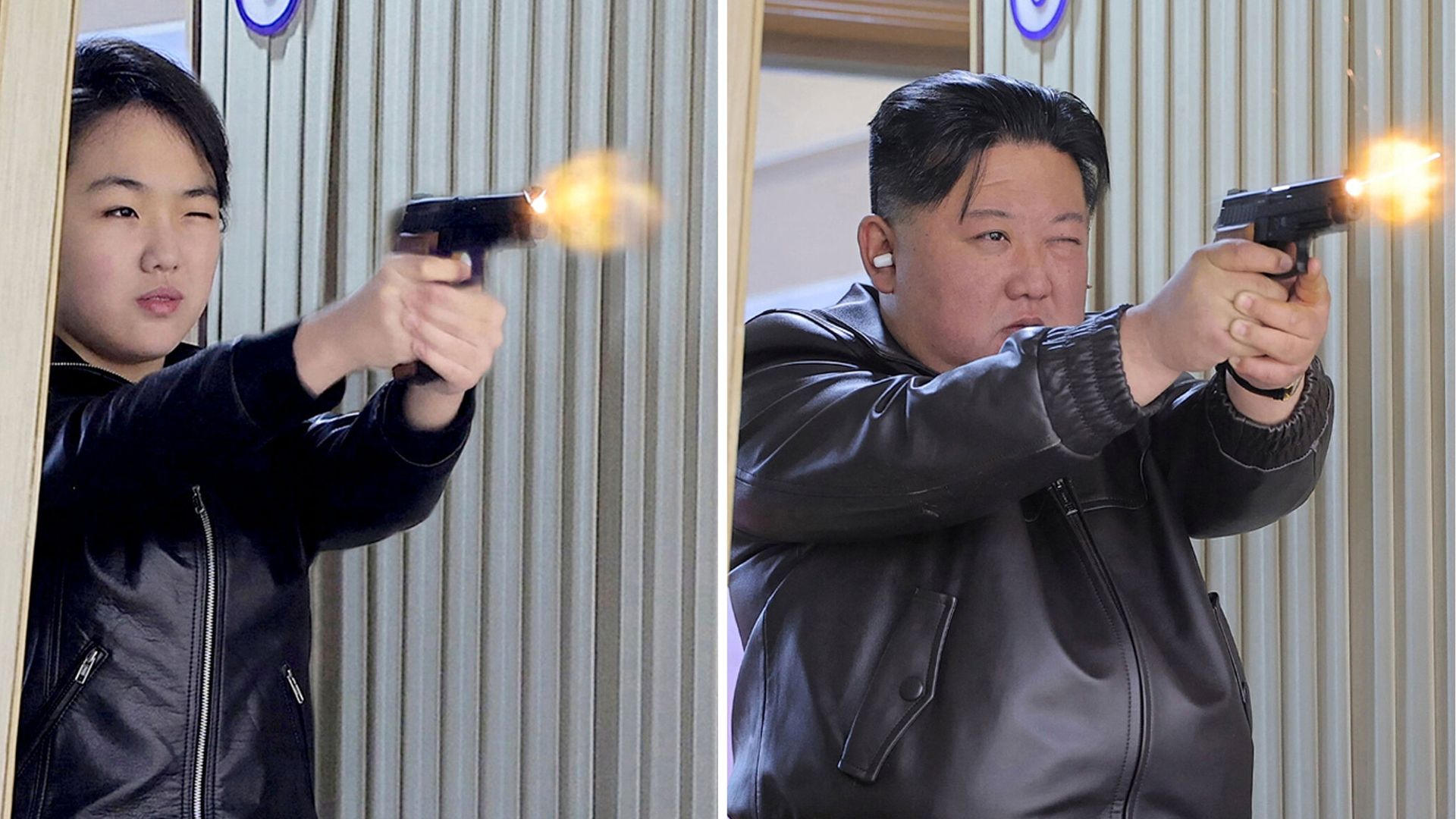
The teenage daughter of North Korean leader Kim Jong Un, Kim Ju-ae, has reportedly been identified as a potential successor to her father, according to South Korea's National Intelligence Service (NIS). This development comes as speculation about the future leadership of North Korea intensifies, with Kim Jong Un's health and longevity increasingly under scrutiny.
The NIS's assessment is based on recent intelligence gathered from various sources, including defectors and surveillance of North Korean activities. While there is no official confirmation from either the North or South Korean governments, the intelligence community has long been interested in the possibility of a female leader in the traditionally patriarchal regime.
Kim Ju-ae, who is believed to be in her early teens, has been spotted accompanying her father on several public appearances, including a visit to a munitions factory where they were seen firing pistols. These sightings have fueled speculation about her role within the regime and her potential future responsibilities. However, it is important to note that North Korea's leadership structure is highly secretive, and public appearances are often staged to project an image of unity and strength.
The idea of a female successor in North Korea is not entirely unprecedented. Kim Jong Suk, the mother of Kim Jong Il, was revered as a national heroine, and her influence was celebrated in state media. However, the concept of a female leader ruling North Korea remains largely theoretical, given the country's strict gender roles and the historical preference for male heirs.
The NIS's report raises questions about the stability of North Korea's leadership and the potential impact on regional security. If Kim Ju-ae were to succeed her father, it could signal a shift in the regime's approach to governance and foreign policy. However, it is equally plausible that the North Korean government might opt for a more traditional succession plan, with Kim Jong Un's brothers or other male relatives taking the helm.
In the meantime, the international community continues to monitor the situation closely. The United States and other nations have long been concerned about the potential for instability in North Korea, given the country's nuclear arsenal and its history of provocative actions. The possibility of a female leader could complicate diplomatic efforts, as it might lead to different dynamics in negotiations and interactions with other nations.
Despite the uncertainty, one thing remains clear: the future of North Korea's leadership will have significant implications for the region and the world at large. As the NIS's intelligence suggests, the teenage Kim Ju-ae could be on the cusp of a historic role, one that would shape the trajectory of her country for generations to come.
In conclusion, the speculation surrounding Kim Jong Un's teenage daughter as a potential successor highlights the complexities of North Korea's political landscape. While there is no definitive evidence to support this claim, the intelligence gathered by South Korea's NIS underscores the regime's potential willingness to break with tradition. As the world watches closely, the question of who will succeed Kim Jong Un remains one of the most intriguing and consequential in global politics.








