Khamenei unconscious in Qom raises concerns over Iran’s leadership stability
Khamenei's health issues could destabilize Iran's leadership, increasing regime change risks amid external pressures and internal uncertainties. The post Khamenei unconscious in Qom raises concerns over Iran’s leadership stability appeared first on Crypto Briefing .
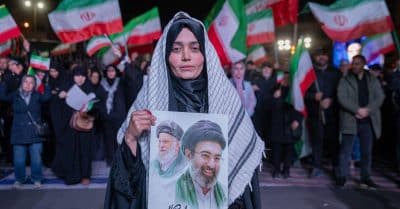
The recent report that Iran's Supreme Leader Ayatollah Ali Khamenei was unconscious in the holy city of Qom has sparked widespread concerns about the stability of Iran's leadership. Khamenei, who has been in power since 1989, is the highest-ranking religious and political figure in the Islamic Republic of Iran, and his health has been a subject of speculation for years. However, the recent incident has intensified worries about the potential for regime change and the implications for Iran's domestic and international standing.
Iran's leadership structure is unique, with Khamenei serving as both the head of state and the highest religious authority. This dual role has been crucial in maintaining the theocratic system that has governed Iran since the 1979 Islamic Revolution. Khamenei's health issues could disrupt this delicate balance, leading to power struggles and internal instability. Analysts have long noted that Iran's political system is not designed to handle the absence or incapacity of its Supreme Leader, which could create a power vacuum and exacerbate existing tensions within the regime.
The timing of Khamenei's reported health crisis is particularly concerning. Iran is currently facing significant external pressures, including economic sanctions imposed by the United States and other Western nations, as well as mounting tensions with Israel. Domestically, Iran's economy is struggling due to the impact of sanctions, inflation, and a lack of investment. These challenges have led to widespread dissatisfaction among Iranians, with protests breaking out sporadically across the country. The unrest has been suppressed ruthlessly by security forces, resulting in numerous deaths and arrests.
In this context, concerns about the leadership's stability are heightened. If Khamenei were to become incapacitated or pass away, the question of succession becomes critical. The Iranian constitution stipulates that the Supreme Leader must be a jurist, or faqih, and must be elected by an assembly of experts. However, the process of selecting a new leader is complex and could be manipulated by powerful factions within the regime. This could lead to a power struggle among hardliners and more moderate elements, with potential implications for Iran's nuclear program, its relations with other countries, and its domestic policies.
Moreover, the uncertainty surrounding Khamenei's health could embolden opposition groups both inside and outside Iran. Domestically, reformist and secularist movements might see a power vacuum as an opportunity to challenge the theocratic system. Externally, countries and organizations that oppose Iran's current regime, such as the United States and Israel, might attempt to exploit the instability to pressure Iran to change its policies.
In addition to the political implications, Khamenei's health issues could also have a significant impact on Iran's military capabilities. As the Supreme Leader, Khamenei has overseen the development of Iran's nuclear program and its revolutionary guards corps, the country's elite military force. A change in leadership could lead to shifts in Iran's military strategy, potentially affecting its regional and global standing.
The situation in Iran is further complicated by the fact that official statements about Khamenei's health are often sparse and contradictory. In the past, reports of his health issues have been downplayed or denied, leading to speculation about the extent of his actual condition. This lack of transparency has fueled further concerns among analysts and the international community.
In conclusion, the recent report that Ayatollah Ali Khamenei was unconscious in Qom has raised serious concerns about the stability of Iran's leadership. With external pressures and internal uncertainties already straining the country, the potential for regime change could have far-reaching consequences for Iran's domestic and international landscape. As the situation unfolds, it will be crucial for both Iran and the international community to monitor the developments closely, as any shift in leadership could reshape the region's political dynamics.