Jollof and Biryani: How Nigeria-India Redefine Soft Power
In Nigeria’s capital, Abuja, on November 15, 2024, a quiet revolution unfolded. Three Memoranda of Understanding were signed between India and Nigeria—on cultural exchange, customs cooperation, and geospatial surveys—paving the… The post Jollof and Biryani: How Nigeria-India Redefine Soft Power appeared first on India Narrative .
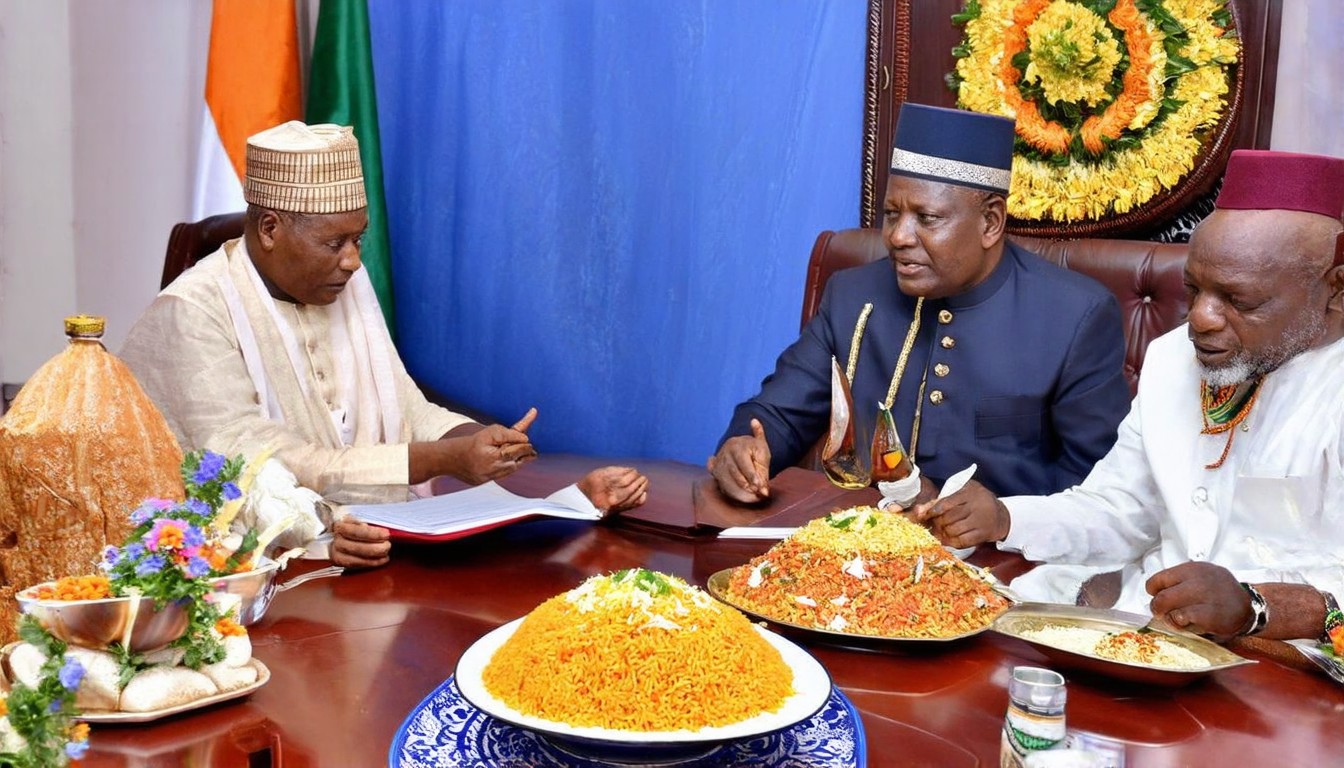
In Nigeria’s capital, Abuja, on November 15, 2024, a quiet revolution unfolded. Three Memoranda of Understanding were signed between India and Nigeria—on cultural exchange, customs cooperation, and geospatial surveys—paving the way for deeper people-to-people ties. This pivotal moment marked a significant shift in the relationship between Africa’s most populous nation and the world’s largest democracy.
The cultural exchange MoU, in particular, commits both nations to sharing archives, arts, and heritage experiences, fostering pluralism in societies long shaped by diversity. Imagine Nigerian troupes performing Afrobeat fusions with Bollywood rhythms at India’s Republic Day, or Indian classical dancers exploring Yoruba festivals—bridges built on shared anti-colonial histories. Such collaborations not only enrich cultural landscapes but also serve as powerful tools for soft power, promoting mutual understanding and goodwill.
The customs pact, meanwhile, streamlines the $20 billion-plus bilateral trade between the two countries, dominated by Nigerian crude oil feeding India’s refineries. By curbing illicit flows and boosting legitimate commerce, this agreement ensures a smoother flow of goods and services, benefiting both economies. The collaboration underscores the practical benefits of strengthening ties, as it directly impacts the lives of millions of people on both sides.
The third MoU, on geospatial surveys, renews a 2014 framework and equips Nigeria with India’s Survey of India expertise for mapping infrastructure, agriculture, and disaster management in a climate-vulnerable Sahel. This partnership is crucial for Nigeria, as it helps the country build resilient systems to address the challenges posed by climate change and ensure sustainable development.
At the core of these agreements lies India’s Indian Technical and Economic Cooperation (ITEC) program, a cornerstone of South-South solidarity. Since 1964, ITEC has trained over 200,000 professionals from 160 countries, with Nigeria receiving 400-500 fully funded scholarships yearly—250 civilian and 150 defense-focused. Covering fields such as IT, renewable energy, governance, agriculture, and more, ITEC has empowered 27,500 Nigerians over 45 years, all expenses paid. This initiative not only enhances the skills of Nigerian professionals but also fosters a network of professionals who can drive sustainable development in their home country.
Indian Prime Minister Narendra Modi’s landmark visit to Nigeria the following day, his first in 17 years, sealed the moment with Nigeria’s highest civilian honor, the Grand Commander of the Order of the Niger. This recognition is not merely a diplomatic formality but a testament to the mutual prosperity envisioned by both nations. It signifies a blueprint for collaboration in a fractured world, where soft power and practical cooperation can pave the way for a brighter future.
These agreements aren’t abstract; they are grounded in the shared values and mutual respect that have been building between India and Nigeria. By investing in cultural exchange, trade, and technical cooperation, both countries are not only strengthening their relationship but also setting an example for other nations to follow. In a world where geopolitical tensions often dominate the headlines, the quiet revolution unfolding in Abuja serves as a reminder of the power of people-to-people ties and the potential for positive change through soft power.