
? Jensen’s OpenClaw thesis
The inference transition changes everything
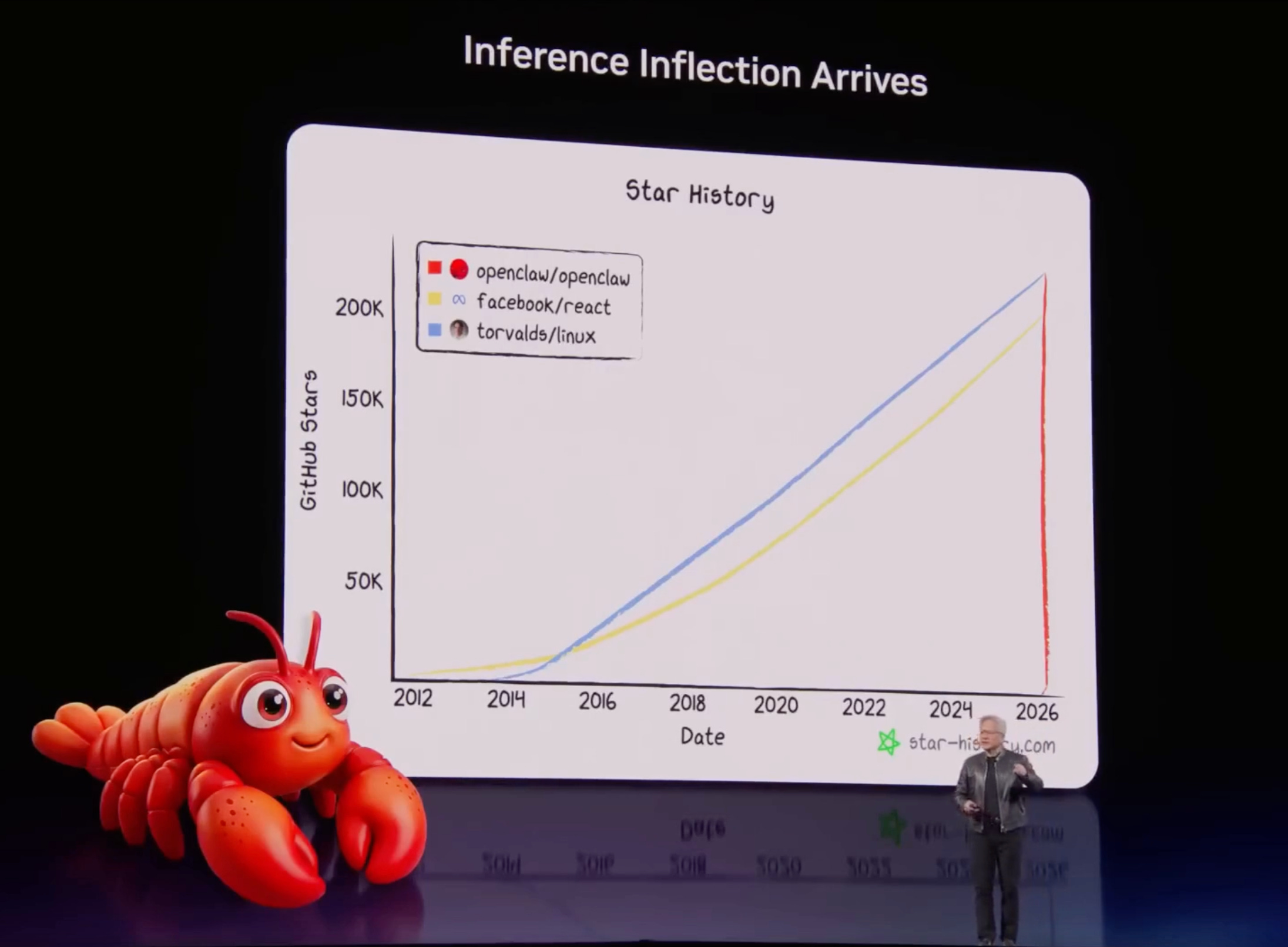
Jensen’s OpenClaw thesis: The inference transition changes everything
Jensen Huang’s performance at this year’s GTC was a highlight for the tech industry, but one statement in particular stood out. Huang mentioned that every company needs an OpenClaw strategy. This concept, which Huang likened to the revolutionary impact of the web browser in 1992, is set to reshape the AI economy. By understanding the shift Jensen described, businesses can prepare for the rapidly changing landscape and capitalize on the opportunities it presents.
The AI economy has long been dominated by the economics of training large language models. When ChatGPT emerged in late 2022, the focus was on the massive compute resources required for training. Models like GPT-4 and Meta’s Llama series consumed astronomical amounts of computing power, with GPT-4 reportedly costing over $100 million to train. Data centers were optimized for maximum parallelism and throughput, catering to the one-time act of building these models.
However, training is inherently a one-time event. Once a model is trained, it is inferred against—or used—millions or billions of times by end-users. Inference has entirely different economic dynamics compared to training. This realization is crucial, as it highlights the shift from a training-centric economy to an inference-centric one.
NVIDIA’s acquisition of Groq for $20 billion underscores this transition. When a user sends a prompt to a language model, two phases occur: the pre-fill phase and the decode phase. During the pre-fill phase, the model reads and processes input tokens in parallel, a task where GPUs excel due to their graphics-oriented architecture. However, the decode phase, which generates the response word by word, is structurally sequential and cannot be parallelized. This phase becomes the bottleneck, with memory bandwidth becoming a critical factor.
The inference transition signifies a move away from the traditional focus on training and towards optimizing inference processes. Companies that recognize the importance of this shift and adopt an OpenClaw strategy will be better positioned to thrive in the evolving AI economy. By prioritizing inference efficiency and leveraging technologies that address the unique challenges of this phase, businesses can unlock new opportunities and maintain a competitive edge.
For organizations, adopting an OpenClaw strategy involves reevaluating their AI infrastructure and processes. This includes optimizing inference workflows, investing in technologies that improve memory bandwidth, and ensuring systems are scalable to handle the growing demands of inference. By doing so, companies can reduce latency, improve response times, and enhance the overall user experience.
The window for adopting an OpenClaw strategy is already narrowing. As the AI economy transitions from training to inference, companies that fail to adapt may find themselves left behind. The time to act is now, as the benefits of an OpenClaw approach—such as cost efficiency, scalability, and improved performance—are becoming increasingly important in the competitive AI landscape.
In conclusion, Jensen Huang’s mention of an OpenClaw strategy at GTC is a call to action for businesses to prepare for the inference-centric future of AI. By recognizing the shift from training to inference and adopting strategies that optimize inference processes, organizations can position themselves for success in the rapidly evolving AI economy. The window for action is closing, so it is crucial for companies to act swiftly and strategically.









