Jammu Temple Wall Collapse: Heritage vs. Development
A section of the nearly 200-year-old Gadadhar temple wall in Jammu collapsed after rain, sparking local outrage. Residents blame ongoing excavation work near the Mubarak Mandi heritage complex, narrowly averting a major tragedy.
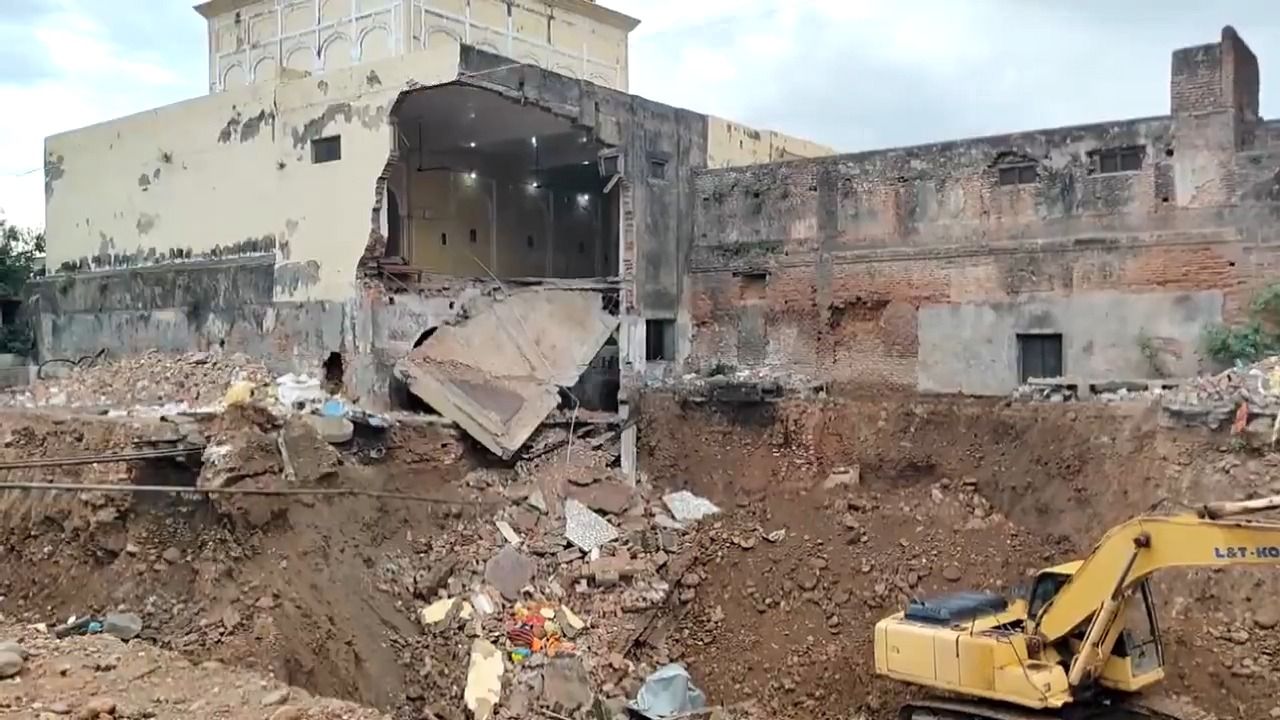
A section of the nearly two-century-old Gadadhar temple wall in Jammu collapsed on Thursday, following rainfall. The incident, which occurred outside the historic Mubarak Mandi heritage complex, fortunately resulted in no casualties. However, it has ignited significant concern among local residents who are pointing fingers at the extensive excavation and restoration activities currently underway near the revered shrine. The collapse has brought to the forefront long-standing anxieties regarding the safety of ancient structures amidst ongoing development projects in historically sensitive zones.
The Gadadhar temple, a sacred site dedicated to Lord Vishnu and Goddess Lakshmi, traces its origins back to the mid-19th century. It was established during the illustrious reign of Maharaja Gulab Singh, a pivotal figure in the region's history, underscoring its deep cultural and architectural significance. Managed by the esteemed Dharmarth Trust, the temple stands as a testament to Jammu's rich heritage, drawing devotees and visitors alike. Its age and historical context make any damage to its structure a matter of profound public and cultural concern, highlighting the delicate balance required in preserving such invaluable assets.
Crucially, the incident narrowly averted a potential catastrophe. Local accounts reveal that a community feast, known as a "bhandara", had concluded at the temple just 10 to 20 minutes before the wall gave way. Ram Magotra, a local resident, expressed immense relief, stating that "By the god's grace, no casualty was reported in the incident. Had it happened earlier, it could have resulted in a major tragedy." He further emphasized the constant foot traffic in the narrow lane outside the temple, which is frequently used by residents, including children and the elderly, underscoring the severe risk posed by such structural failures in densely populated areas.
Residents are vociferous in their allegations, asserting that the ongoing excavation work, part of the protracted restoration of the Mubarak Mandi palace complex, directly contributed to the temple wall's collapse. Specifically, they cite the construction of a parking lot in the vicinity as a key factor. The community believes that these extensive digging activities have critically weakened the foundations and structural integrity of the ancient temple, making it susceptible to external factors like rain. This perspective underscores a prevalent concern about the potential negative impacts of modern construction methods on fragile historical edifices.
Furthermore, locals claim that they had previously raised objections regarding the methodology and proximity of the excavation work to heritage structures. These concerns, they allege, were not adequately addressed by the authorities overseeing the restoration project. This perceived disregard for community input and expert warnings has fueled public frustration and a sense of betrayal, suggesting a breakdown in communication and accountability between project implementers and the affected populace. The incident, therefore, is seen by many as a direct consequence of these ignored advisories.
Elaborating on the allegations, Ram Magotra specifically pointed to what he described as deep excavation carried out without proper soil testing or a comprehensive assessment of the old building's structural stability. He contended that the agencies involved in the restoration project failed to adequately evaluate whether the temple walls could withstand the impact of such extensive digging in its immediate vicinity. Magotra has demanded stringent accountability from the officials supervising the project, stressing the critical need for meticulous planning and execution when dealing with heritage conservation.
Beyond the immediate collapse, Magotra also voiced apprehension over reports suggesting the development of commercial facilities, including a restaurant, in the area. He firmly stated that public safety should never be compromised for the sake of development projects or commercial ventures. This concern reflects a broader societal debate about balancing economic development and tourism with the imperative of preserving cultural heritage and ensuring the well-being of local communities, especially in sensitive historical precincts.
The Mubarak Mandi complex itself holds immense historical significance as the erstwhile royal residence of the Dogra rulers. This sprawling complex has been undergoing extensive restoration and conservation work for several years, aimed at preserving its unique architectural grandeur and historical importance for future generations. The ambitious project seeks to revitalize the complex, transforming it into a vibrant cultural hub. However, the recent incident at the adjacent Gadadhar temple casts a shadow on the execution methodologies employed in such large-scale heritage restoration initiatives.
In the wake of the incident, local residents have collectively called for an immediate and thorough technical assessment to precisely determine the cause of the collapse. They have also urged authorities to take swift action to secure the surrounding areas, thereby preventing any further potential damage or accidents. As of now, the authorities responsible for the Mubarak Mandi restoration project have not issued any official statement or response to the serious allegations and concerns raised by the local community, leaving many questions unanswered and anxieties unaddressed.
The partial collapse of the Gadadhar temple wall serves as a stark reminder of the inherent complexities and responsibilities involved in heritage conservation, particularly when juxtaposed with urban development and restoration efforts. It underscores the critical necessity for rigorous oversight, transparent communication, and a community-centric approach to ensure that the preservation of historical landmarks does not inadvertently lead to their degradation or endanger public safety. The incident calls for a re-evaluation of current practices to safeguard India's invaluable architectural legacy.