
Jamie Dimon says Iran war makes Middle East peace prospects better in the long term
JPMorgan Chase CEO Jamie Dimon issued an optimistic viewpoint on Middle East peace, weeks into the war with Iran.
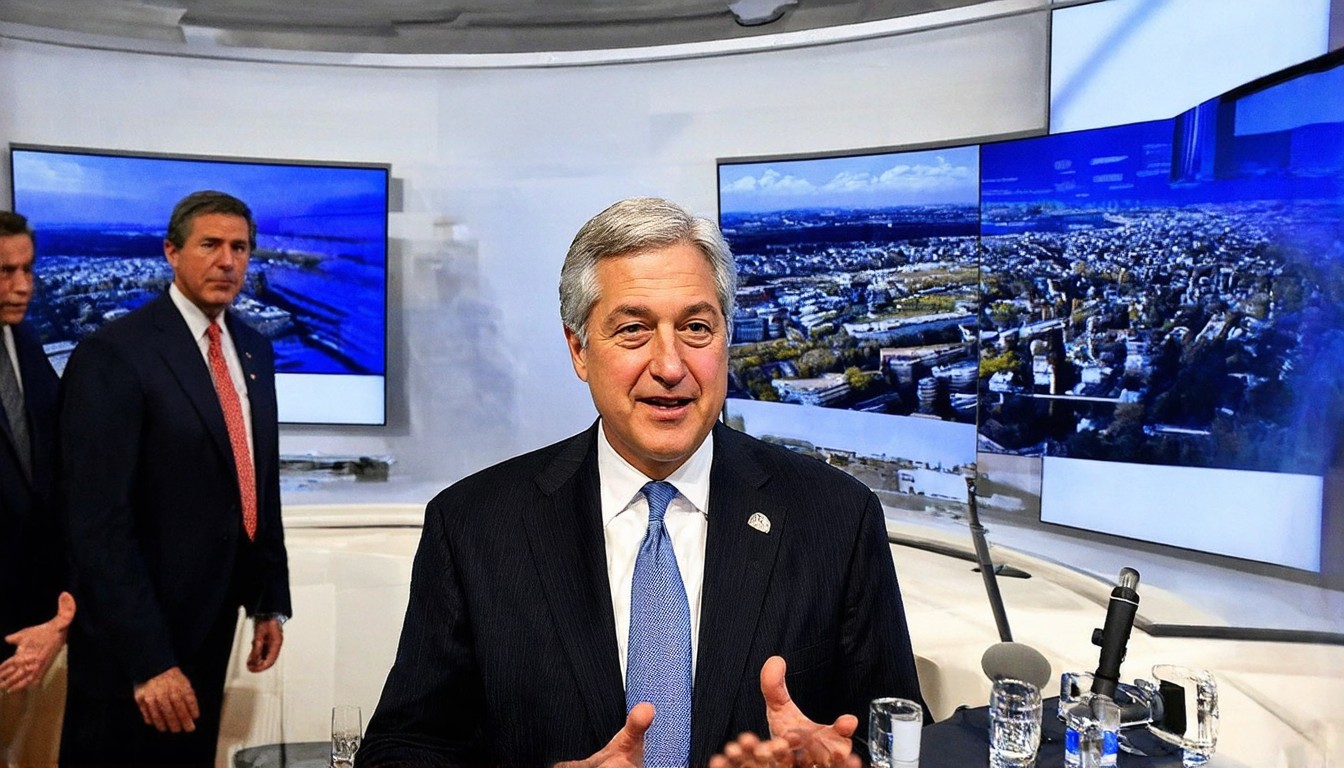
JPMorgan Chase CEO Jamie Dimon has recently expressed an optimistic outlook on the prospects of Middle East peace, despite the ongoing conflict with Iran. In a series of interviews, Dimon suggested that the current war could inadvertently pave the way for a more stable and peaceful region in the long term.
Dimon's comments come as the Middle East continues to grapple with the complexities of its political and social dynamics. The war with Iran, which has been raging for weeks, has brought renewed attention to the region's instability and the need for peace. However, Dimon argues that this conflict could serve as a catalyst for change, ultimately leading to a more unified and stable Middle East.
One of the key factors Dimon points to is the potential for the war to unify the region's diverse factions. He suggests that the shared threat posed by Iran could encourage countries in the Middle East to put aside their differences and work together towards a common goal. This unity, he believes, could lead to a stronger and more resilient region, capable of addressing the challenges it faces.
Furthermore, Dimon believes that the war could lead to a reevaluation of the region's political landscape. He argues that the current conflict may force certain countries to reconsider their alliances and policies, leading to a more balanced and equitable distribution of power in the Middle East. This shift could, in turn, create a more stable environment, as the region's major players are forced to engage in dialogue and cooperation.
Dimon's optimism is not without its critics, however. Some analysts argue that the war could exacerbate existing tensions and deepen divisions within the region. They point to the potential for the conflict to spill over into neighboring countries, further destabilizing the area. Additionally, there are concerns that the war could lead to increased militarization and a further erosion of diplomatic efforts to achieve peace.
Despite these concerns, Dimon remains steadfast in his belief that the war could ultimately lead to positive outcomes. He emphasizes that while the short-term effects of the conflict may be negative, the long-term implications could be transformative. By forcing the region's leaders to confront their differences and work towards a common solution, the war could set the stage for a new era of peace and stability in the Middle East.
In conclusion, Jamie Dimon's optimistic view on the Middle East's peace prospects, despite the ongoing war with Iran, highlights the complex interplay of conflict and cooperation in the region. While there are undoubtedly significant challenges to achieving peace, Dimon's perspective underscores the potential for the current conflict to serve as a catalyst for change. As the Middle East navigates this tumultuous period, the path towards lasting peace will undoubtedly require careful consideration of the region's unique dynamics and the ability of its leaders to unite in the face of adversity.









