
Israeli strikes kill Iran Guards intel chief as Trump deadline looms
Israeli strikes killed the intelligence chief of Iran's Revolutionary Guards, as the Islamic republic on Monday defied threats from US President Donald Trump to devastate civilian infrastructure if it does not reopen the Strait of Hormuz.
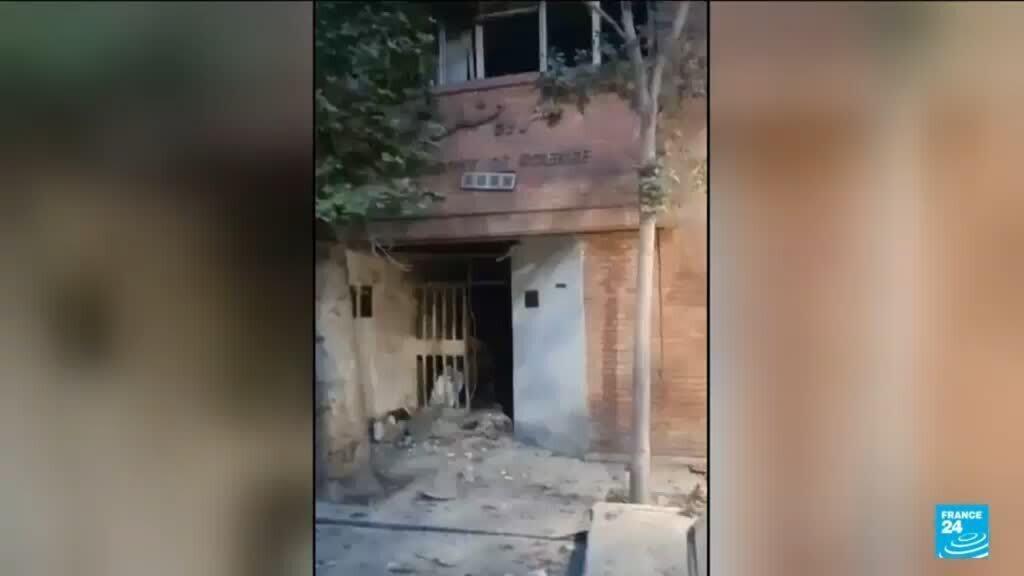
Israeli forces carried out a series of strikes in Iran on Monday, targeting the intelligence chief of the Islamic Revolutionary Guard Corps (IRGC), a high-ranking military and intelligence leader in the country. The attack comes as tensions escalate between Iran and the United States, with US President Donald Trump warning that the US would retaliate against Iranian civilian infrastructure if it does not reopen the Strait of Hormuz.
The intelligence chief, whose identity has not been publicly confirmed, was a key figure in the IRGC's intelligence operations, overseeing the organization's activities in the Middle East and beyond. The IRGC is a powerful military and paramilitary force within Iran, responsible for both domestic and foreign operations, including support for proxies in Syria and Lebanon. The strike, which reportedly took place in the early hours of the morning, was executed with precision and has been described as a significant blow to Iran's intelligence capabilities.
The timing of the Israeli attack coincides with a critical moment in the ongoing geopolitical standoff between Iran and the United States. On Monday, Iran defied a deadline set by Trump, who had threatened to take military action against Iranian infrastructure if the country did not reopen the Strait of Hormuz. The Strait, a narrow waterway connecting the Persian Gulf to the Gulf of Oman, is a crucial chokepoint for global oil shipments, with approximately 30% of the world's oil passing through it.
Iran has been accused of repeatedly threatening to block the Strait, citing US sanctions and economic pressures. In response, the US has increased its military presence in the region, deploying additional warships and aircraft carriers to monitor the situation. Trump's warning, delivered in a tweet on Sunday, underscored the administration's determination to prevent Iran from disrupting global oil supplies.
The Israeli strike on the IRGC intelligence chief is seen as part of a broader campaign by Israel to undermine Iran's capabilities and influence in the region. Israel has long regarded Iran as a primary threat, particularly due to its support for Shia militant groups in Lebanon and Syria, as well as its nuclear program. Israeli intelligence has been actively involved in covert operations targeting Iranian assets and personnel, both within Iran and abroad.
The attack on the IRGC intelligence chief is expected to further heighten tensions between Iran and Israel. Iran has previously threatened to retaliate against Israeli targets in response to Israeli strikes, particularly those targeting Iranian proxies in Syria. The latest strike could therefore trigger a cycle of escalating violence and retaliation, with potential ramifications for regional stability.
Meanwhile, the US is closely monitoring the situation, with officials expressing concern over the potential for a broader conflict to spill over into the region. The Trump administration has been working to build a coalition of international support to counter Iran's actions, including sanctions and diplomatic efforts. However, the effectiveness of these measures has been questioned, with some experts warning that a military confrontation could become increasingly likely.
In the aftermath of the Israeli strike, the future of the Strait of Hormuz and the broader Middle East remains uncertain. As tensions continue to rise, the international community must grapple with the potential for a full-scale conflict, with far-reaching consequences for global energy markets, regional politics, and international security. The latest developments underscore the delicate balance of power in the region and the urgent need for diplomatic engagement to prevent further escalation.








