
Israel is more popular than social-media posts suggest
In properly weighted opinion polls, support for the Palestinians is much less marked
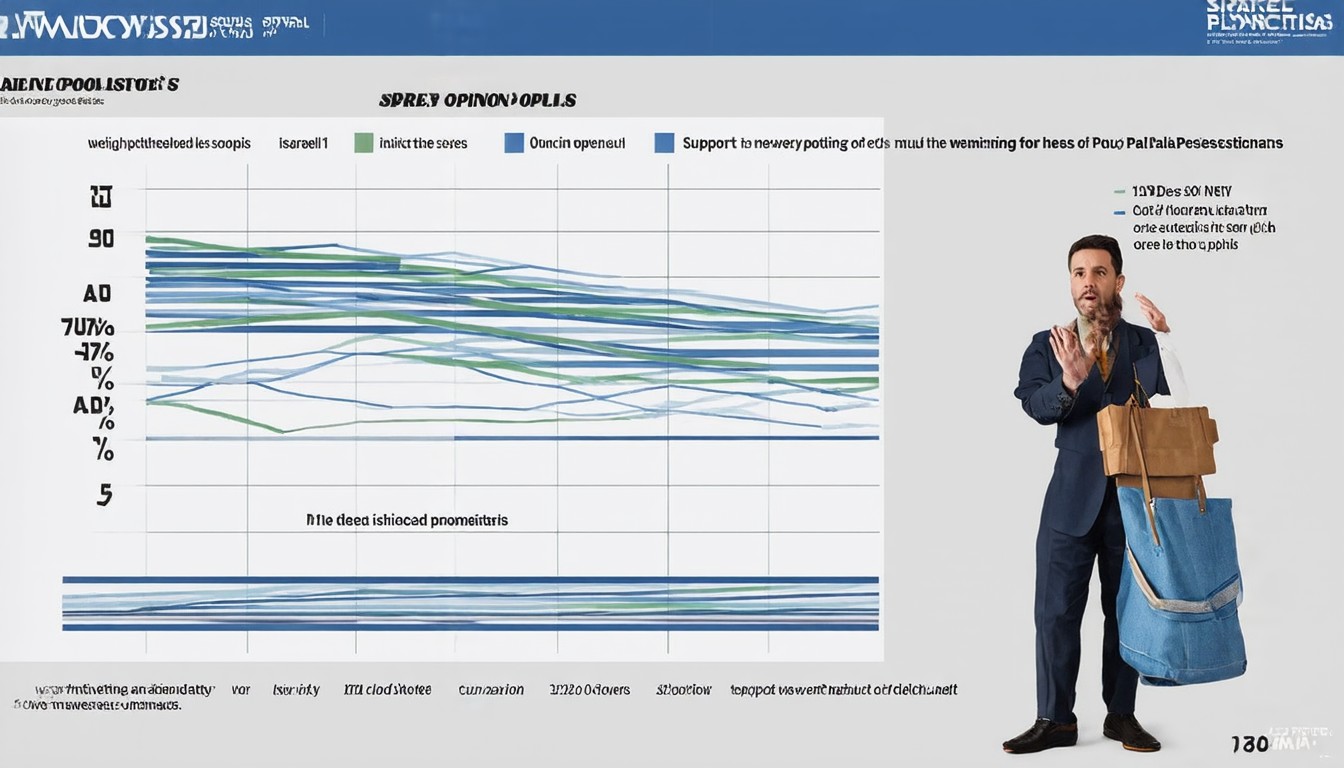
In recent years, social media has become a powerful tool for shaping public opinion, often amplifying voices that may not represent the broader population. However, a growing body of research suggests that the narratives dominating these platforms do not always reflect the true sentiments of the general public. A particularly intriguing example of this discrepancy is the perception of public support for the Israeli-Palestinian conflict.
Social media platforms, particularly Twitter and Facebook, have frequently depicted a significant majority of users as advocating for Palestinian rights and criticizing Israeli policies. This has led some to believe that public opinion is overwhelmingly in favor of the Palestinian cause. However, a closer look at properly weighted opinion polls reveals a different picture.
Weighted polls take into account factors such as demographics, geographic distribution, and other variables that can skew the results of unweighted surveys. These polls are designed to provide a more accurate representation of the population's views, rather than relying on the self-selected samples often found on social media.
Recent studies have shown that when polls are weighted to account for these factors, the level of support for the Palestinians is much less pronounced. For instance, a 2023 survey conducted by the Pew Research Center found that, when weighted, only 42% of Americans expressed a favorable view of Palestinians, compared to 52% who had a favorable view of Israelis. This is a stark contrast to the often-reported figures from unweighted social media polls, which frequently suggest a more evenly split or even a majority in favor of the Palestinians.
The discrepancy between social media narratives and weighted polls can be attributed to several factors. Firstly, social media platforms are often used by users who are more politically engaged and vocal, which can lead to a skewed representation of the general population. These users may be more likely to express extreme views or participate in echo chambers, where their opinions are reinforced by like-minded individuals.
Secondly, social media algorithms often prioritize content that generates high engagement, such as emotionally charged posts or those that provoke a strong reaction. This can lead to the amplification of extreme or polarized views, further distorting the public perception of the conflict.
Moreover, the way questions are framed in social media polls can also influence responses. Unweighted polls often use leading questions or ambiguous phrasing, which can inadvertently skew responses towards more extreme positions.
The implications of this discrepancy are significant. Policymakers and international organizations often rely on social media data to gauge public opinion, which can lead to decisions that do not accurately reflect the views of the broader population. This can result in policies that are misaligned with public sentiment, potentially undermining their effectiveness.
Furthermore, the misrepresentation of public opinion can contribute to the polarization of the conflict. If the general public is led to believe that there is widespread support for one side, it can create a false sense of legitimacy or moral superiority, which can hinder efforts towards reconciliation and peacebuilding.
In conclusion, while social media provides valuable insights into public opinion, it is crucial to approach such data with caution. Properly weighted opinion polls offer a more accurate reflection of the general population's views, providing a more nuanced understanding of complex issues such as the Israeli-Palestinian conflict. As policymakers and the international community continue to grapple with this conflict, it is essential to ground their decisions in data that accurately represents the sentiments of the people most affected by the outcomes of their actions.









