
Israel approves sweeping death penalty legislation targeting terrorism, EU condemns move
Israel's Knesset voted to mandate the death penalty for terrorists convicted of deadly attacks, a shift lawmakers say was driven by the horrors of the Oct. 7 massacre.
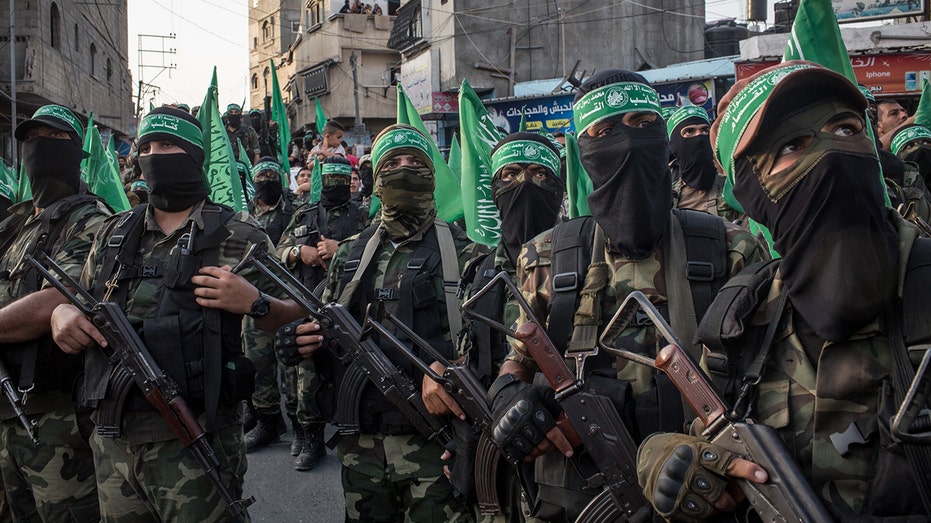
Israel's Knesset has passed sweeping death penalty legislation targeting terrorism, a move that has drawn condemnation from the European Union. The law, which mandates the death penalty for Palestinian terrorists convicted of deadly acts of terrorism, was approved by a vote of 62-47. The legislation was spearheaded by far-right National Security Minister Itamar Ben Gvir and his party, Otzma Yehudit.
The decision to reinstate the death penalty comes after the horrific massacre that took place on October 7, which lawmakers say has driven the need for a harsher approach to terrorism. Otzma Yehudit lawmaker Tzvika Foghel, who advanced the bill through the National Security Committee, told Fox News Digital that Israelis are fed up with policies of containment and compromise. He emphasized that the death penalty for terrorists is part of a broader shift in Israel, driven by the recognition that no other country faces a reality in confronting radical Islamic terrorism in Gaza, Lebanon, Judea and Samaria (the West Bank), as well as in Yemen and Iran.
Foghel compared the death penalty for terrorists who have burned, raped, mutilated, and abused children and parents to the punishment established for the Nazis. He argued that the death penalty is a necessary measure to protect Israeli citizens from the ongoing threat of terrorism.
The move has been met with strong opposition, particularly from European countries. Kaja Kallas, the European Union’s High Representative for Foreign Affairs and Security Policy, stated that the EU has a principled position against the death penalty in all cases and in all circumstances. She noted that Israel had previously upheld a de facto moratorium on both executions and capital punishment sentencing, thereby leading by example in the region despite a complex security environment.
Kallas expressed deep concern over the approval of the Death Penalty Bill by the Israeli Parliament, describing it as a grave regression from Israel's own commitments. She reiterated the EU's opposition to the death penalty and called for Israel to reconsider its decision.
The legislation has also faced criticism from Israeli opposition leaders, who argue that it will only fuel further violence and retaliation. They maintain that the death penalty does not deter terrorism and may even encourage more attacks, as perpetrators may feel they have nothing to lose.
Despite the criticism, the Knesset's decision to reinstate the death penalty for terrorists is a significant shift in Israeli policy. It reflects a growing sense of desperation and frustration among lawmakers and citizens alike, who are seeking more effective ways to combat the ongoing terror threat.
The approval of this legislation is likely to have far-reaching consequences, both domestically and internationally. It could lead to increased tensions between Israel and its neighbors, as well as strained relations with European countries that oppose the death penalty.
In the coming weeks and months, it will be interesting to see how the Israeli government and its allies respond to the international backlash. Will they stand firm in their decision, or will they be forced to reconsider their stance on the death penalty for terrorists? Only time will tell.
Meanwhile, the Israeli public remains divided on the issue. Some argue that the death penalty is a necessary measure to protect national security, while others believe that it is a cruel and ineffective form of punishment that will only lead to further violence and instability.
As the debate continues, one thing is clear: the approval of the death penalty legislation is a significant development in Israeli politics and a reflection of the deep divisions and tensions that exist within Israeli society. It remains to be seen whether this new law will be effective in combating terrorism or whether it will only serve to exacerbate the ongoing conflict.









