Israel, Lebanon Renew Ceasefire; Hezbollah Banned from Zones
A US-mediated agreement sees Israel and Lebanon renew their delicate ceasefire and establish security zones within Lebanon, from which Hezbollah militants will be prohibited, aiming for comprehensive peace amidst regional tensions.
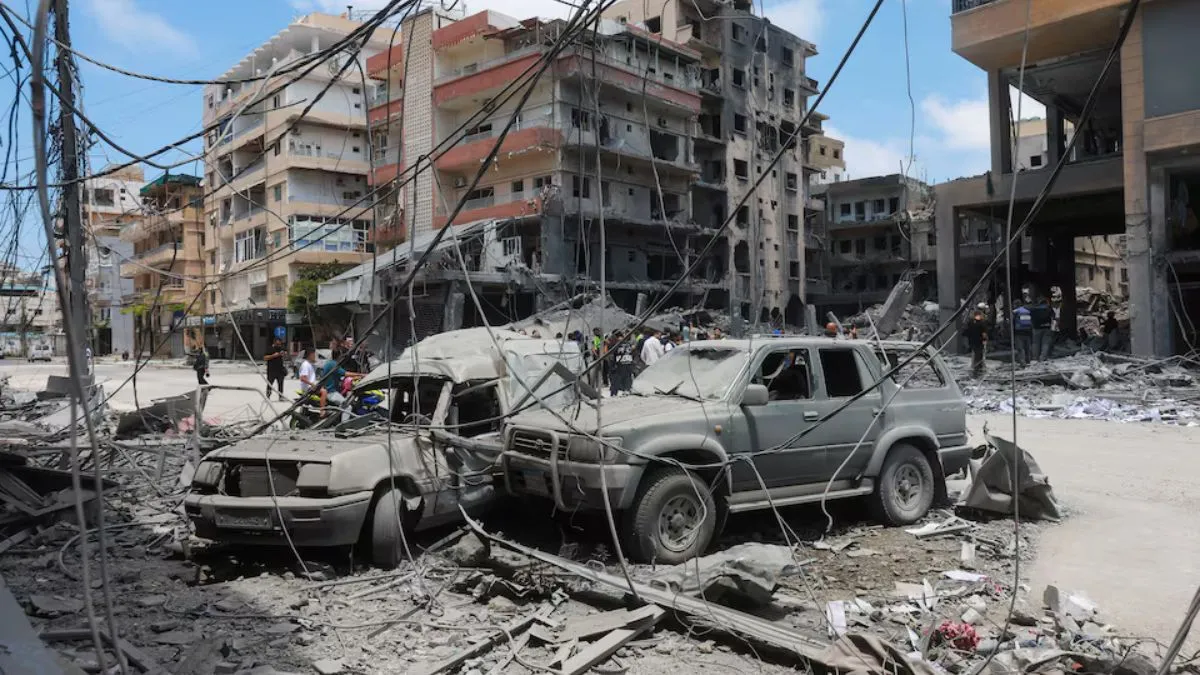
In a significant diplomatic development, Israel and Lebanon have reportedly agreed to renew their long-standing yet fragile ceasefire. This crucial understanding, brokered through the mediation efforts of the United States, also entails the establishment of specific security zones within Lebanese territory. A central tenet of this renewed agreement is the explicit exclusion of Hezbollah militants from these designated areas, marking a pivotal shift in the dynamics along the contentious border.
The historical relationship between Israel and Lebanon has been characterized by periods of intense conflict and uneasy truces. Hezbollah, a powerful political party and militant group in Lebanon, has frequently been at the forefront of cross-border confrontations, often operating independently of the Lebanese state. The 'fragile' nature of past ceasefires has consistently underscored the deep-seated mistrust and complex geopolitical landscape that defines this volatile region, making any renewed commitment to peace a cautious yet hopeful step.
Under the terms of this latest US-mediated agreement, the renewed ceasefire is complemented by the creation of security zones within southern Lebanon. While the precise geographical scope and operational parameters of these zones were not detailed, their primary objective is understood to be the creation of a buffer, intended to reduce direct contact and potential flashpoints between Israeli forces and non-state actors operating from Lebanese soil. This measure aims to enhance stability and prevent escalation along the frontier.
Perhaps the most impactful element of this renewed understanding is the stipulation that Hezbollah militants will be banned from these newly established security zones. This provision represents a direct challenge to Hezbollah's operational freedom in areas traditionally considered its stronghold or spheres of influence. The enforcement of such a ban would necessitate a significant shift in the security architecture of southern Lebanon and could have profound implications for the group's future activities and its relationship with the Lebanese state.
The United States' role as a mediator has been instrumental in bringing both parties to this agreement. International diplomatic engagement often proves critical in navigating the intricate web of regional rivalries and domestic political pressures that typically complicate peace efforts in the Middle East. Furthermore, the agreement reportedly places the Lebanese national army in control of these security zones, a move that could bolster the authority of the Lebanese state and its legitimate security forces over its sovereign territory, potentially reducing the influence of non-state armed groups.
The overarching goal articulated for this agreement is the pursuit of comprehensive peace between Israel and Lebanon. While this ambition remains a long-term aspiration given decades of animosity and unresolved issues, the establishment of security zones and the renewed ceasefire are presented as foundational steps towards de-escalation. Such measures, if successfully implemented and sustained, could lay groundwork for future dialogue and more substantial peace-building initiatives, moving beyond mere cessation of hostilities.
However, the path to lasting peace is fraught with significant hurdles. The agreement comes amidst ongoing regional tensions, which frequently involve proxy conflicts and shifting alliances. The persistent influence of Iran, a key patron of Hezbollah, introduces another layer of complexity. Iran's strategic interests in the region often diverge from those of the United States and its allies, and its role could potentially impact the durability and effectiveness of any agreement that seeks to curtail Hezbollah's activities.
The successful implementation of these security zones and the enforcement of the ban on Hezbollah will depend heavily on the commitment of all parties and the capacity of the Lebanese army to assert full control. Should the agreement hold, it could potentially lead to a reduction in border skirmishes, enhance the security of civilian populations on both sides, and foster a more predictable security environment. Conversely, any breaches or failures in enforcement could quickly unravel the fragile truce and reignite tensions.
Observers will undoubtedly be watching closely to see if this renewed ceasefire and the establishment of security zones can indeed survive the multifaceted challenges inherent in the region. The question of whether this truce will endure hinges not only on the immediate actions of Israel and Lebanon but also on the broader geopolitical currents, the internal dynamics within Lebanon, and the willingness of regional and international actors to support and uphold the terms of the agreement. The journey towards comprehensive peace remains arduous.
Ultimately, this US-mediated agreement represents a delicate balancing act, aiming to create a framework for stability where none has truly existed in a robust form. While the intent is clear – to move towards comprehensive peace by sidelining a key non-state actor from critical border areas – the inherent fragility of the situation, compounded by entrenched regional rivalries and external influences, means that the path ahead will require sustained diplomatic effort and unwavering commitment from all stakeholders to truly transform this renewed ceasefire into a durable peace.