
Iran's ceasefire push may be a 'cycle of deception,' analysts warn as shadowy figure gains power
Iran's shadowy Ahmad Vahidi, a former Quds Force commander linked to deadly bombings abroad, is now more dominant than Iran's president or Khamenei's son, experts warn.
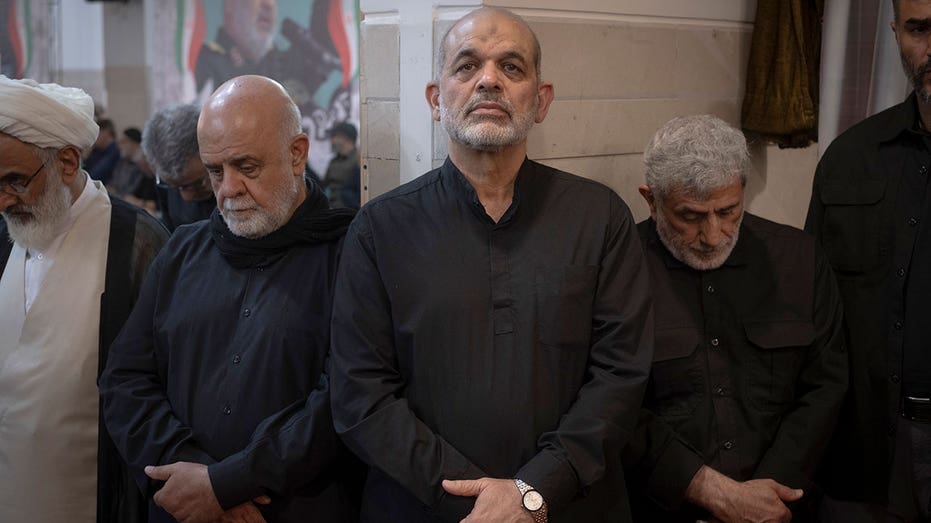
Iran's recent push for a ceasefire has raised concerns among analysts who warn that the country's real power dynamics may be shifting towards hardline figures within the Islamic Revolutionary Guard Corps (IRGC). President Donald Trump's suggestion that Iran might be seeking a ceasefire has led to speculation about the true nature of Iran's intentions and the individuals holding the reins of power. While Trump did not explicitly name the Iranian figure he was referring to, his comments have sparked discussions about the role of Iran's President Masoud Pezeshkian and the broader implications of a potential ceasefire.
Pezeshkian's statement, in which he claimed that Iran's new regime president is "much less radicalized and far more intelligent than his predecessors," has been met with skepticism by experts. Behnam Ben Taleblu, a senior fellow at the Foundation for Defense of Democracies, told Fox News Digital that Iran's president does not have the authority to make decisions about major military conflicts with the United States. This highlights the complex power structure within Iran, where senior figures tied to the IRGC, such as Ahmad Vahidi, Mohammad Bagher Ghalibaf, and Mohammad Zolghadr, hold significant influence.
Ahmad Vahidi, a former Quds Force commander and a shadowy figure in Iran's political landscape, has recently gained prominence and is now considered more dominant than Iran's president or even Supreme Leader Ayatollah Ali Khamenei's son. Vahidi's reemergence has raised concerns among analysts, as he is linked to deadly bombings abroad and is seen as an extremist pulling the strings in Iran's leadership.
Experts caution that even when Iran signals interest in a "ceasefire," it may not align with the Western understanding of the term. Beni Sabti, an Iran expert at the Israeli Institute for National Security Studies, introduced the concept of "hudna," a ceasefire with deception. Under this strategy, Iran would stop fighting when it is weak, rebuild its strength, and then attack again, targeting either Israel or the United States.
This "cycle of deception" underscores the challenges faced by both the United States and its allies in interpreting Iran's intentions. The IRGC's senior figures, including Vahidi, operate within overlapping centers of influence, making it difficult to discern the true drivers of Iran's foreign policy. As the power dynamics shift, the potential for escalation in the region remains a significant concern.
The Trump administration's "doctrine of unpredictability" in dealing with Iran has been on display amidst the recent strike threats and sudden pauses. This approach has been criticized for its lack of clear strategy and coherence. However, it has also been effective in keeping Iran off-balance and uncertain about the next move by the United States.
In conclusion, while Iran's ceasefire push may appear to signal a shift in its approach, analysts warn that the real power lies with hardline figures within the IRGC, such as Ahmad Vahidi. The concept of "hudna" serves as a reminder that Iran's understanding of a ceasefire may be vastly different from that of the West. As the power structure evolves, the complex interplay of influence within Iran's leadership will continue to pose challenges for both the United States and its allies in the region. The stakes are high, and the potential for escalation remains a significant concern.









