
Iran threatens to restrict Bab el-Mandeb Strait after Trump warnings
US President Donald Trump on Sunday threatened Iran and its infrastructure if it doesn't open the Strait of Hormuz by his Tuesday deadline. In response, Iran threatened to restrict the Bab el-Mandeb Strait.
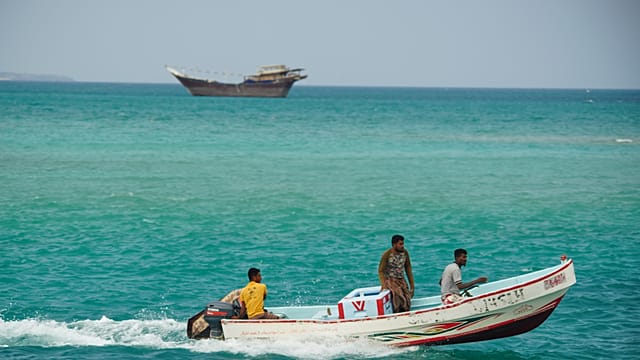
Tensions escalated between the United States and Iran on Sunday as President Donald Trump issued a stark warning, threatening Iran and its infrastructure if it fails to open the Strait of Hormuz by Tuesday. In a tweet, Trump stated that if Iran does not comply with his demand, "the U.S. will take out the Oil Refineries and Ports of the Islamic Republic of Iran." This ultimatum comes amid ongoing disputes over Iran's nuclear program and its influence in the Middle East.
In response to Trump's threats, Iran's Foreign Minister Mohammad Javad Zarif warned that the U.S. should not underestimate the consequences of its actions. Zarif tweeted, "The price of aggression will be clear to all." Additionally, Iran's state news agency, IRNA, reported that Iran would restrict access to the Bab el-Mandeb Strait, a crucial shipping route in the Red Sea, if the U.S. takes military action against Iranian oil facilities.
The Bab el-Mandeb Strait, located between Yemen and Somalia, is a vital chokepoint for global oil shipments, with about 3 million barrels of crude oil passing through it daily. Restricting access to this strait could disrupt global oil markets and lead to significant price increases. Analysts have warned that such a move could have far-reaching economic consequences, affecting not only oil-importing nations but also economies reliant on stable energy prices.
The Strait of Hormuz, which connects the Persian Gulf to the Gulf of Oman, is another critical shipping route. It accounts for about 20% of global oil production, with around 20 million barrels of crude oil passing through it daily. Trump's demand for Iran to open this strait likely stems from concerns over the security of these vital shipping lanes. In recent months, tensions have risen between the U.S. and Iran, with both sides accusing each other of aggression and destabilizing activities in the region.
Iran has previously warned that any attack on its oil infrastructure would be met with a strong response, potentially leading to a full-scale conflict. The U.S. has also increased its military presence in the region, deploying additional warships and aircraft carriers in the Persian Gulf. This move has been seen as a show of force to deter any potential Iranian aggression.
The situation in the Bab el-Mandeb Strait is further complicated by the ongoing civil war in Yemen, which has led to a humanitarian crisis and instability in the region. The port of Hodeidah, located on the Red Sea, is a key point of contention, with Iran and its allies supporting the Houthi rebels, while the U.S. backs the Yemeni government. Restricting access to the Bab el-Mandeb Strait could exacerbate these tensions and further destabilize the already fragile region.
As the deadline for Iran to comply with Trump's ultimatum approaches, the international community is closely monitoring the situation. European and Asian nations, which heavily rely on oil shipments through the Strait of Hormuz and the Bab el-Mandeb Strait, are particularly concerned about the potential impact of any disruptions. The United Nations and other diplomatic channels are working to mediate the situation and prevent an escalation of hostilities.
In the meantime, both the U.S. and Iran continue to exchange threats and accusations, with neither side showing signs of backing down. The future of the region's oil supply routes and the broader geopolitical landscape remain uncertain, as the two superpowers vie for influence and security in the Middle East. The stakes are high, with the potential for a full-scale conflict that could have far-reaching consequences for global markets and international relations.








