
Iran rejects ceasefire as Trump says entire country can be 'taken out'
The US president threatened Iran saying "the entire country can be taken out in one night - and that night might be tomorrow night".
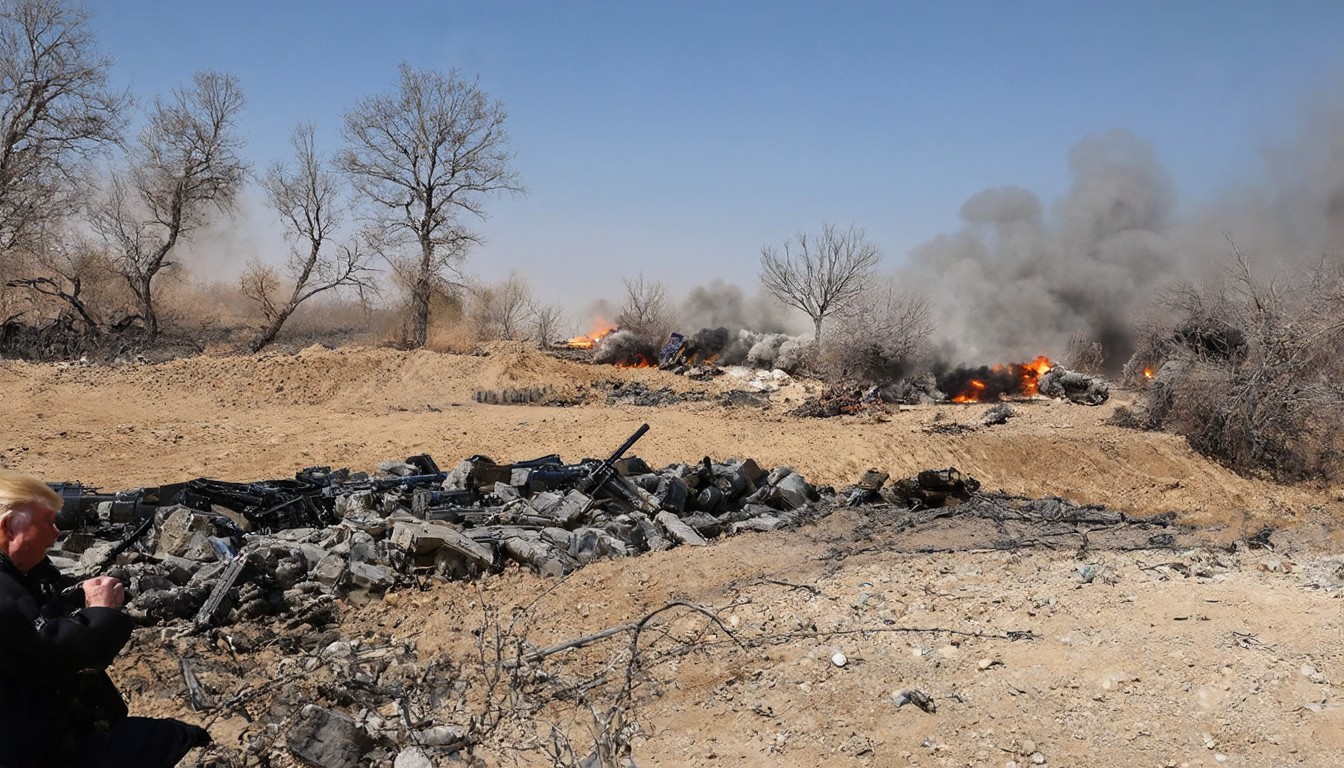
In a recent escalation of tensions between the United States and Iran, President Donald Trump warned that the entire Iranian nation could be "taken out" in a single night, with the possibility of such an event occurring as early as tomorrow. This stark threat comes as Iran has firmly rejected any ceasefire agreement, refusing to back down in the ongoing conflict.
Trump's remarks were made during a speech at a rally in Michigan, where he emphasized the military might of the United States and its readiness to respond to any threats posed by Iran. The president's comments have been met with concern by international observers, who fear that such a confrontation could lead to a full-scale war in the Middle East.
Iran, on the other hand, has remained unyielding in its stance, dismissing any calls for a ceasefire. Iranian officials have repeatedly stated that their country will not back down in the face of U.S. aggression, insisting that their right to defend their sovereignty is non-negotiable. This refusal to negotiate has deepened the divide between the two nations, with tensions reaching a critical level.
The roots of this conflict can be traced back to years of mutual distrust and hostility between the United States and Iran. The U.S. has long accused Iran of supporting terrorist groups and seeking nuclear weapons, while Iran has accused the U.S. of interference in its internal affairs and exploitation of its resources. These accusations have fueled a cycle of retaliation and escalation, with both sides engaging in acts of aggression and sabotage.
Trump's threat to "take out" Iran has been widely interpreted as a warning of a potential military strike, possibly targeting Iranian military installations or key figures in the government. Such an action could have far-reaching consequences, potentially leading to the collapse of the Iranian regime and a power vacuum that could be filled by various factions, including those aligned with or opposed to the U.S.
However, the possibility of a military strike also raises concerns about the potential for unintended consequences. A U.S. military intervention in Iran could trigger a broader regional conflict, drawing in other countries with vested interests in the area, such as Russia, China, and Saudi Arabia. This could escalate into a full-scale war, with devastating impacts on the entire Middle East and beyond.
In addition to the military implications, Trump's threat has also sparked debates about the legality and morality of such an action. Critics argue that the U.S. has no clear justification for a preemptive strike, while supporters contend that it is necessary to prevent further aggression and protect U.S. interests.
As tensions continue to mount, diplomatic efforts to resolve the conflict have taken a back seat. International organizations, including the United Nations, have called for dialogue and de-escalation, but their appeals have been largely ignored by both sides.
In the meantime, the situation in Iran has become increasingly unstable, with protests and unrest on the rise. Domestic dissent, fueled by economic hardships and political repression, could further destabilize the country and make it more susceptible to external pressures.
As the world watches with bated breath, the future of the U.S.-Iran relationship remains uncertain. Trump's threat to "take out" Iran underscores the volatile nature of the conflict and the urgent need for diplomatic solutions. The refusal of Iran to accept a ceasefire, however, suggests that a peaceful resolution may be further away than many had hoped.
In the coming days and weeks, it will be crucial for both the U.S. and Iran to reassess their positions and engage in meaningful dialogue. The stakes are high, and any misstep could lead to catastrophic consequences. The international community must remain vigilant and support efforts to de-escalate the situation, lest the threat of a full-scale war become a grim reality.








