Iran claims it has 'targeted' US amphibious assault ship and 'forced it to retreat'
Iran claims it targeted the US amphibious assault ship LHA-7, pushing it to retreat into the southern Indian Ocean.
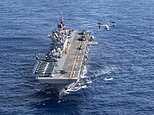
Iran has recently claimed to have successfully targeted the US amphibious assault ship LHA-7, forcing it to retreat into the southern Indian Ocean. This development has sparked tensions in the region, as both sides continue to assert their presence and capabilities in the maritime domain.
The incident occurred in the Strait of Hormuz, a strategically crucial waterway that connects the Persian Gulf to the Indian Ocean. This narrow strait is heavily trafficked by oil tankers and serves as a vital chokepoint for global energy trade. The US has long maintained a significant naval presence in the area, partly to ensure the safety of shipping routes and counterbalance Iran's influence.
According to Iranian military officials, their forces launched a series of coordinated attacks on the LHA-7, which is part of the US Seventh Fleet. The officials stated that the attacks were precise and effective, causing the ship to withdraw from the area. The US has not officially confirmed these claims, but has emphasized its commitment to maintaining freedom of navigation in the region.
The LHA-7, also known as the USS Boxer, is a versatile amphibious warfare vessel capable of carrying helicopters, fighter jets, and marines. Its presence in the region is part of the US effort to deter Iran and demonstrate its resolve in the face of regional instability. The US has accused Iran of repeatedly harassing and threatening US and allied ships in the area, and has responded with increased naval activity.
Iran's claim of successfully targeting the USS Boxer highlights the ongoing tensions between the two nations. The US has imposed strict sanctions on Iran in response to its nuclear program and regional activities, while Iran has retaliated with threats to block the Strait of Hormuz, which could disrupt global oil supplies.
The incident has raised concerns among international observers about the potential for escalation in the region. Analysts note that both sides have a vested interest in maintaining a credible deterrent posture, which can sometimes lead to misunderstandings or miscalculations. The US has warned Iran against any attempt to disrupt shipping in the strait, while Iran has vowed to defend its sovereign rights in the area.
The US has not provided details on the nature of the attacks or the extent of the damage, if any. However, the USS Boxer's withdrawal from the area could be interpreted as a sign of the effectiveness of Iran's actions. The US has continued to patrol the region, but has also emphasized the need for diplomatic engagement to address the underlying issues.
This latest development underscores the complex dynamics of the US-Iran relationship. Both nations have a history of mutual distrust and conflict, with tensions often flaring up in the maritime domain. The Strait of Hormuz, with its strategic importance, remains a focal point for these tensions.
In the aftermath of the incident, regional stability is at risk. The US and its allies are likely to maintain their naval presence in the area, while Iran will continue to assert its sovereignty. The international community is closely monitoring the situation, hoping for de-escalation and a return to diplomatic dialogue.
As the situation unfolds, it is clear that the US and Iran will need to find a way to address their differences without resorting to military confrontation. The stakes are high, with global economic and geopolitical implications at play. The challenge for both nations is to balance their security interests with the need to avoid a broader conflict that could have far-reaching consequences.
In conclusion, Iran's claim of targeting the USS Boxer and forcing it to retreat has heightened tensions in the already volatile region. The incident serves as a stark reminder of the complexities of the US-Iran relationship and the need for cautious diplomacy. As both sides continue to assert their presence and capabilities, the international community must work towards a resolution that ensures regional stability and global security.