Investors dump Orbán-linked stocks as poll shows opposition with 23-point lead
In a single day, the share price of two holding companies on the Budapest Stock Exchange with links to the Orbán government, 4iG and Opus Global, fell 10-12%.
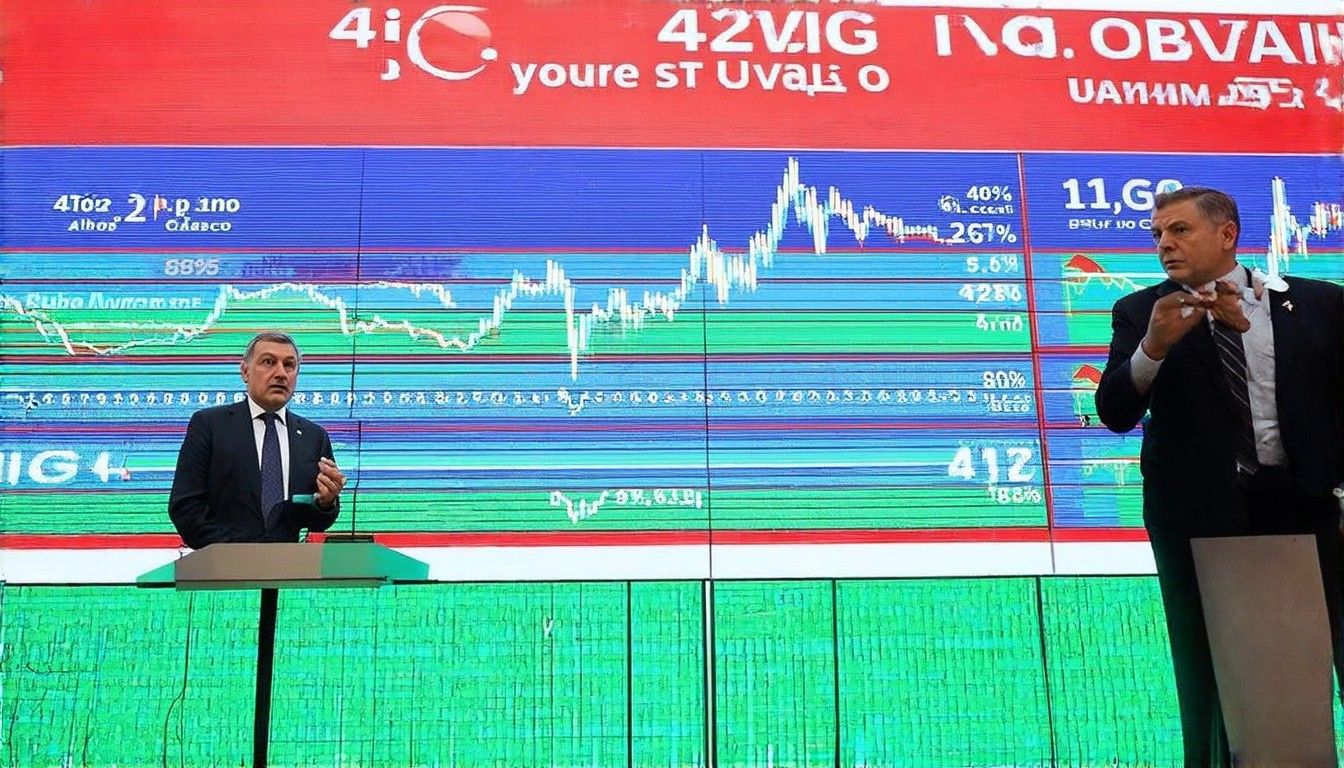
In recent days, investors have shown a significant lack of confidence in two Hungarian holding companies closely tied to the government of Prime Minister Viktor Orbán, as their stock prices plummeted by as much as 12%. The companies in question, 4iG and Opus Global, both listed on the Budapest Stock Exchange, have seen their shares drop sharply in response to a poll indicating a substantial lead for the opposition in upcoming elections.
The poll, conducted by a reputable Hungarian research firm, suggests that the opposition coalition could gain a 23-point lead over Orbán's Fidesz party. This development has raised concerns among investors about the political stability of Hungary and its potential impact on businesses with government ties. The sharp decline in stock prices reflects the heightened uncertainty in the market, as investors reassess their investments in light of the changing political landscape.
4iG, a company with significant government contracts, has seen its share price drop by around 12% in a single day. Analysts speculate that this decline is a direct result of investors' concerns about the company's future prospects if the opposition were to win a decisive victory in the elections. Similarly, Opus Global, another company with links to the Orbán government, has experienced a 10% drop in its share price, highlighting the broader market sentiment of apprehension.
The rapid sell-off of these stocks underscores the close relationship between political developments and investor confidence in Hungary. Many investors have long been wary of the Orbán government's policies, particularly its perceived authoritarian tendencies and its impact on the rule of law and economic freedom. The recent poll results have amplified these concerns, leading to a swift exit from companies perceived as being too closely tied to the government.
Experts note that the stock market's reaction is not entirely unexpected, given the historical context of Hungary's political climate. In recent years, the Orbán government has faced criticism from both domestic and international bodies for its handling of key issues such as media freedom, judicial independence, and economic policies. These concerns have led to a gradual erosion of investor confidence, with many choosing to avoid companies with government ties.
The sharp decline in the shares of 4iG and Opus Global is also a reflection of the broader economic challenges facing Hungary. The country has struggled with inflation, high energy costs, and a weakened currency, all of which have contributed to a less attractive investment environment. The combination of these factors, coupled with the political uncertainty, has created a perfect storm for companies with government links.
In the short term, it remains to be seen how the market will react to further developments in the political arena. As the election date approaches, investors will likely continue to monitor the situation closely, ready to adjust their portfolios in response to new information. For companies like 4iG and Opus Global, the next few weeks could be crucial as they navigate the uncertain waters of political transition.
In the longer term, the outcome of the elections could have significant implications for Hungary's economy and its position on the global stage. A change in government could lead to shifts in policy direction, potentially attracting new investment and fostering a more business-friendly environment. However, the extent of these changes will depend on the specific policies adopted by the new administration and the ability of Hungary to address its economic challenges.
As investors continue to weigh the risks and rewards, the recent stock market volatility serves as a stark reminder of the interconnectedness of politics and economics. The sharp decline in the shares of 4iG and Opus Global is not just a reflection of their individual business performance but a broader signal of investor apprehension about the future of Hungary under a potentially new political leadership. Only time will tell whether the current market sentiment is a temporary blip or a harbinger of more significant changes to come.