
Inside the daring mission to rescue a U.S. airman downed in Iran
The U.S. sent over 150 aircraft to beat Iranian forces in the race to find the missing F-15E weapons systems officer.
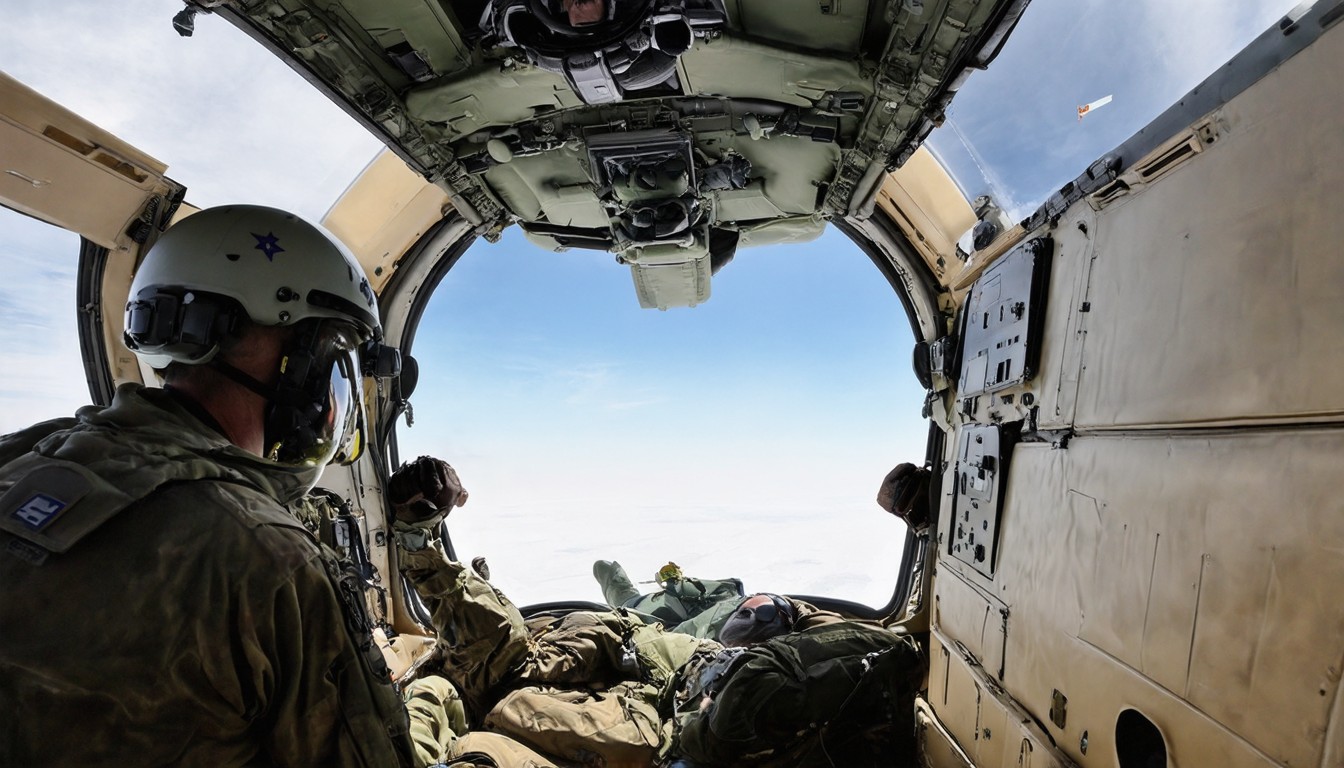
In the early hours of the morning, the U.S. military launched a daring mission to locate and rescue a downed F-15E weapons systems officer who had been shot down over Iranian territory. The operation unfolded in a tense atmosphere, with both American and Iranian forces vying to reach the pilot first. The U.S. deployed over 150 aircraft, including a mix of fighter jets, reconnaissance planes, and transport helicopters, to ensure a swift and successful extraction.
The F-15E, a two-seat strike fighter, had been conducting a routine training exercise in the region when it was unexpectedly intercepted by Iranian air defenses. The pilot managed to eject safely, but the aircraft was brought down, raising immediate concerns about the pilot's fate. As the U.S. scrambled to locate the crash site, Iranian forces were also mobilizing, creating a race against time.
The U.S. response was swift and methodical. Military intelligence worked tirelessly to pinpoint the exact location of the pilot, using satellite imagery, drone footage, and signals intelligence. Simultaneously, a fleet of aircraft was dispatched to monitor Iranian airspace and prevent any interference. The presence of over 150 U.S. aircraft in the region served as a powerful deterrent, signaling to Iran that the U.S. was serious about rescuing its airman.
Among the aircraft involved were several types of reconnaissance planes, tasked with scanning the vast expanse of Iranian territory. These included the U-2 Dragon Lady, known for its high-altitude, long-range capabilities, and the RQ-4 Global Hawk, a remotely piloted aircraft that could remain airborne for extended periods. These assets provided critical real-time intelligence, allowing U.S. forces to track Iranian movements and adjust their strategy accordingly.
In addition to the reconnaissance efforts, the U.S. deployed several types of transport helicopters, including the MH-60 Black Hawk and the CH-47 Chinook. These helicopters were prepared to execute a covert extraction operation once the pilot's location was confirmed. The U.S. military was also prepared to use stealth aircraft, such as the B-2 Spirit and the F-22 Raptor, to conduct airstrikes if necessary, though this was considered a last resort.
The race to reach the pilot was not without its challenges. Iranian forces were actively patrolling the area, and there were concerns that they might attempt to capture the pilot before the U.S. could respond. The U.S. had to balance the need for speed with the necessity of avoiding any provocative actions that could escalate tensions further.
Despite the challenges, the U.S. operation was meticulously planned and executed with precision. Military intelligence successfully identified the crash site, and the transport helicopters were dispatched to extract the pilot. The operation was conducted with stealth and discretion, ensuring that the pilot was safely recovered without drawing undue attention to the U.S. presence in the region.
The successful rescue of the F-15E weapons systems officer marked a significant achievement for the U.S. military. It demonstrated the effectiveness of the U.S. response to a high-stakes situation, as well as the importance of rapid intelligence gathering and coordinated air operations. The mission also underscored the ongoing tensions between the U.S. and Iran, as both nations vied for control in the region.
In the aftermath of the operation, the U.S. military praised the bravery and professionalism of the pilot, who had faced immense danger and uncertainty during the ordeal. The successful extraction served as a testament to the U.S. commitment to ensuring the safety of its personnel, even in the most challenging of circumstances.
The mission also highlighted the critical role of airpower in modern military operations. The deployment of over 150 aircraft showcased the U.S. ability to project force and respond swiftly to crises, while also emphasizing the need for advanced reconnaissance capabilities to gather real-time intelligence in complex environments.
As the U.S. and Iran continue to navigate their contentious relationship, the rescue mission serves as a reminder of the potential for cooperation and mutual understanding, even in the midst of adversity. The successful extraction of the pilot not only ensured his safety but also helped to maintain a degree of stability in an already volatile region.
In conclusion, the daring mission to rescue the U.S. airman downed in Iran was a testament to the U.S. military's capabilities and determination. The deployment of over 150 aircraft, combined with precise intelligence gathering and coordinated operations, resulted in a successful extraction that underscored the importance of airpower and the need for rapid response in high-stakes situations. The mission also highlighted the ongoing challenges and tensions between the U.S. and Iran, as both nations navigate their complex relationship in the region.








